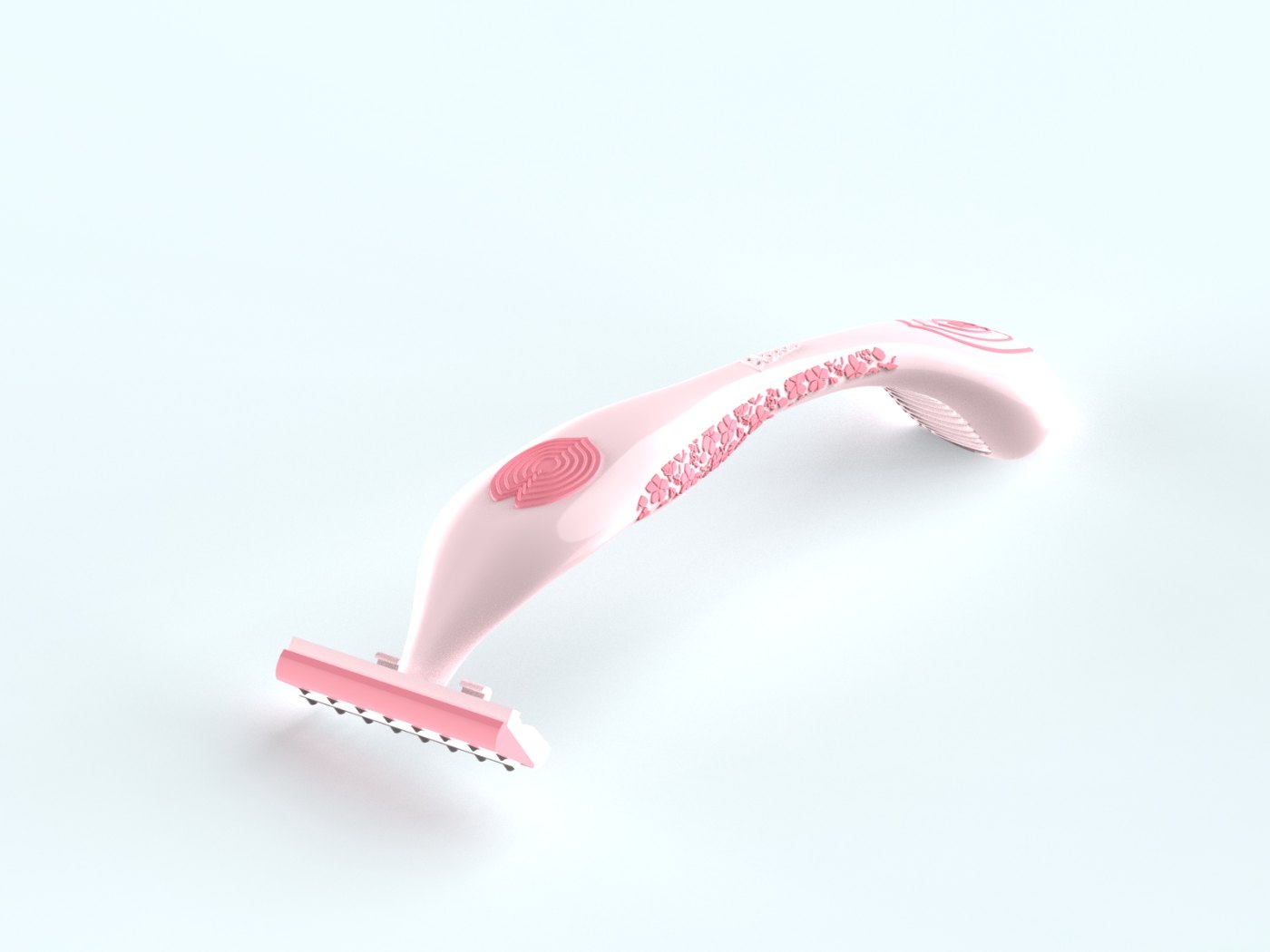
Treet makes blades at volume, but its women’s product was the men’s handle in another colour. My job: a dedicated handle and head that reuse the existing stainless cartridge and run on the plant’s two-shot line. No new blade tooling.
Scope ran from form to shelf, handle, grip, colourways, identity, blister, launch poster. At a disposable price, part count and shot weight are the design.
Legs and underarms are a long stroke over curved surfaces, done wet, one-handed, often blind. The old handle is short, straight, smooth-walled, a jawline tool. Three failures set my requirements.
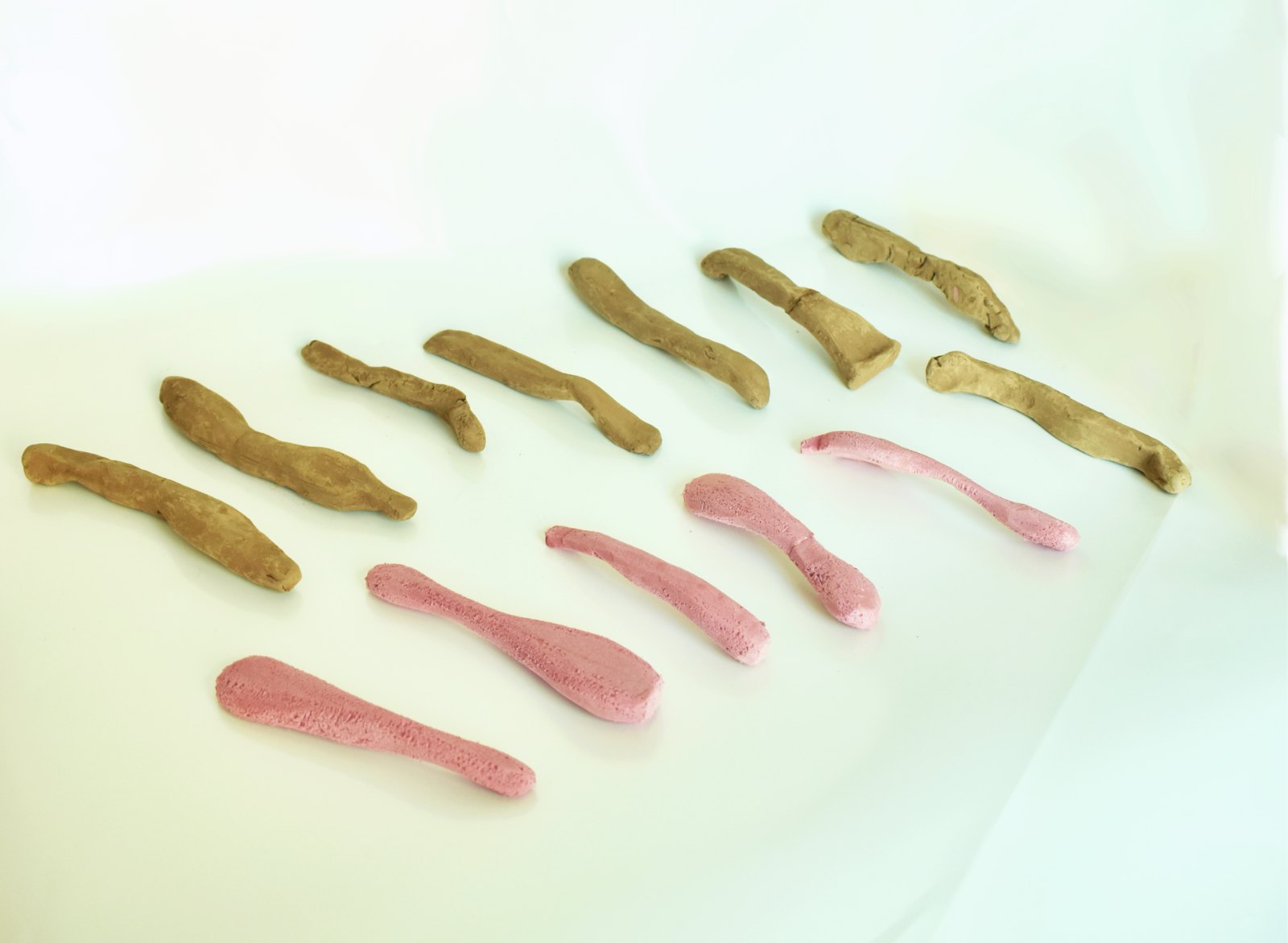
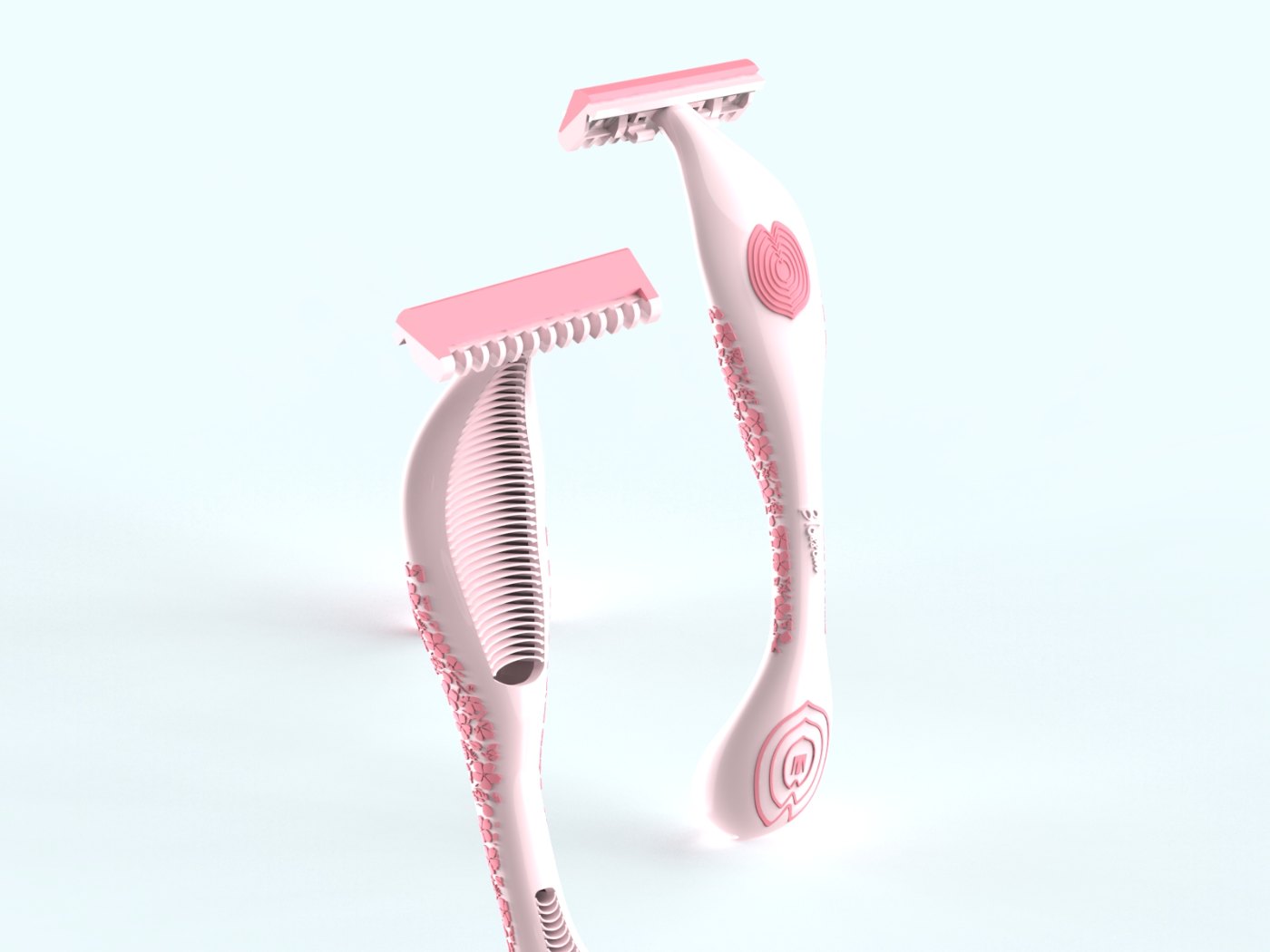
I modelled thirteen handles at full scale and held them wet, chasing three things: shaft length, thumb-rest position, and how much S-curve the hand takes before blade angle goes unpredictable. What carried forward: a long shaft with one shallow reversal, a flared tail, and a thumb pad forward of the balance point.
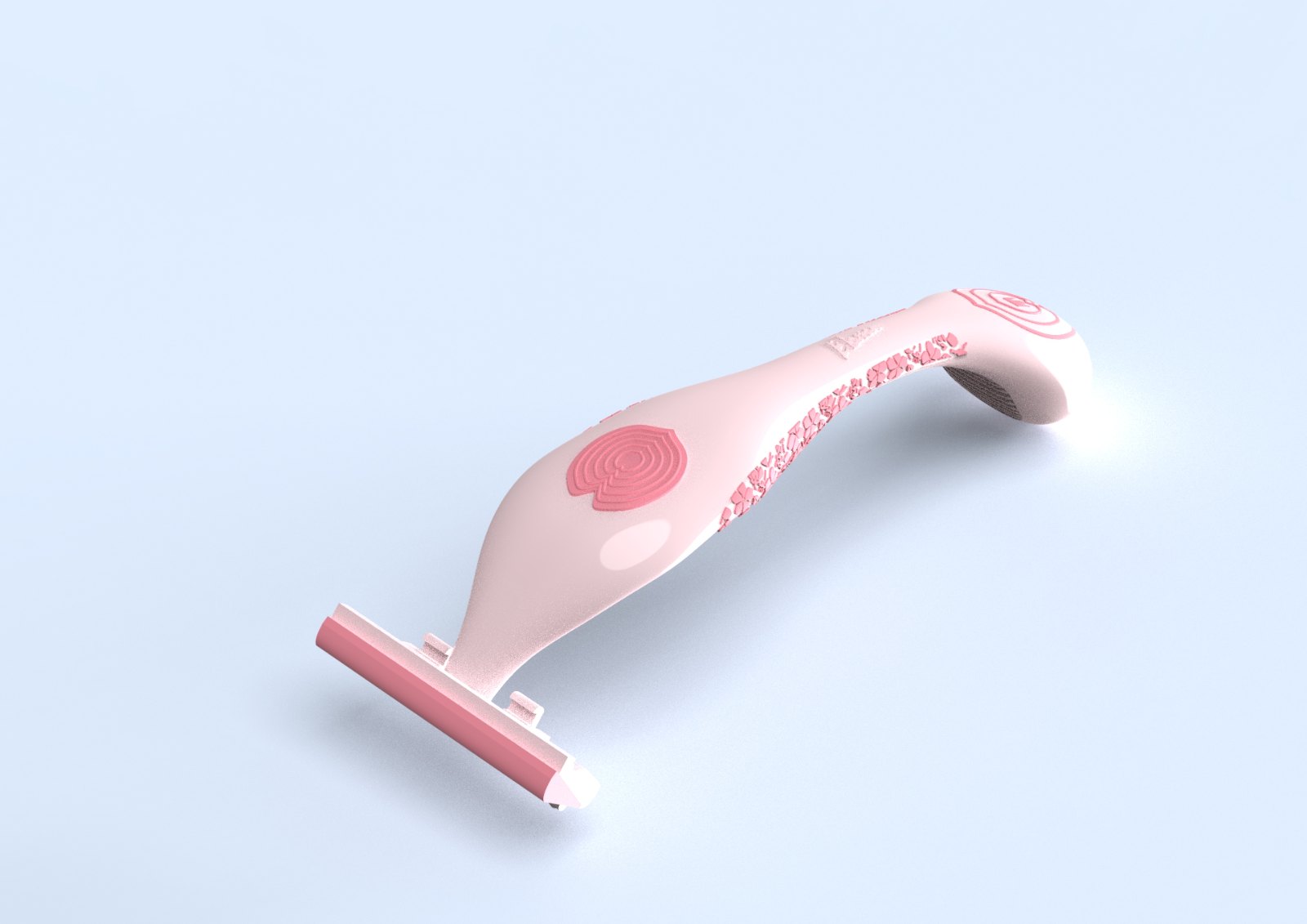
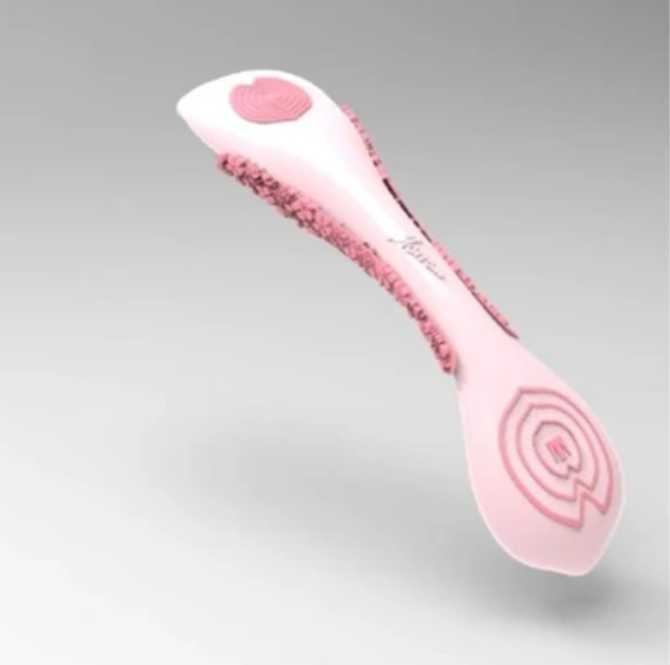
A rigid core with the soft grip overmoulded in the same tool: blossom-textured band down the spine, ribbed cavity where the fingers close, concentric thumb pad on top. The head is a fixed bar carrying the stock twin-blade cartridge, comb guard ahead of it, lubricating strip behind.
Nothing is screwed, clipped or user-serviceable. Head geometry retains the blade unit, so assembly is a press operation, two moulded parts plus the bought-in cartridge.
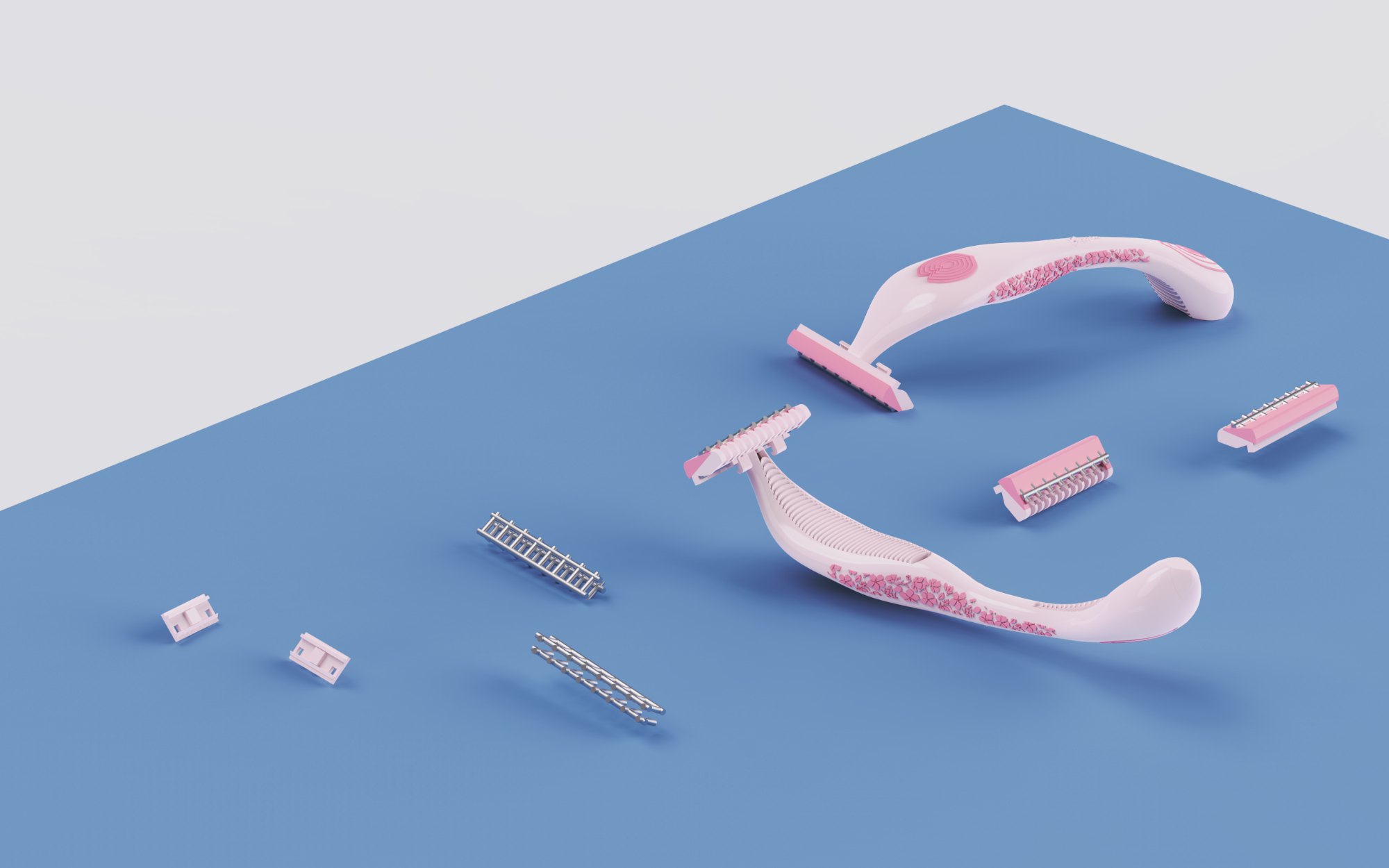
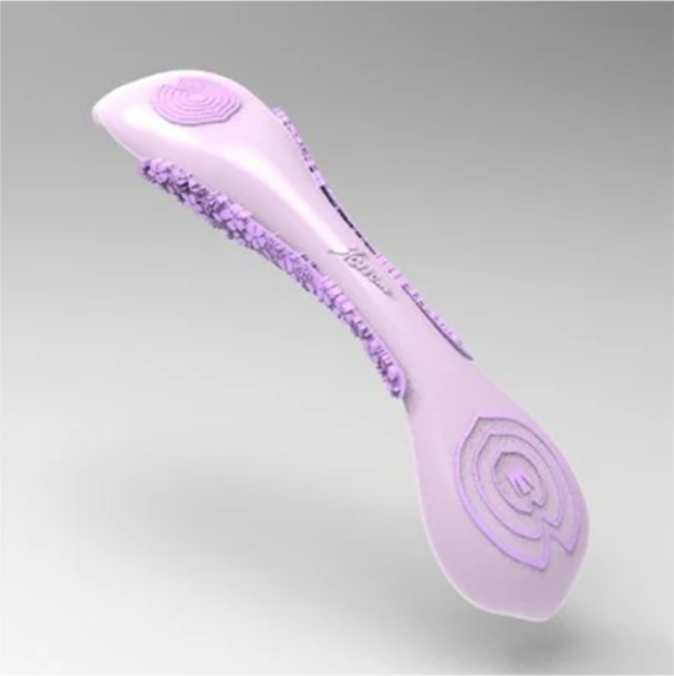
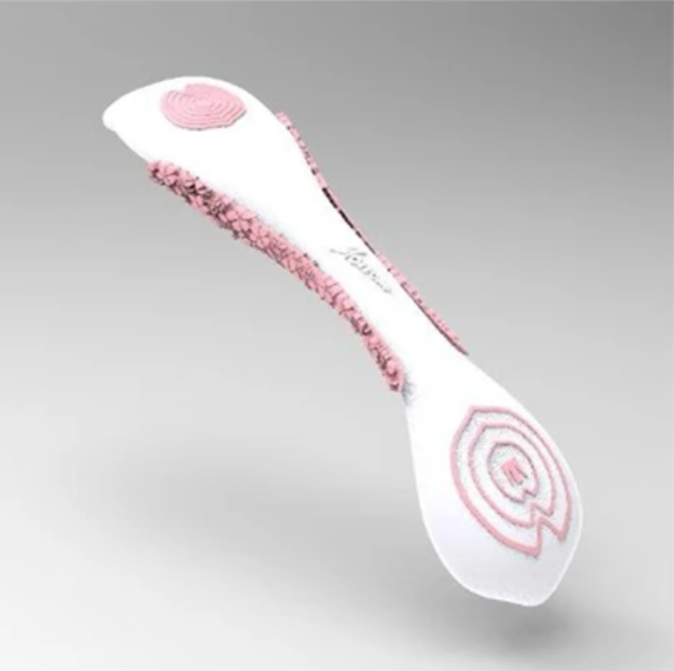
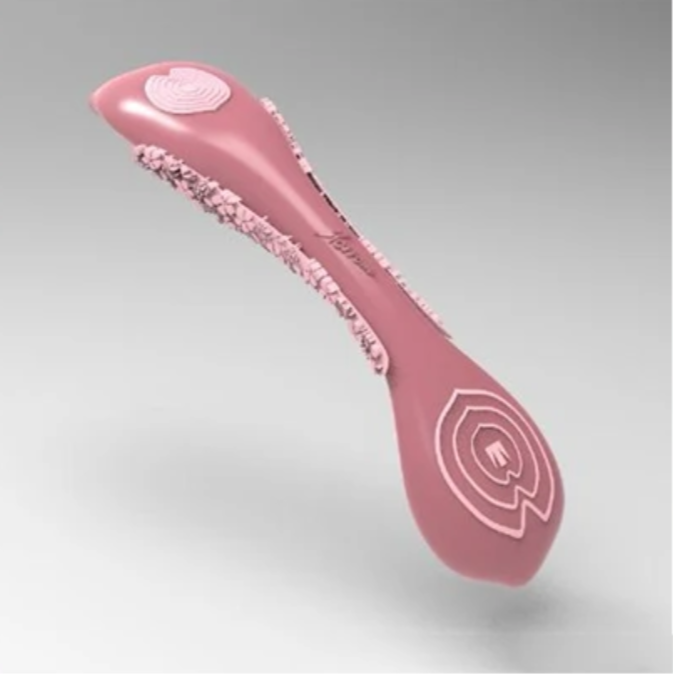
Variety comes entirely from the second shot. One core in one colour; swapping the grip material gives four shelf variants with no new tooling.
The blossom texture is moulded, not printed, so it survives the life of a disposable and doubles as grip. Gloss core against matt grip separates the materials without a graphic seam.
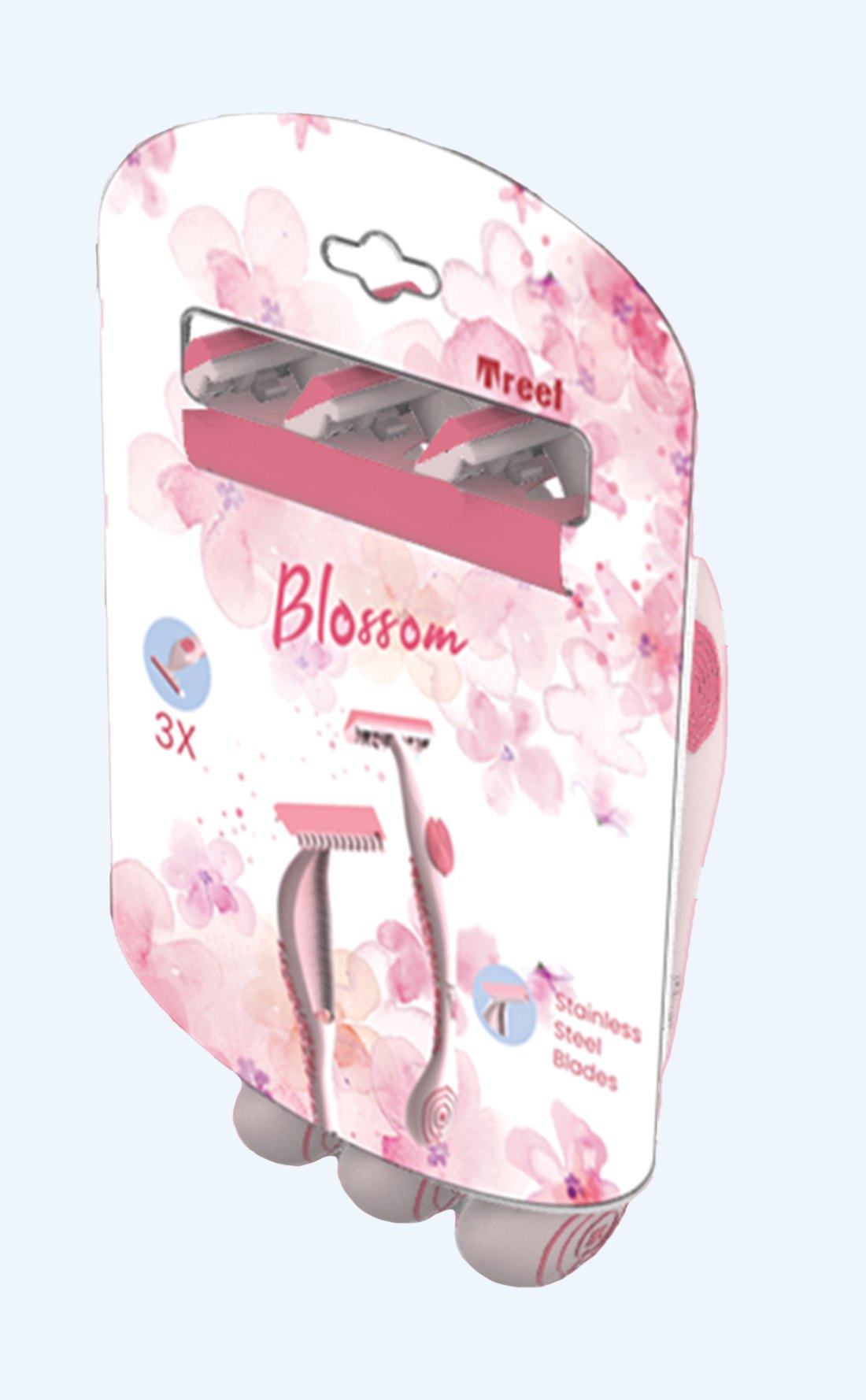
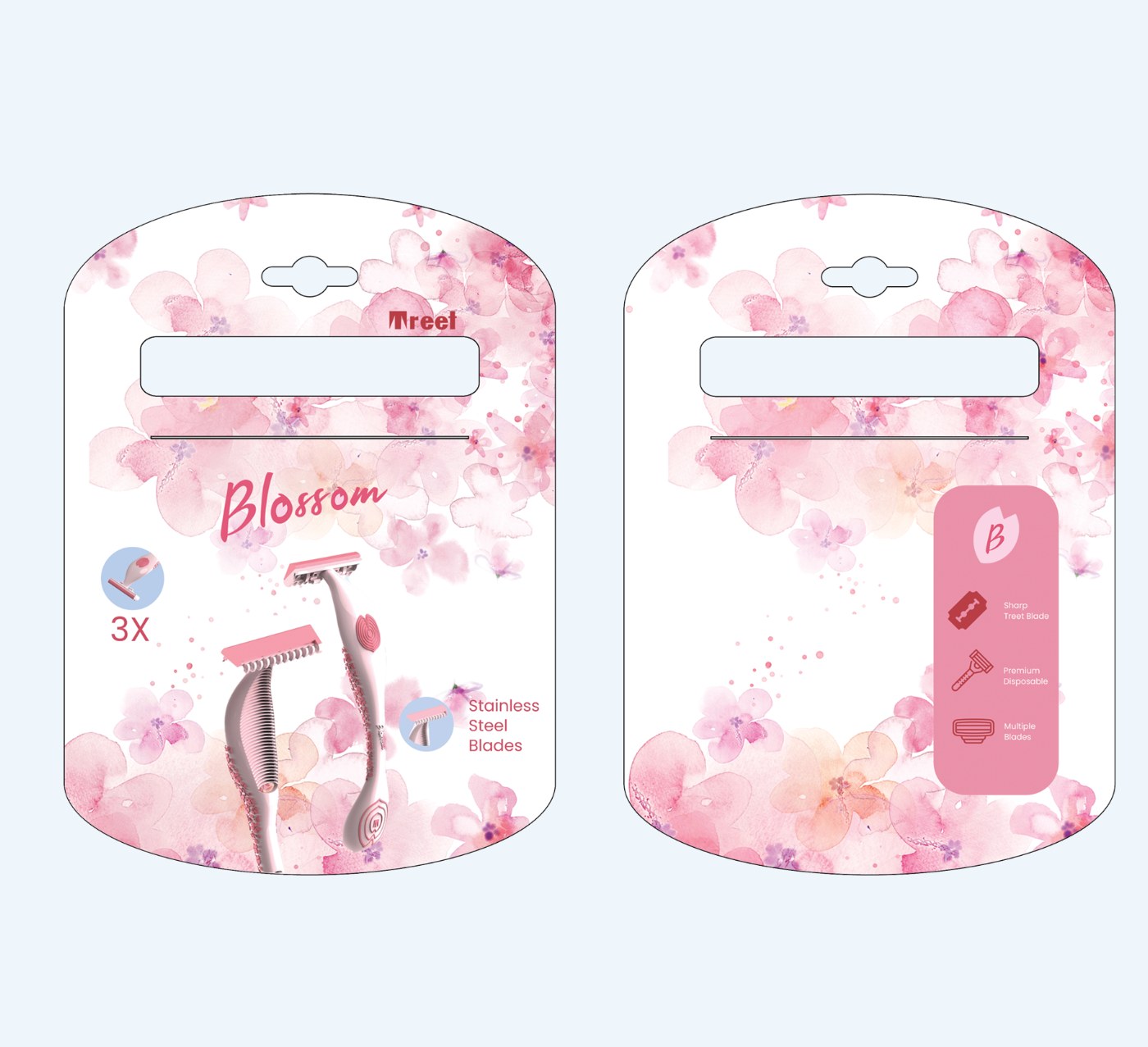
The three-pack hangs on a peg, so the card reads top-down: hook and Treet endorsement, blade window showing real steel, wordmark, then the two claims that decide the sale, count and blade material, as icons, not body copy.
The watercolour blossom field bleeds off all four edges so the pack reads as one object from two metres. Handles stay visible through the blister; the feature list lives on the back.
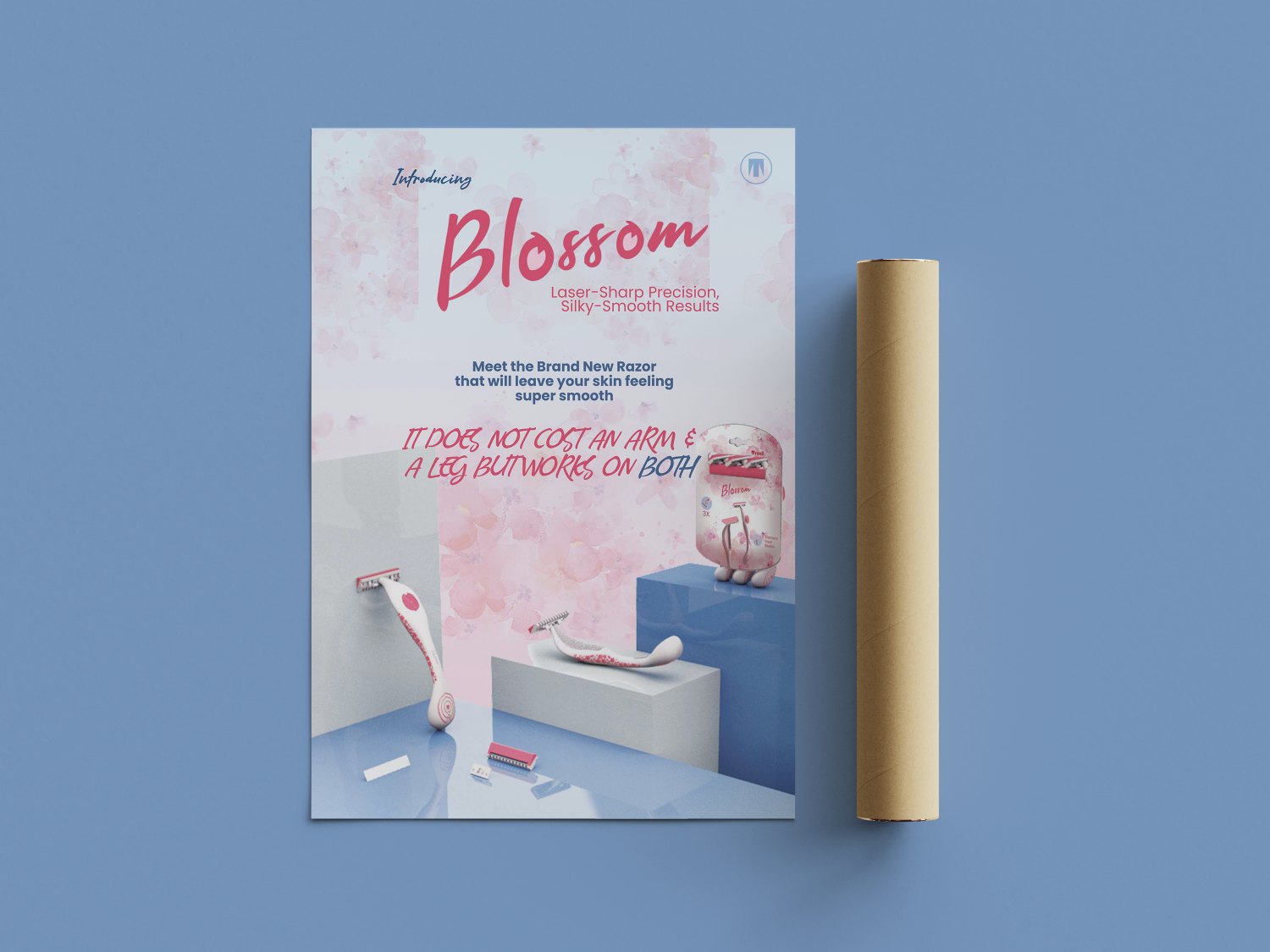
The launch image is a rendered set, plinths, reflective floor, the pack standing on its own handles. Working from CAD meant art-directing the campaign before tooling existed.
Copy is deliberately blunt for the category, the headline sells price and coverage in one line, and the pack, not a model, is the hero.
I handed over CAD for a two-shot handle and press-fit head on Treet’s existing cartridge, four colourways off one tool, the identity, blister artwork and launch poster. No new blade tooling, no added parts, that is what keeps the range viable at a disposable price.