Hadiya.K
Projects  /  Industrial design  /  Dost

Dost

An educational desk organiser for kids, engineered from flat sheet stock to a $0.70 production ceiling.

DisciplineIndustrial Design
Timeline5 weeks, Feb’2024
ContextID 203 Industrial Design II, SADA NUST
Constraint$1 retail, $0.70 landed cost
Dost stationery set, final render
01Brief02Problem03Ideation04Keymodels05Architecture06Cost07Deliverables08The range09Outcome
01
Brief

Price fixed first: $1 at retail, $0.70 to produce

The One Dollar Project fixes the price first: $1 on the shelf, $0.70 to land a unit. Material, part count, finish and packaging all get measured against that number.

The brief also asked for social value. We aimed it at desk organisation for 6-10 year olds, a shelf full of thin moulded plastic, and carried species awareness through the form and packaging.

$0.70landed cost ceiling per unit, set before any concept work
4functions integrated into a single glued assembly
5full-scale keymodels used to verify volumes and clearances
1sheet material, nested so the accessory is the offcut
02
Problem

The dollar shelf is a manufacturing constraint, not a taste problem

Everything at this price is injection moulded, which only pays at huge volumes and pushes walls to the thinnest the tool will fill. Low durability, single-function parts, no repair path. Three failures set our requirements.

01  Process dictates the productMoulding amortises tooling over millions of units. At small-batch volume it is unavailable, and the incumbents are thin, brittle and single-purpose.Flat sheet stock, cut not moulded, no tooling cost at 500 units
02  Desk equipment has not followed the screenHomework at this age is partly tablet-based, but the category has no stable stand, devices lie flat and get knocked off the desk.Tablet slot integrated into the rear panel at reading rake
03  Nothing earns retentionA generic caddy has no attachment value; it is displaced within weeks and replaced rather than kept.Character form, named range and a user-applied sticker set
03
Ideation

Reducing feature count until the silhouette carried the function

Our first concepts modelled the elephant literally: separate legs, tusks, a raised trunk. Each one is another cut path, another bonding operation, all chargeable against $0.70.

The direction that survived reads the elephant as a single arch, two identical side panels with the storage formed between them. Legs become negative space, the ear a through-cut, the head end the drawer.
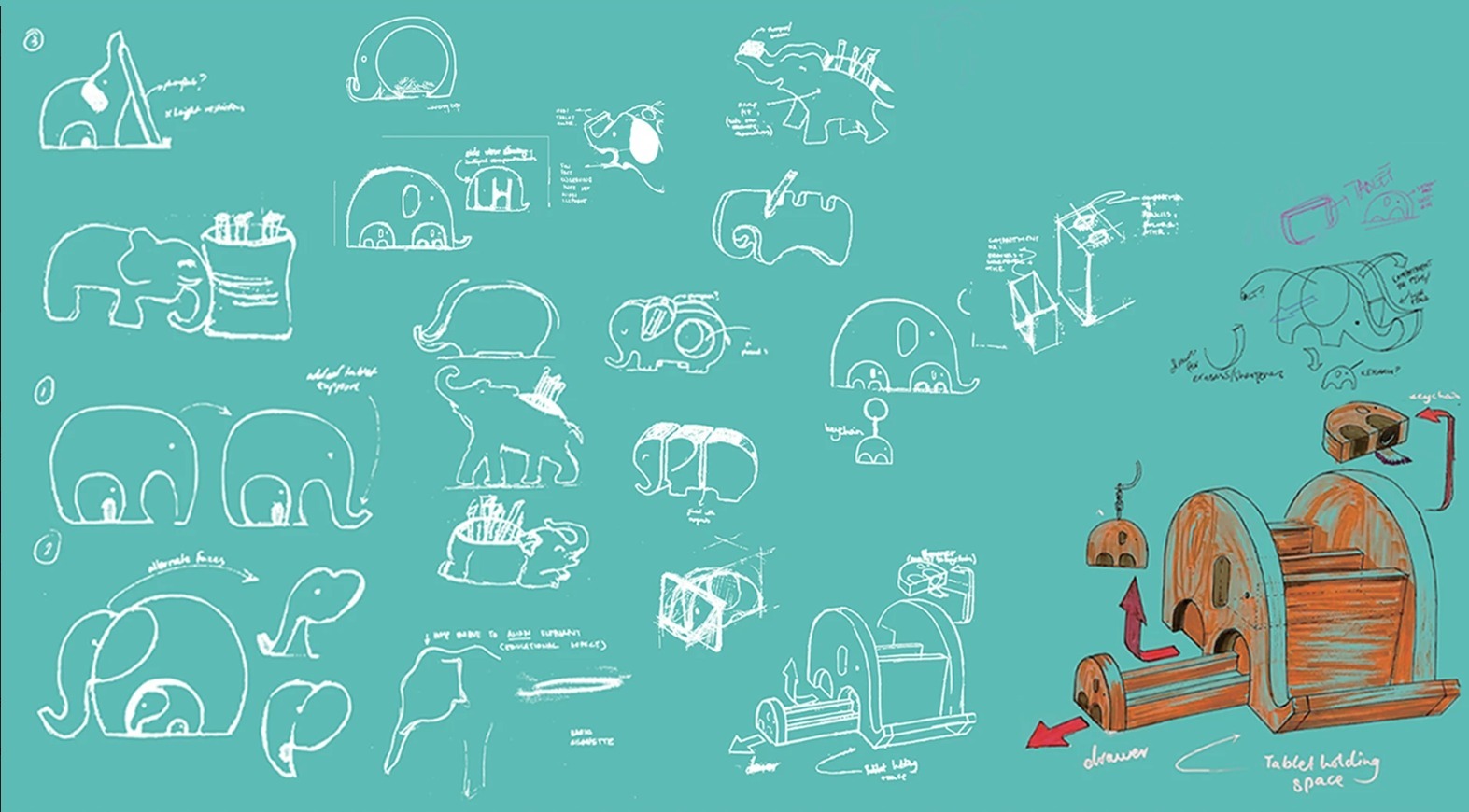
Dost ideation sheet, elephant thumbnails, drawer and tablet-slot studies
Ideation sheet, form studies, face variants, and the resolved concept annotated with drawer, tablet slot and keychain
04
Keymodels

Volumes and clearances verified in full-scale card

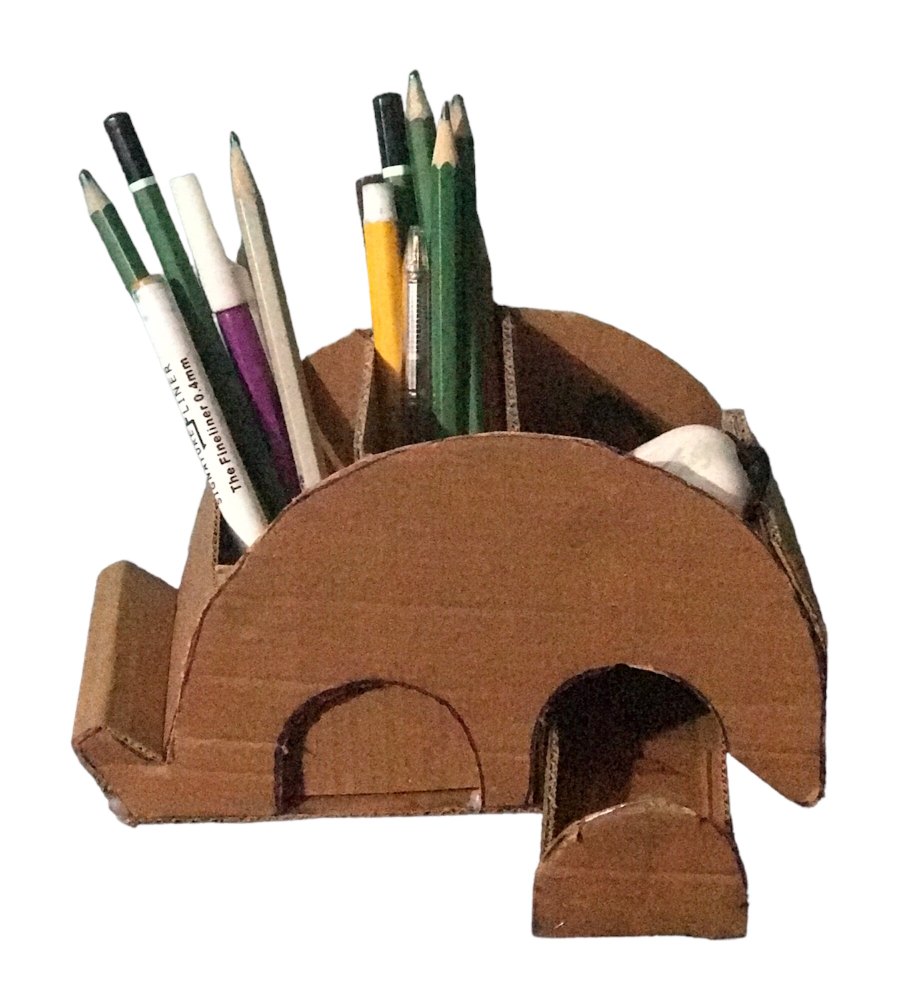
We built full-scale corrugated models and cut them down one variable at a time: pen-well depth, slot rake with a tablet loaded, drawer travel, footprint on a real desk. Three changes went into the drawing, deeper drawer, wider slot, lower body.
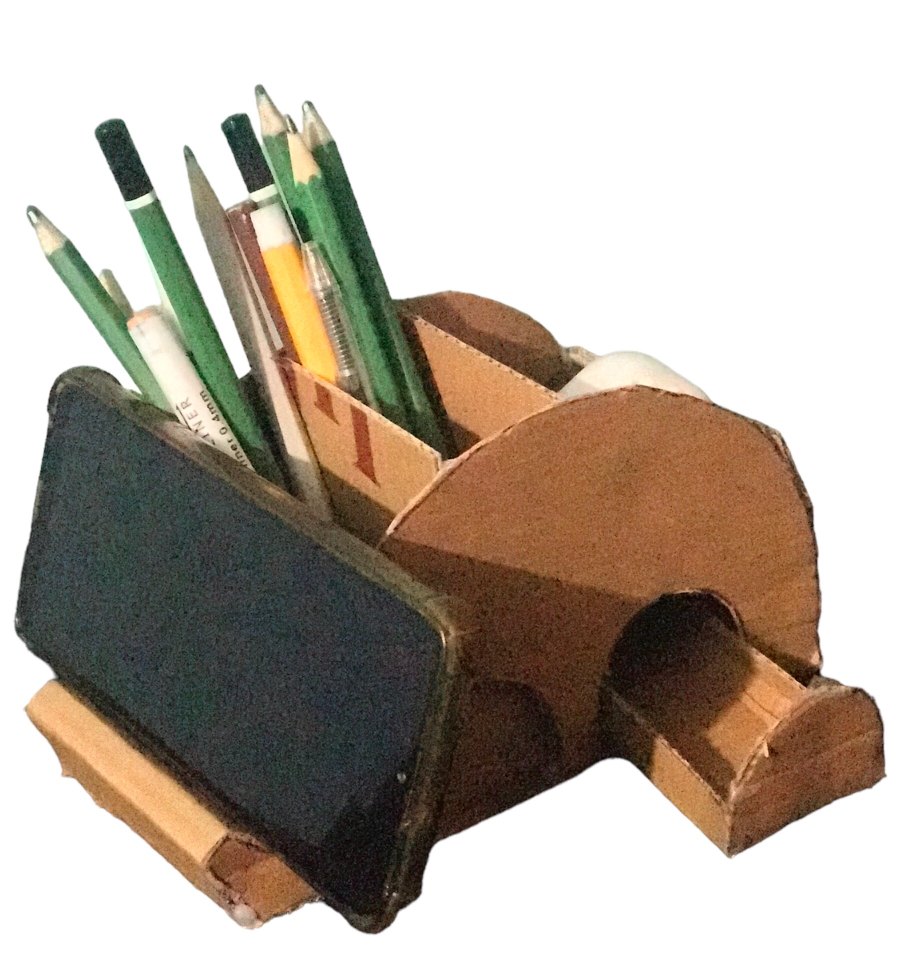
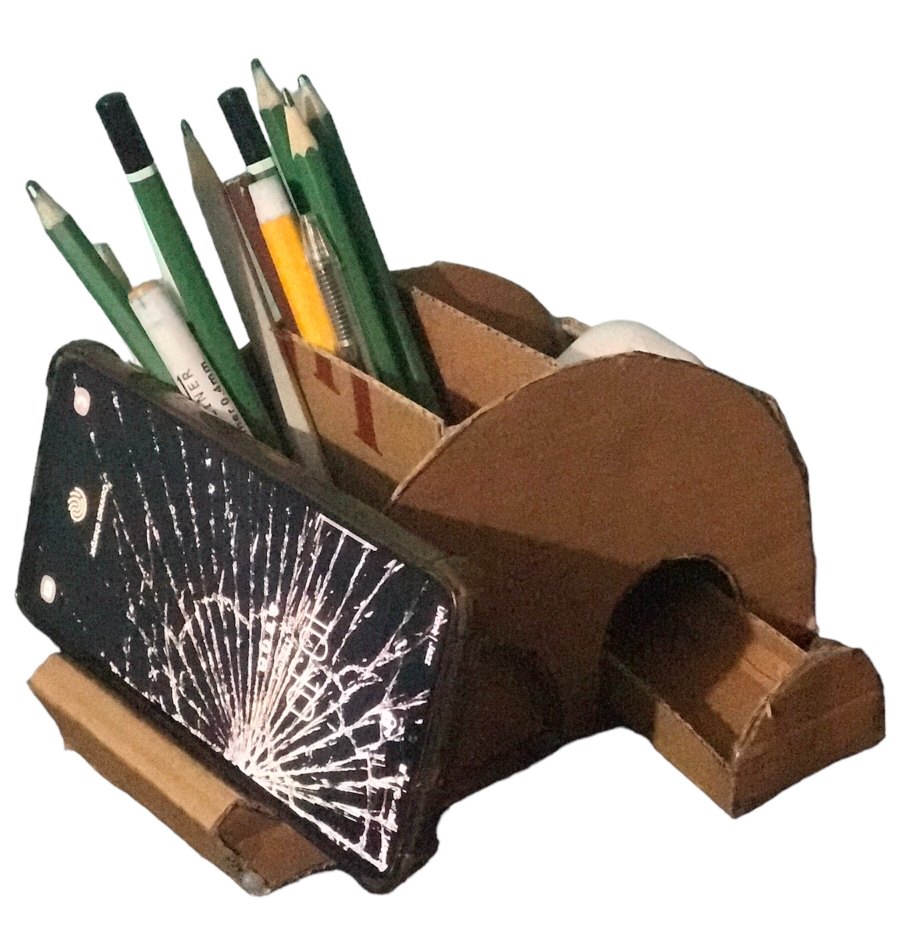
Dost keymodel 01
Keymodel 01, full compartment set, tablet loaded in the rear slot
Dost keymodel 02
Keymodel 02, pen-well depth and divider spacing isolated
Dost keymodel 03
Keymodel 03, head-to-body proportion and arch height
05
Architecture

Two side panels, four functions, no mechanical fasteners

Two shaped side panels with the dividers held between them on box joints and slits, all worked out in AutoCAD before a single sheet was cut. The drawer runs on the board with no hardware; the keychain is cut from waste inside the body outline.

Because it is joined rather than glued shut, it also comes apart: the organiser can be disassembled at end of life and the board recycled. No screws, no clips, nothing on the bill of materials but one keychain eyelet.
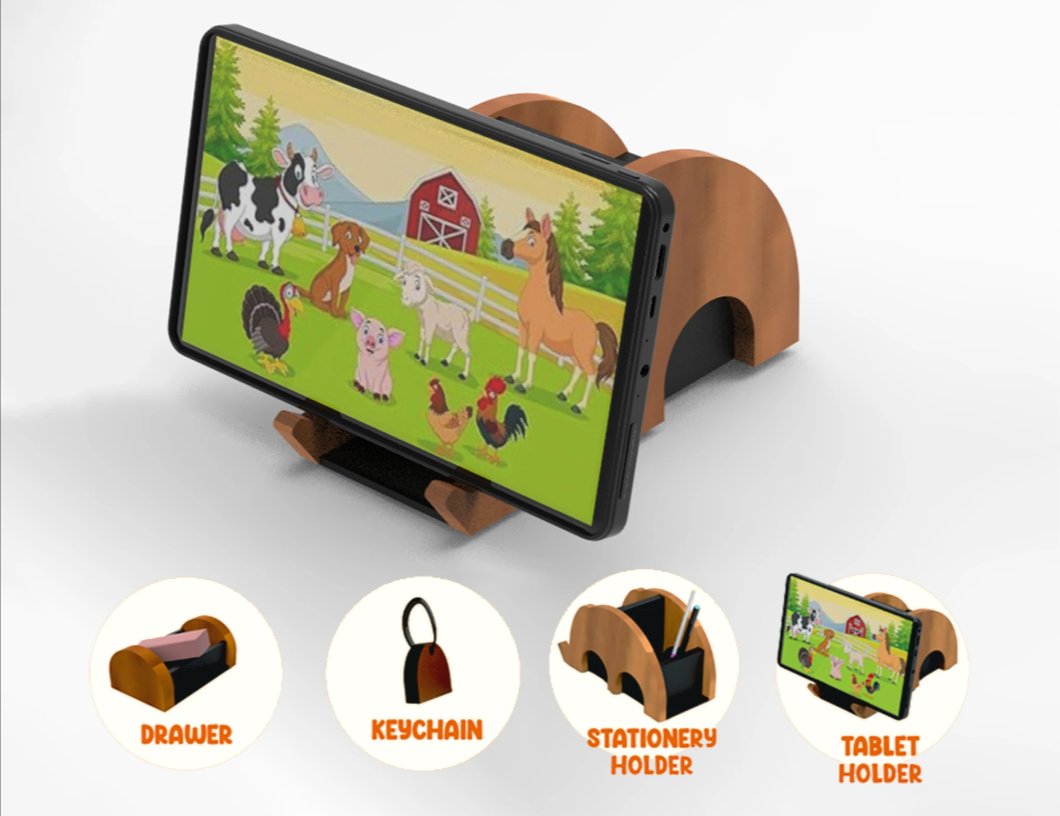
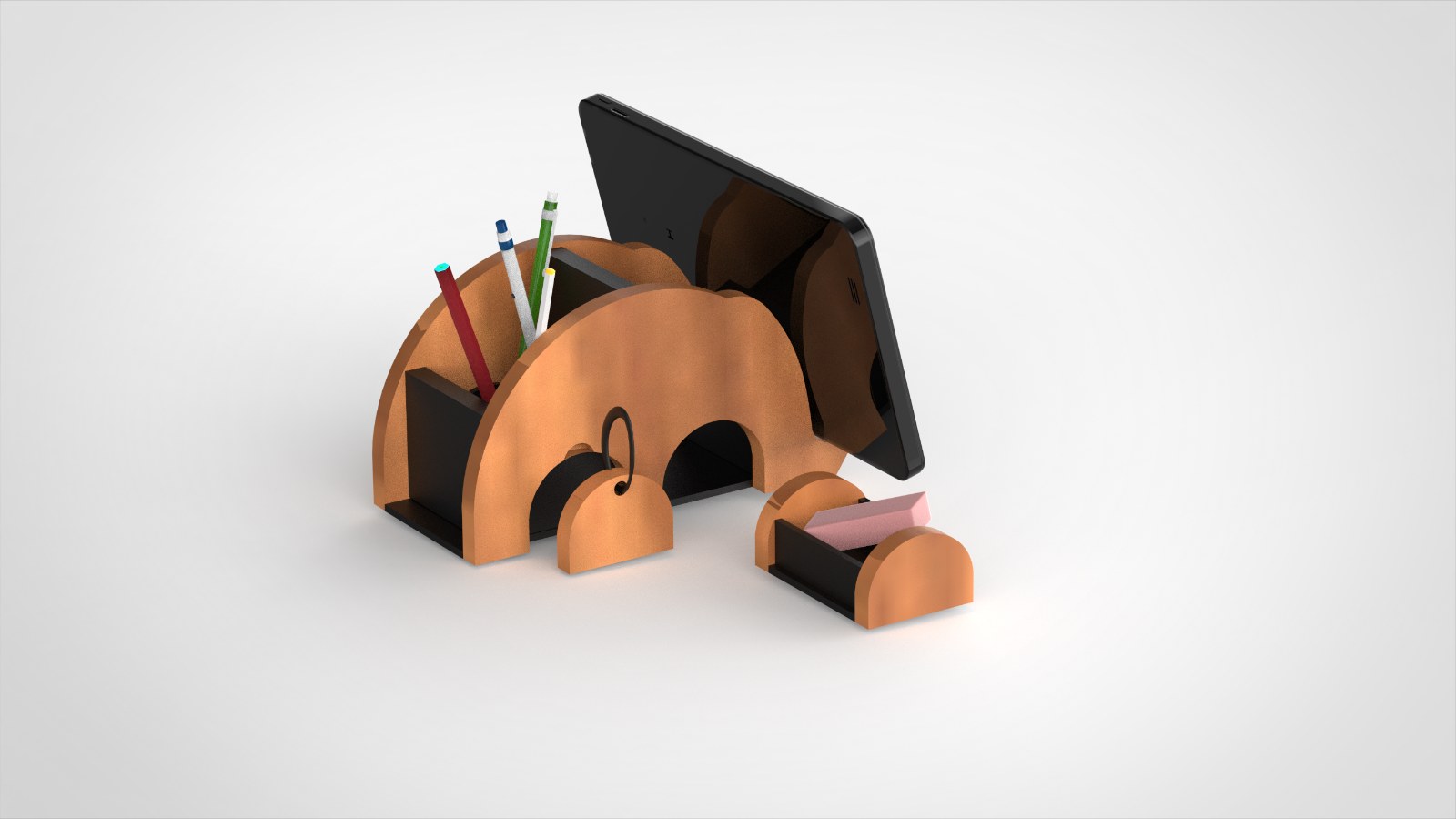
Stationery well, dividedTablet slot in the rear panelSliding drawer, board on boardDetachable keychain from offcutUser-applied sticker setDesigned for disassembly
Material3mm sheet board, single nested layout
ProcessFlat-sheet cutting, no tooling
AssemblyWooden box joinery, designed for disassembly
FinishVeneer outer faces, matt black interior
HardwareOne keychain eyelet only
Dost, tablet holder in use with the four functions called out
The four functions: drawer, detachable keychain, stationery holder and tablet holder
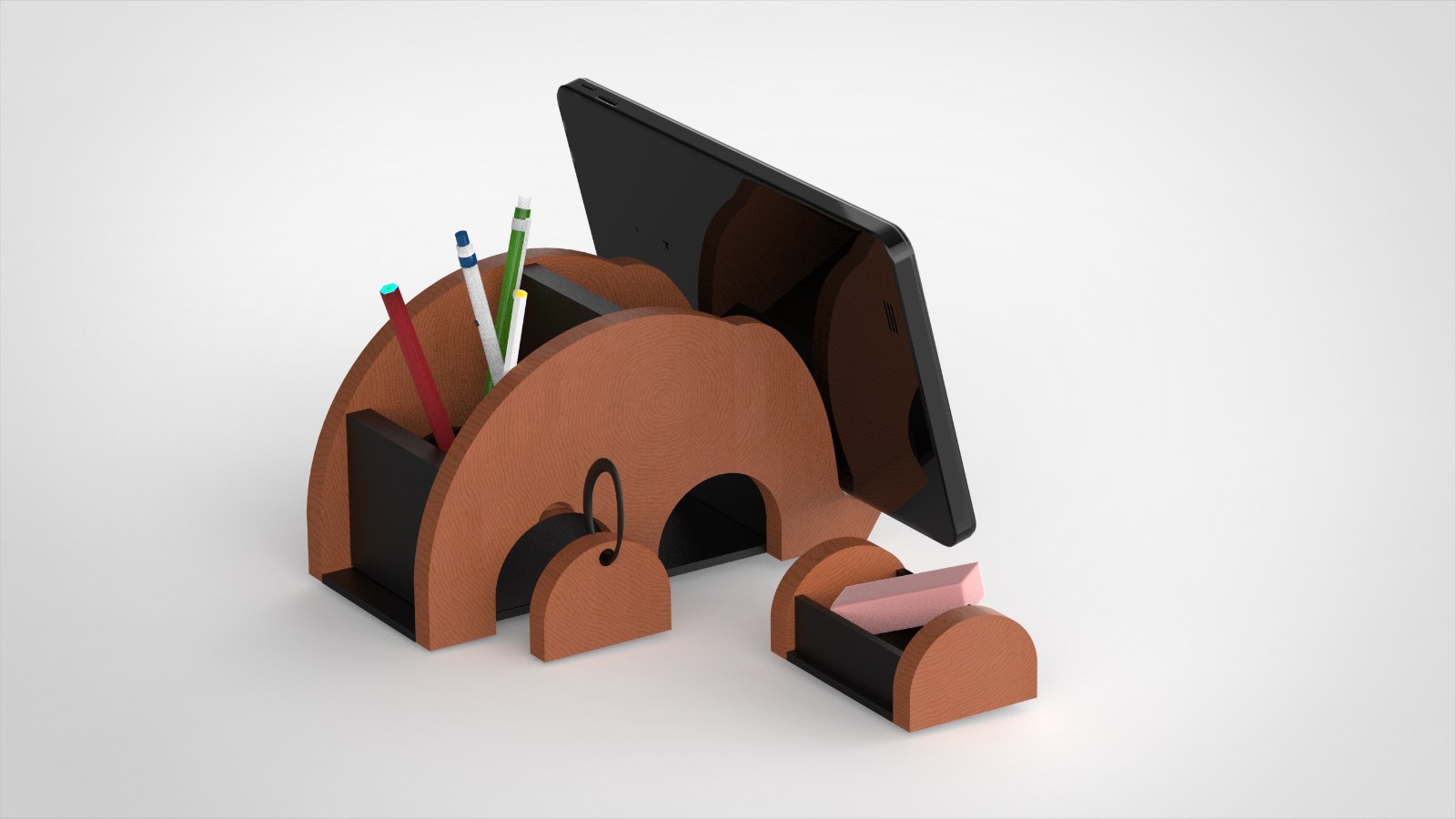
Dost render, three-quarter view, loaded
All four functions in use, pencils, tablet, eraser in the drawer, keychain at the ear
Dost render, reverse three-quarter view
Reverse view, drawer travel and the open underside of the body
06
Cost

Bill of materials against the $0.70 ceiling

Costed at a 500-unit run on local workshop rates. All parts nest in one sheet layout, so keychain and stickers consume waste. Figures are indicative pending a supplier quote.

ItemSpecificationUSD
Sheet board3mm, single nested layout0.28
Veneer facingOuter faces, two side panels0.11
Interior paintMatt black, water-based, child-safe0.06
Adhesive & keychain eyeletPer unit0.07
Sticker sheetOne colour, die-cut0.05
Carton & labelKraft, flat-packed, one-colour print0.09
Landed cost$0.04 under ceiling; $0.34 gross margin at $1 retail0.66
07
Deliverables

Instructions and point-of-sale for a non-reading user

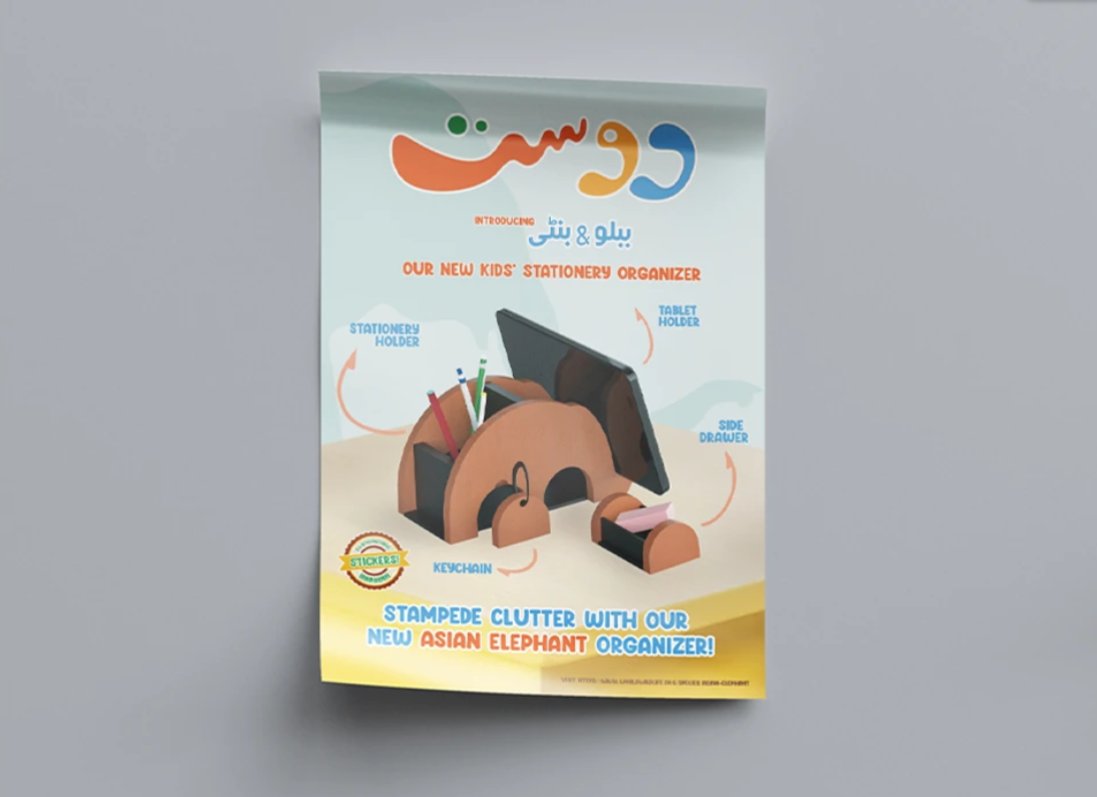
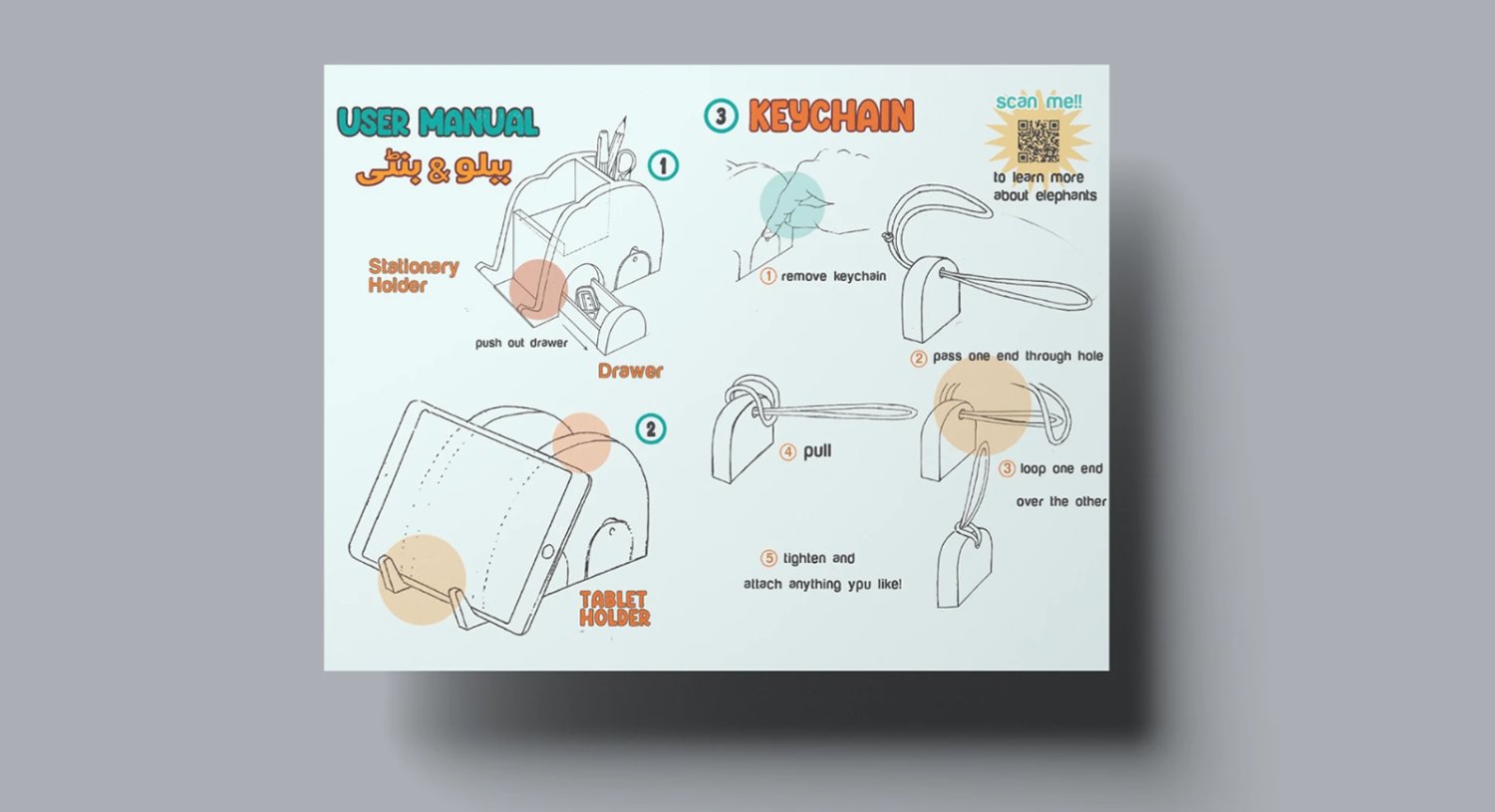
The brief required a manual and a single-page advertiser. Both are drawn rather than written: numbered line illustrations for the drawer, tablet slot and keychain knot, closing on a QR to the species page. The advertiser names each function around the product.
Dost single-page advertiser poster
Single-page advertiser, functions called out around the product
Dost user manual, illustrated steps
User manual, three illustrated sequences and a QR link to the Asian elephant page
08
The range

One species per organiser, each with its own function set

The Asian elephant is the silhouette of this first organiser, readable by the bump on its head, an educational easter egg for the kids using it. It is on the brink of extinction in South Asia, as reported by WWF, and market research turned up very little educational product at this price.

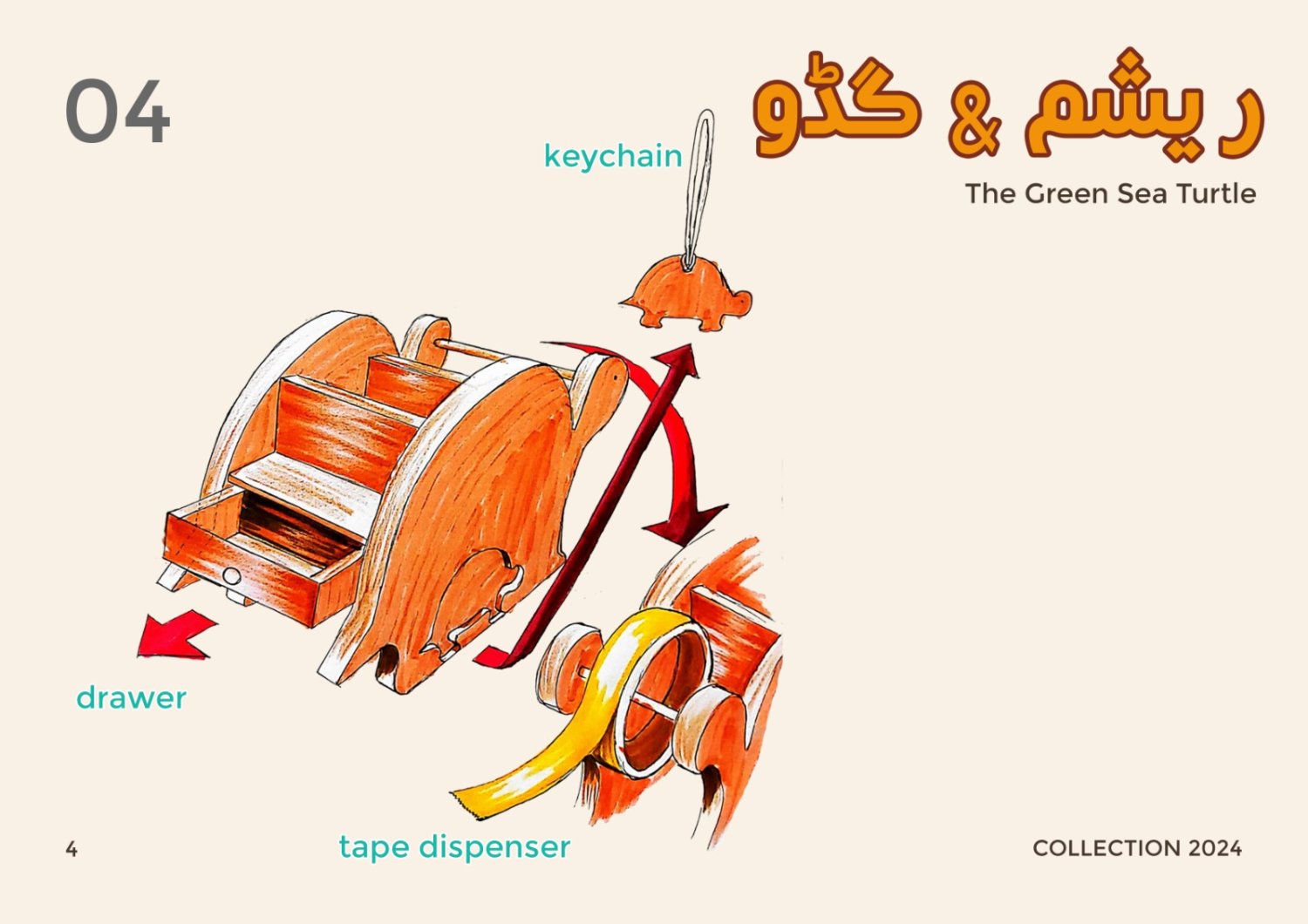
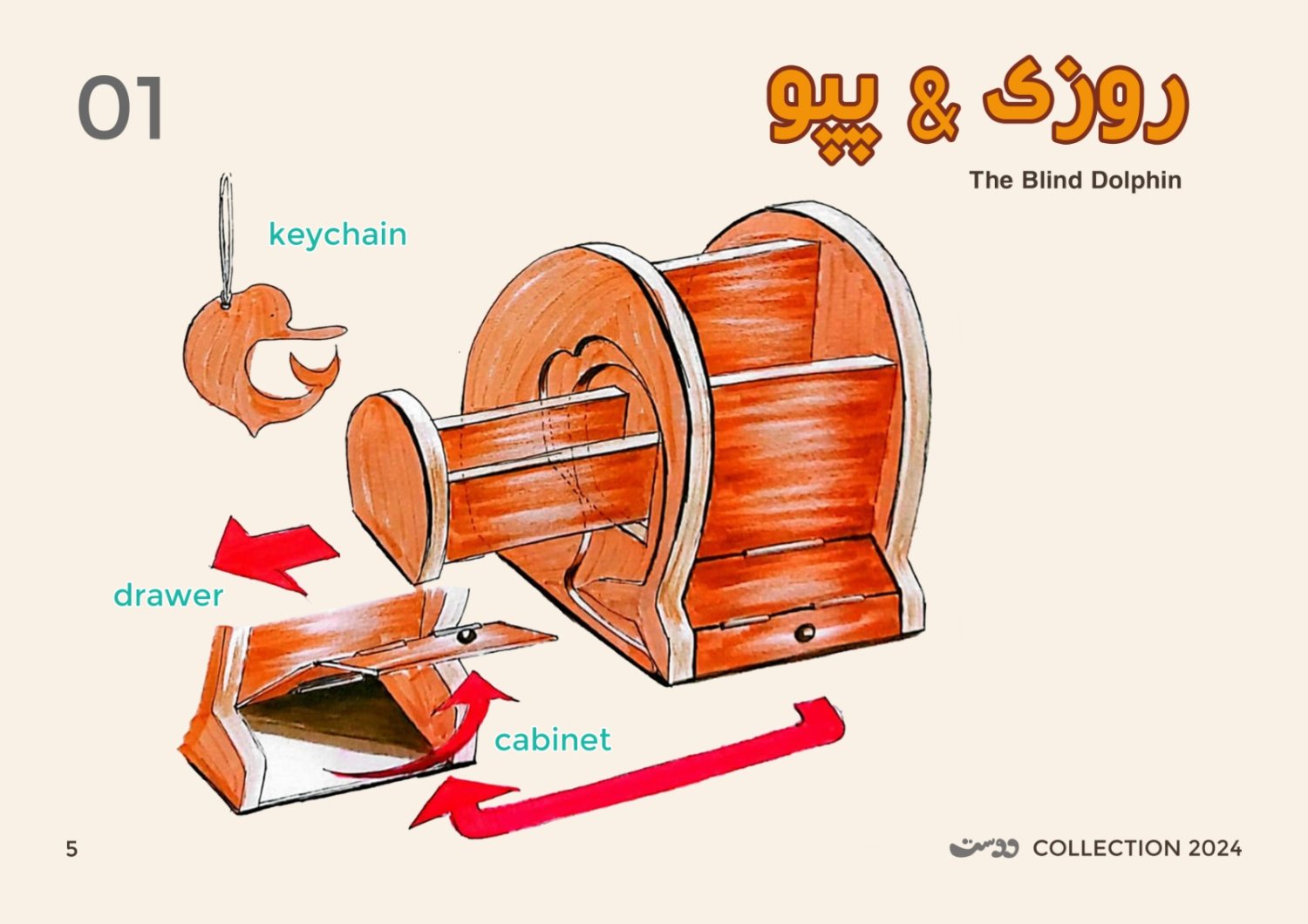
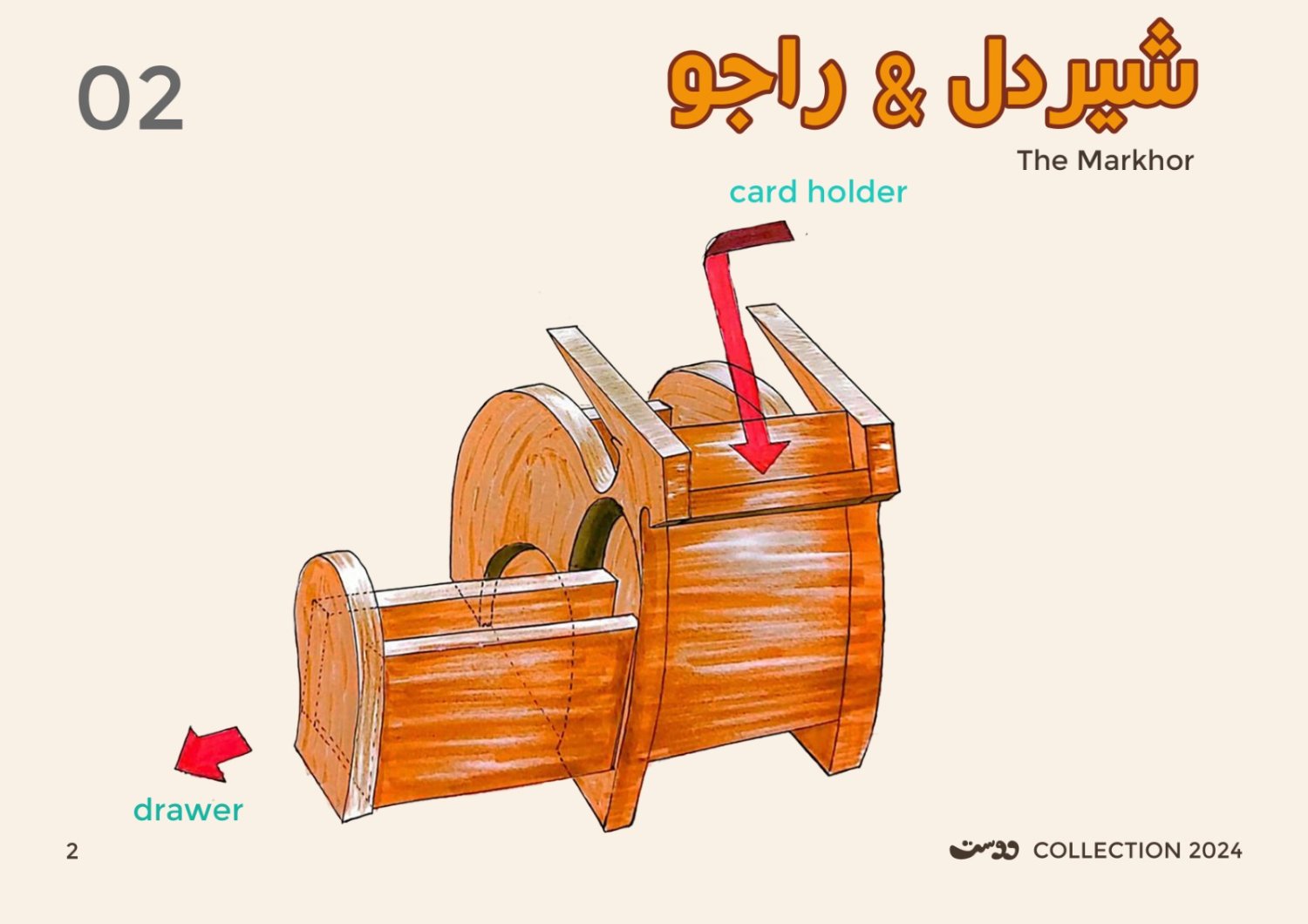
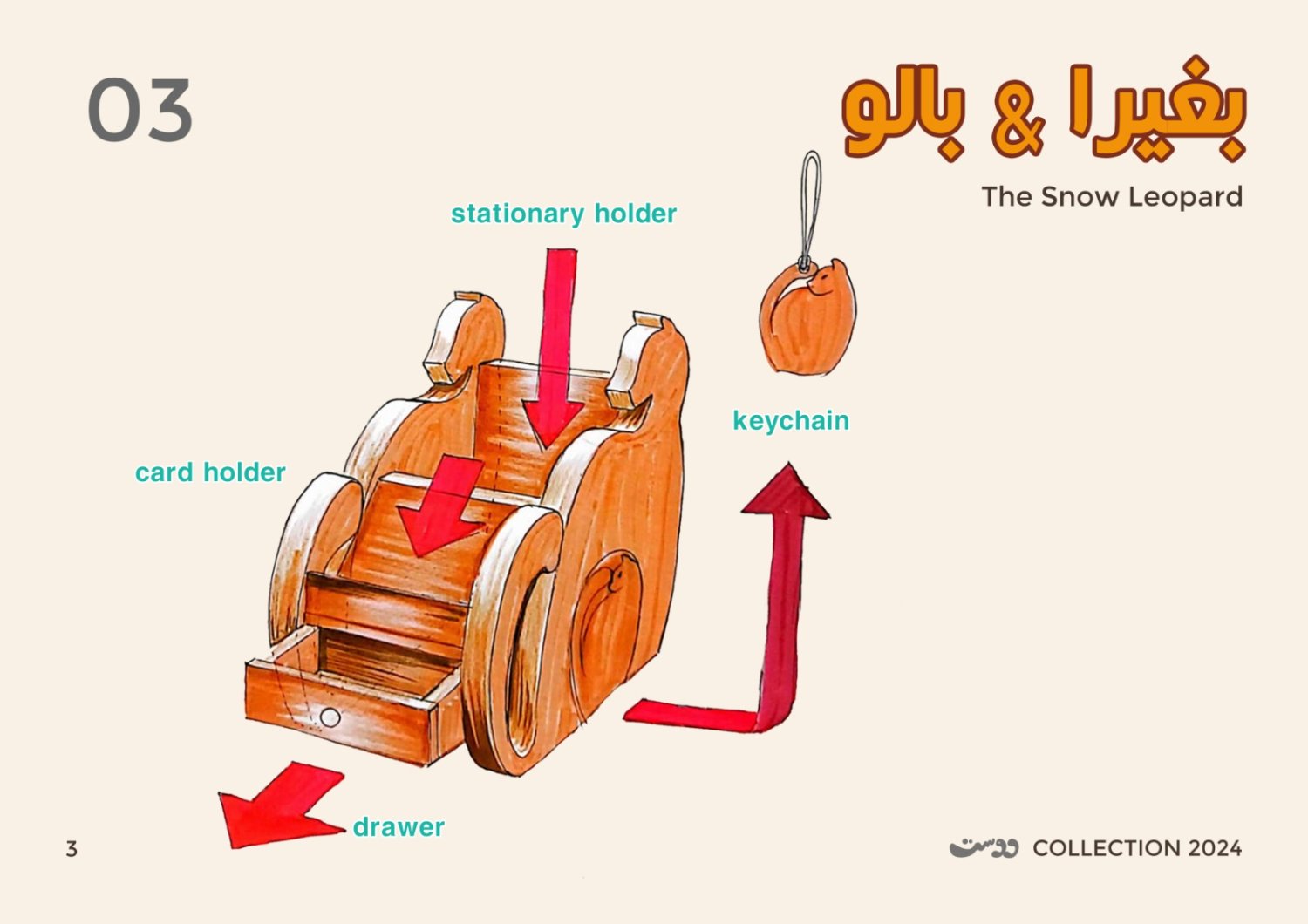
The line carries on into the other species affected: the Markhor, the Snow Leopard, the Green Sea Turtle and the Indus River Dolphin. Each animal keeps the two-panel construction but earns a different accessory, a card holder, a tape dispenser, a fold-out cabinet.
Sherdil and Rajo, the Markhor organiser
Sherdil & Rajo, the Markhor: drawer and card holder
Bagheera and Balu, the Snow Leopard organiser
Bagheera & Balu, the Snow Leopard: card holder, stationery well and keychain
Resham and Gaddu, the Green Sea Turtle organiser
Resham & Gaddu, the Green Sea Turtle: drawer, keychain and tape dispenser
Rozi and Pippo, the Indus River Dolphin organiser
Rozi & Pippo, the Indus River Dolphin: drawer and fold-out cabinet
09
Outcome

Delivered at $0.66, four cents inside the ceiling

Five weeks from brief to jury: a finished prototype with all four functions operating, costed at $0.66 per unit, delivered with the technical drawing, user manual, advertiser and brand system.

It was also our first run at batch manufacturing, which is the part that honours the “industrial” in industrial design. Ten units were made and sold through the One Dollar Store at Centaurus Mall, Islamabad, landed at PKR 192.5 so the rest of the dollar stayed as margin.
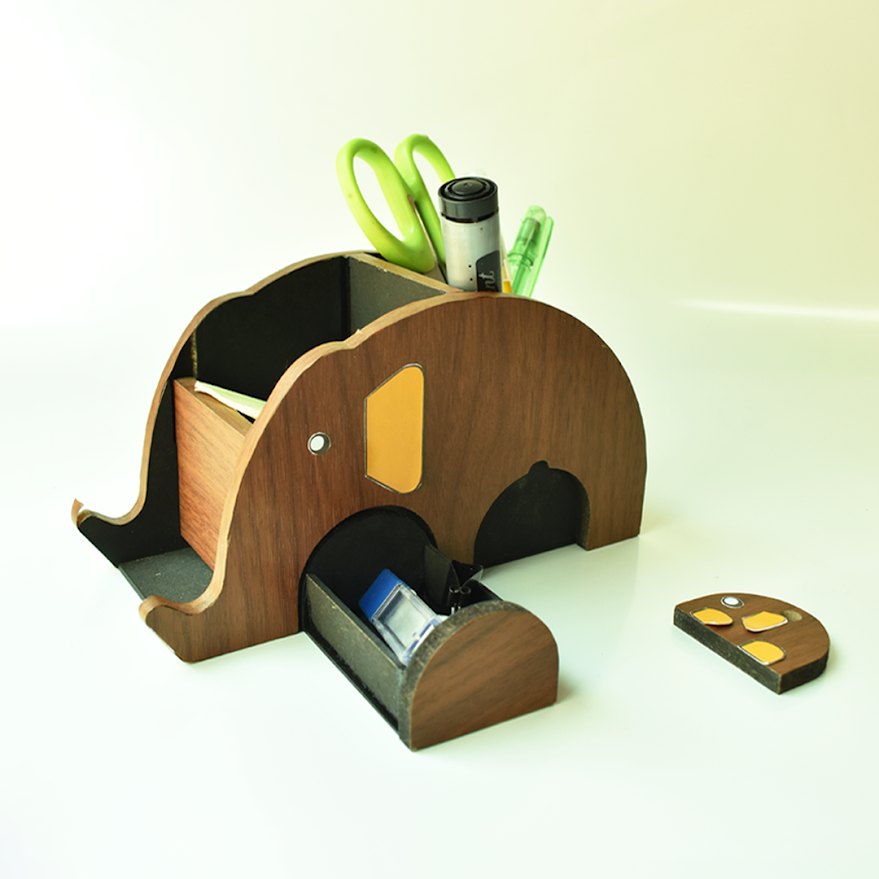
Finished Dost prototype in walnut veneer, drawer open, keychain alongside
The finished unit: stationery well loaded, drawer out, keychain detached
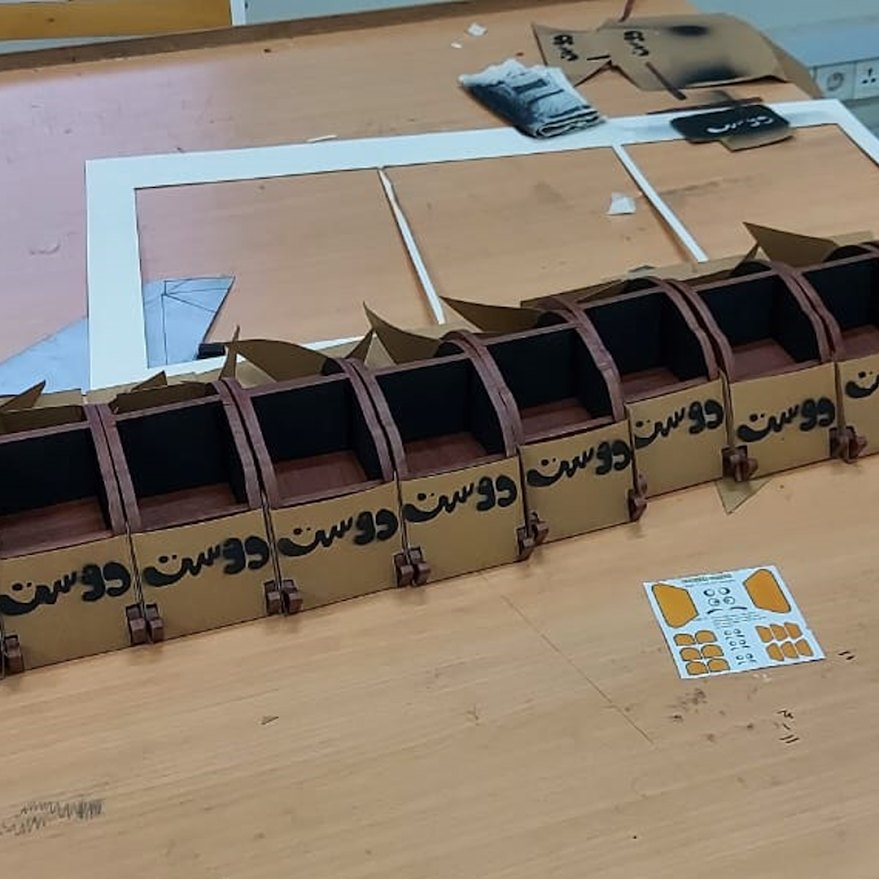
Batch of Dost units in production on the bench with sticker sheets
Batch manufacturing on the bench, bodies lined up with their sticker sheets

Designing to a price is a part-count and material problem before it is a form problem.

Dost, final 3D model, reverse three-quarter view with the drawer withdrawn
Final 3D model, drawer withdrawn and keychain detached from the body
View BlossomBack to Projects