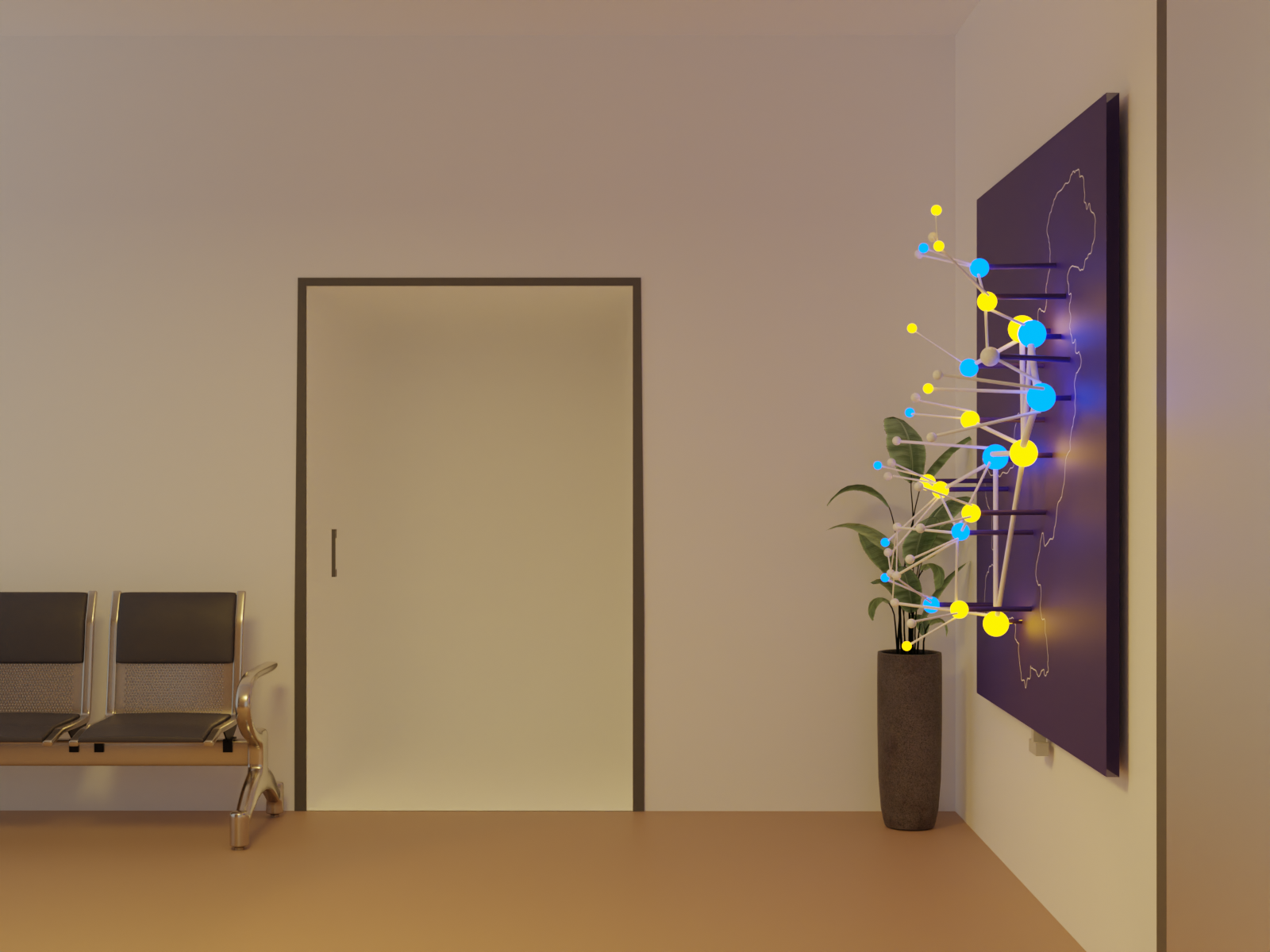
A corridor where people queue with nothing on the walls, and a brief set in 2050. So: not a light fitting, but a piece of wall that grows as the network does.
Six methods, one week, three findings that survived.
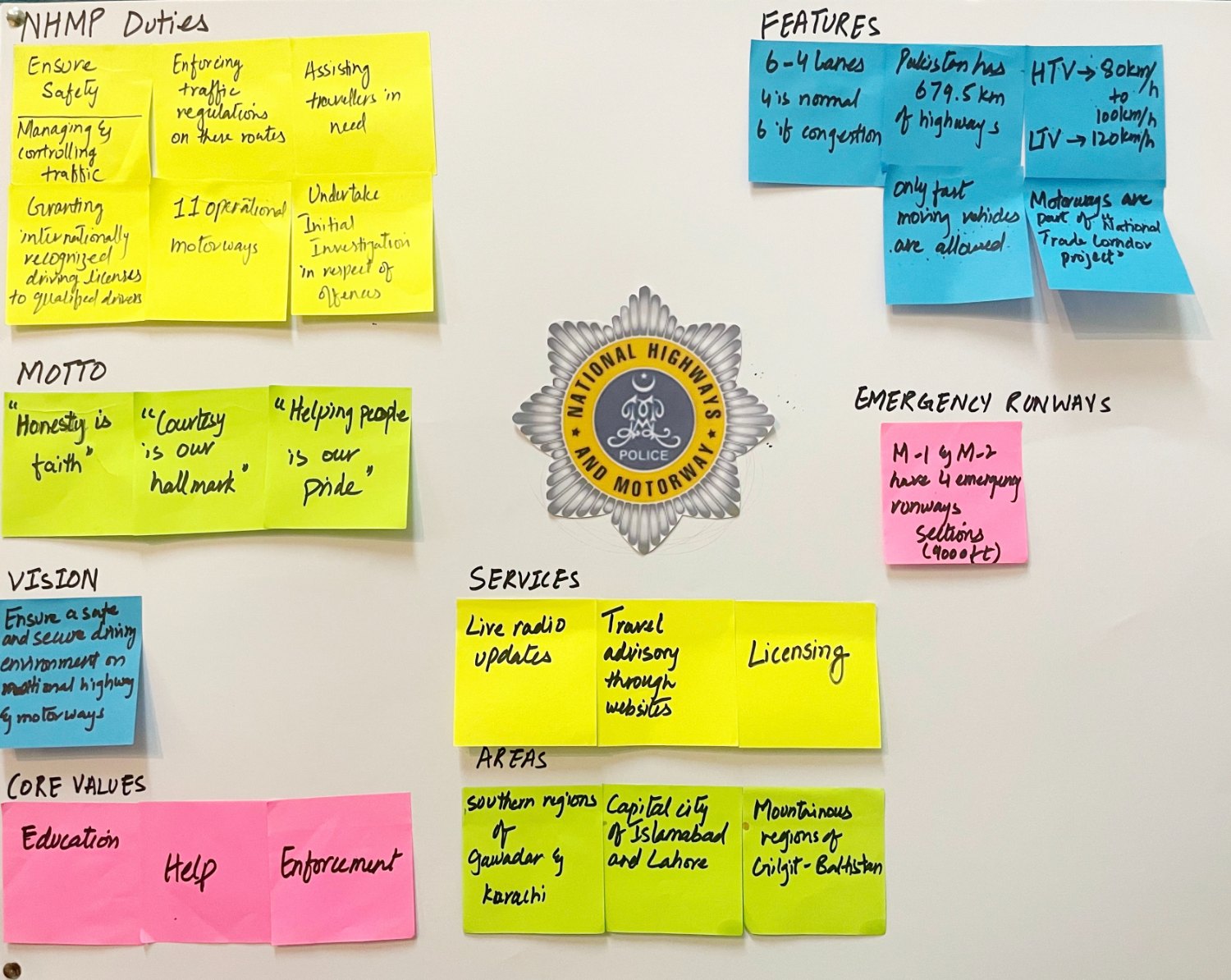
Renewals and first tests split at the token desk. Both spend their longest stretch waiting.
The corridor already had framed motorway photographs, and a scale road model sat near the lobby. People stop at the model, not the frames.
So: the wall between them, movement as the difference. Neon marks where it went.
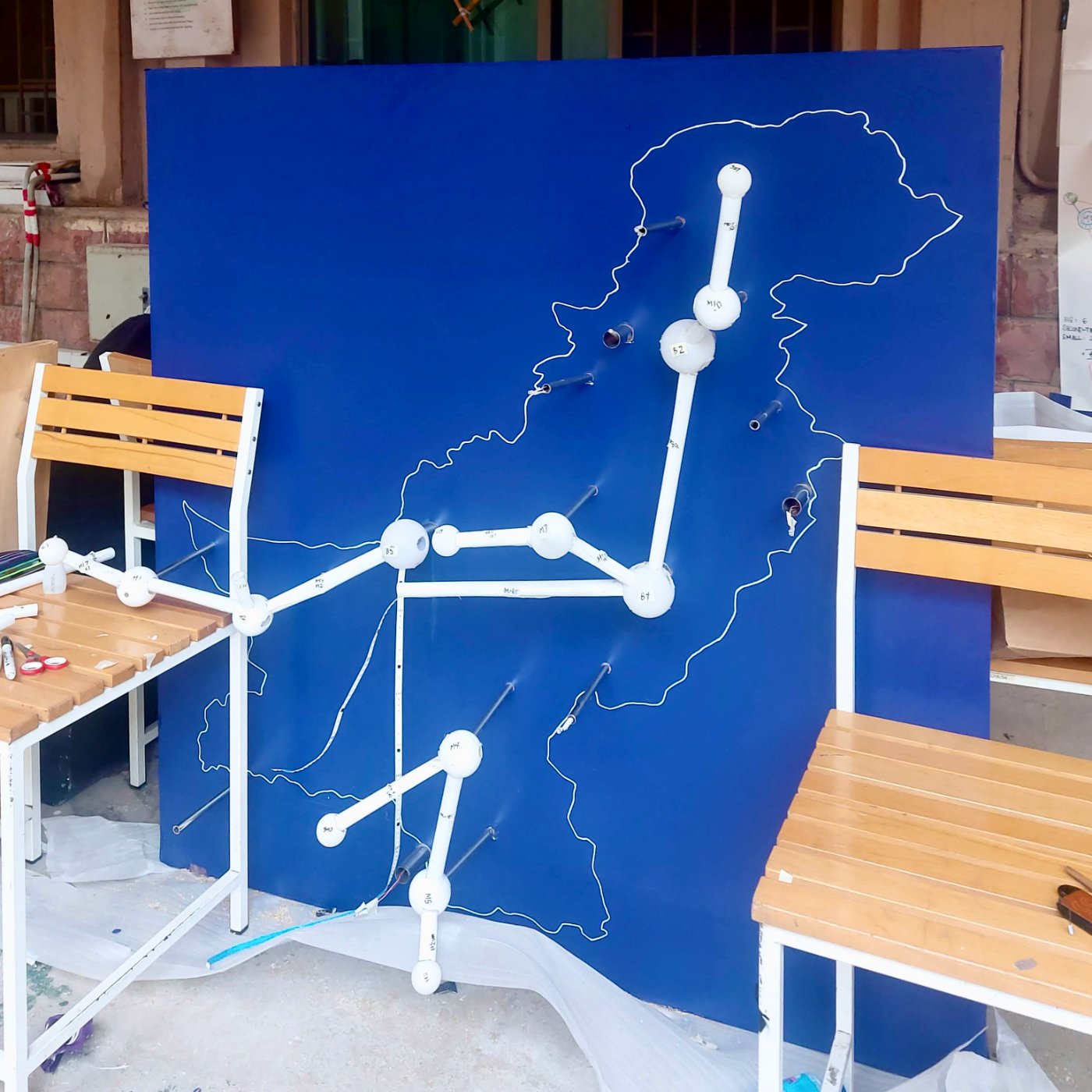
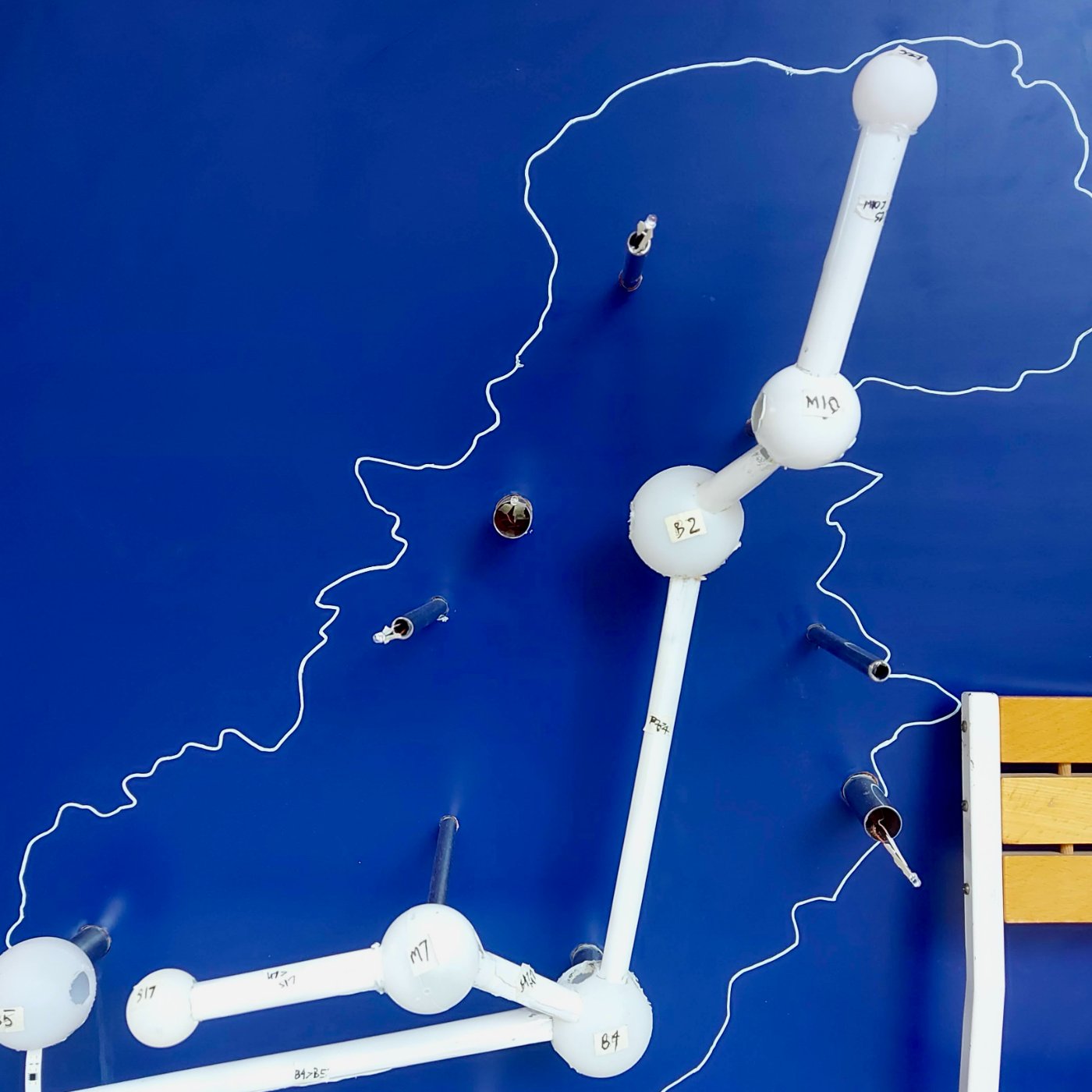
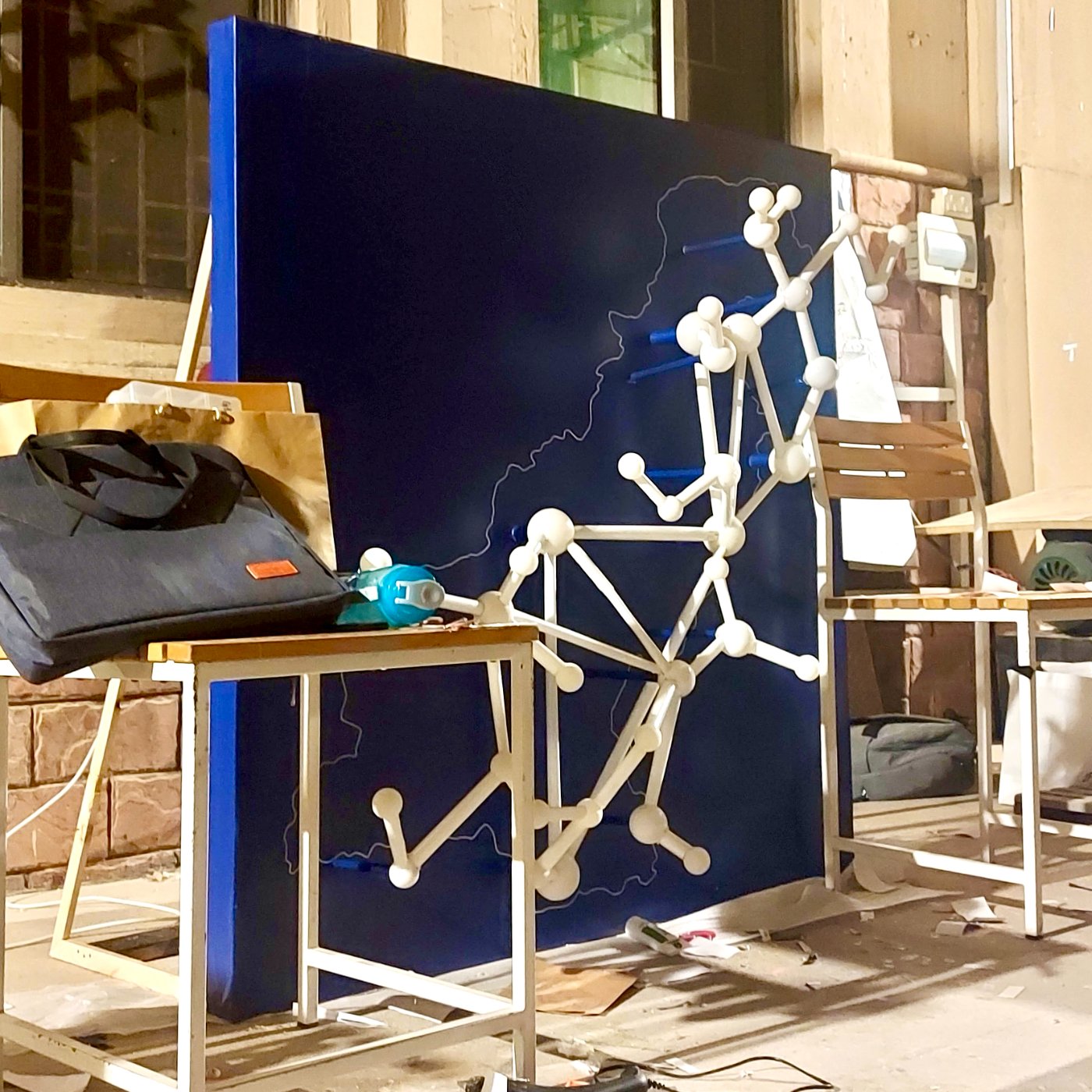
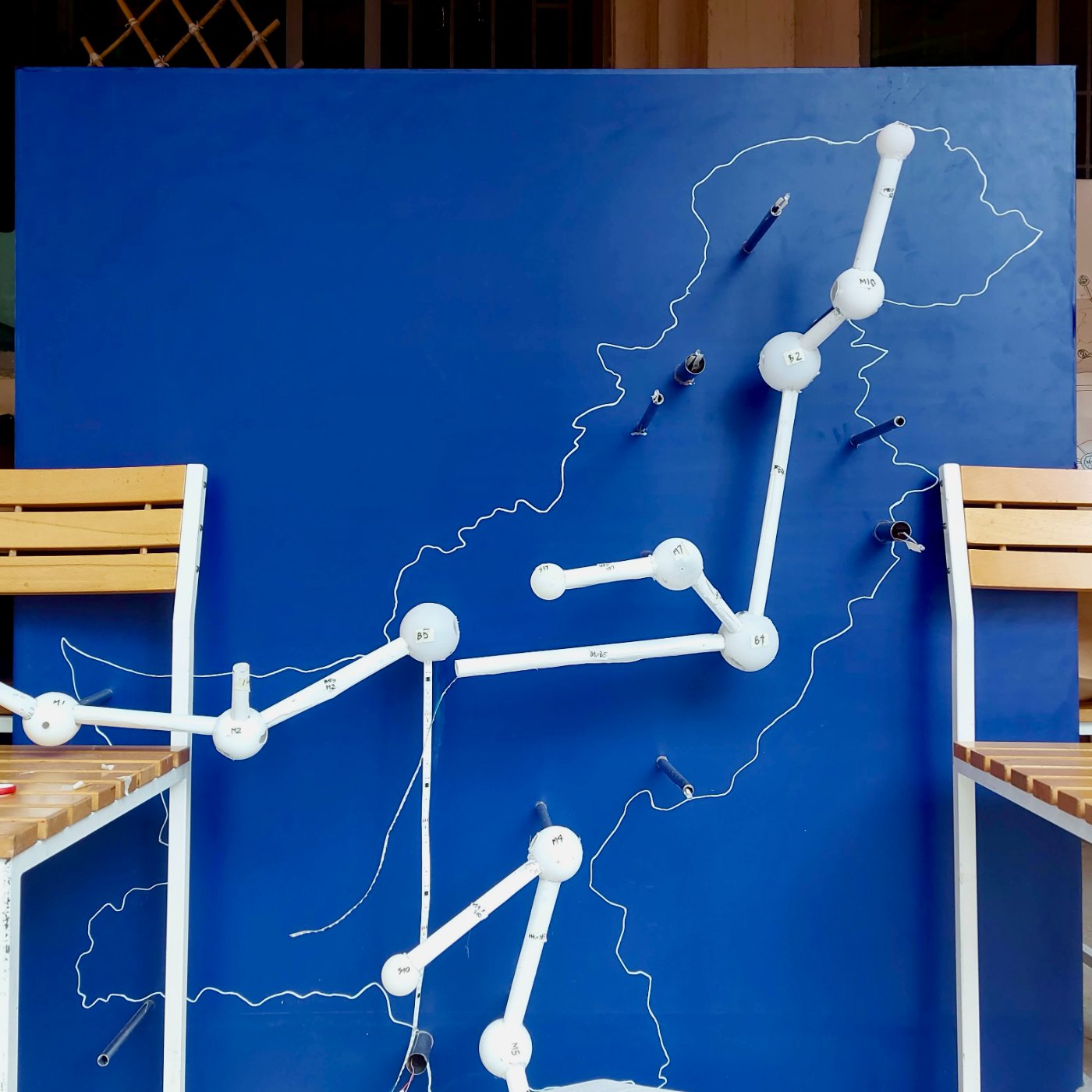
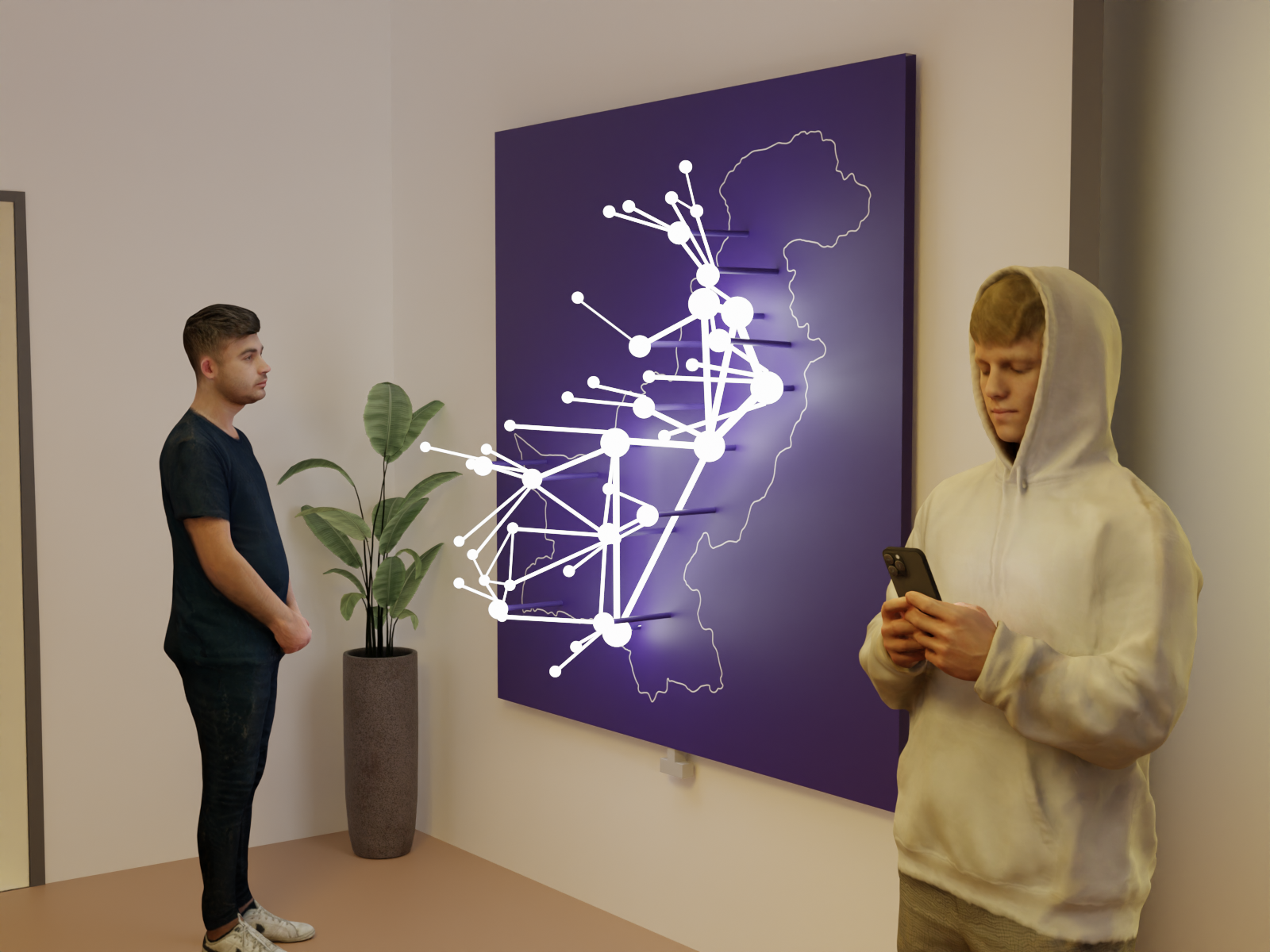
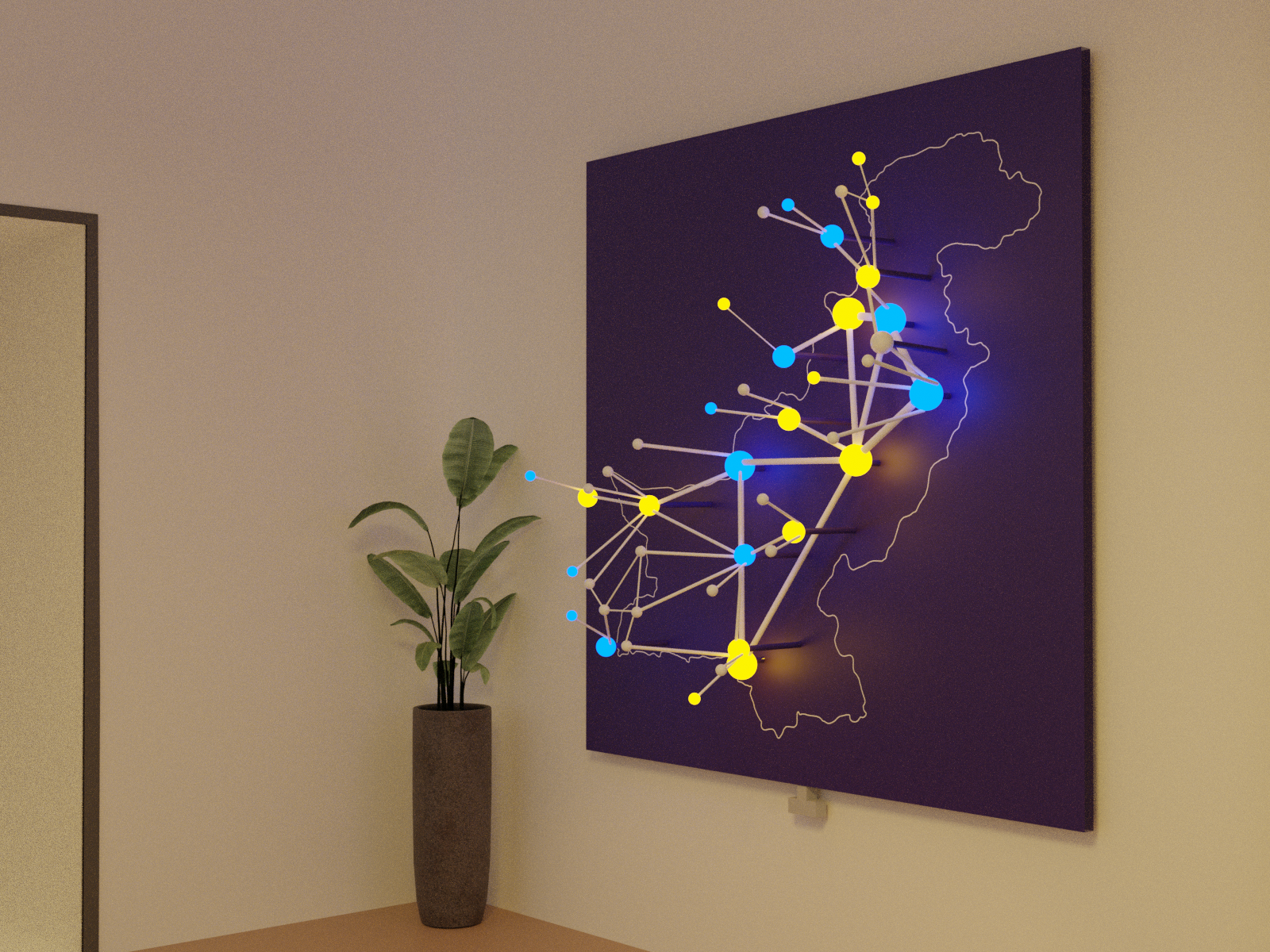
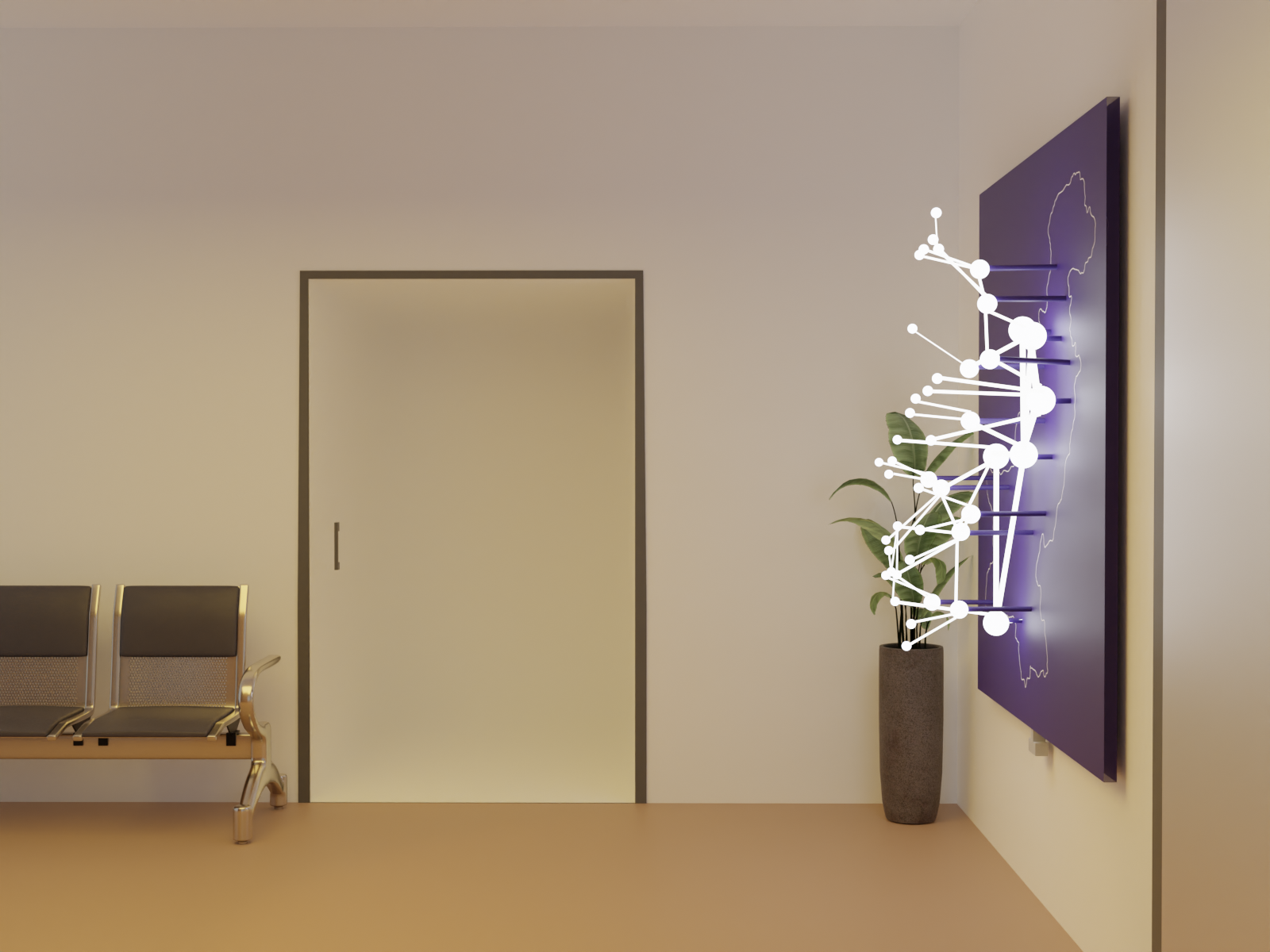
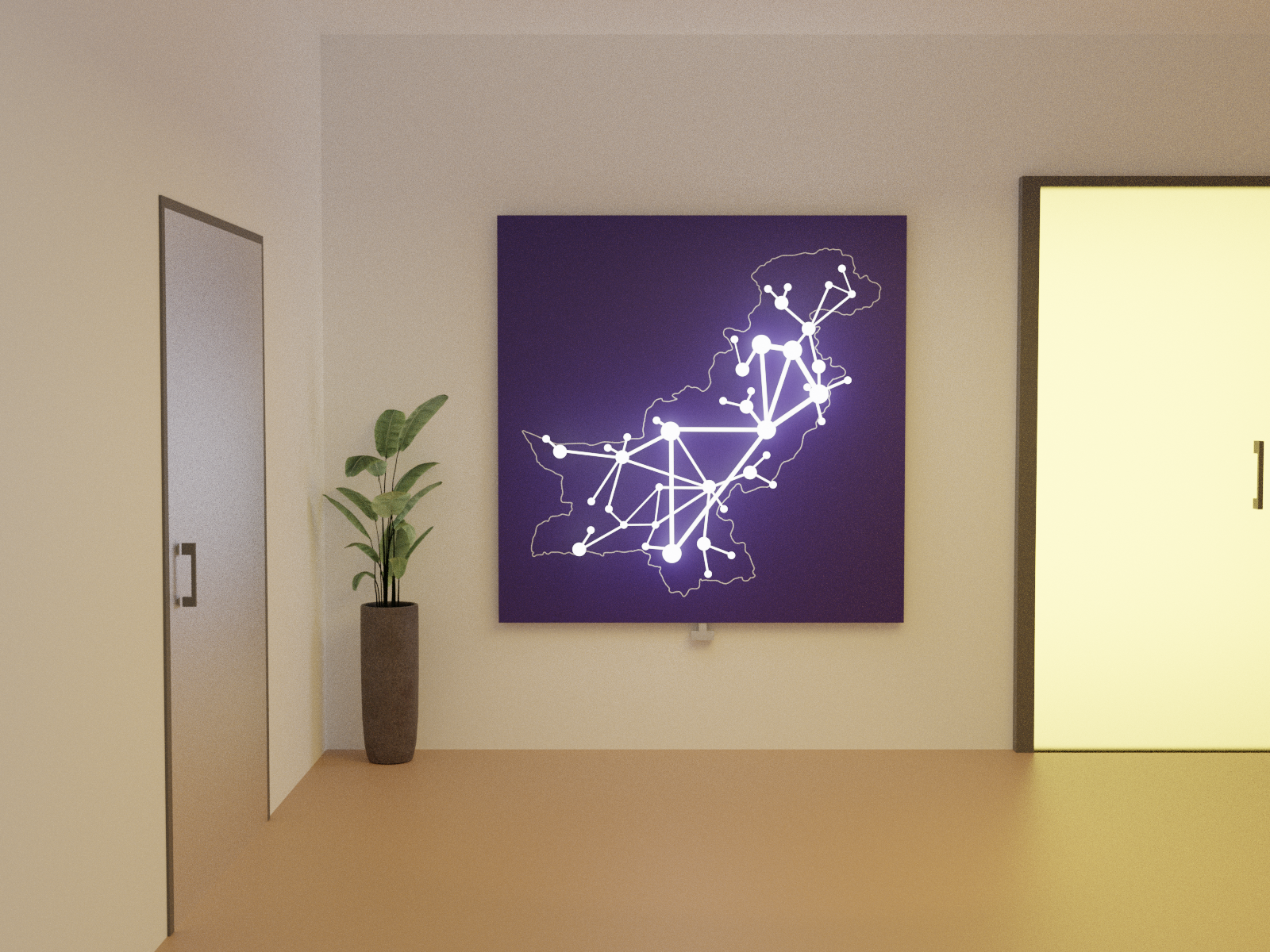
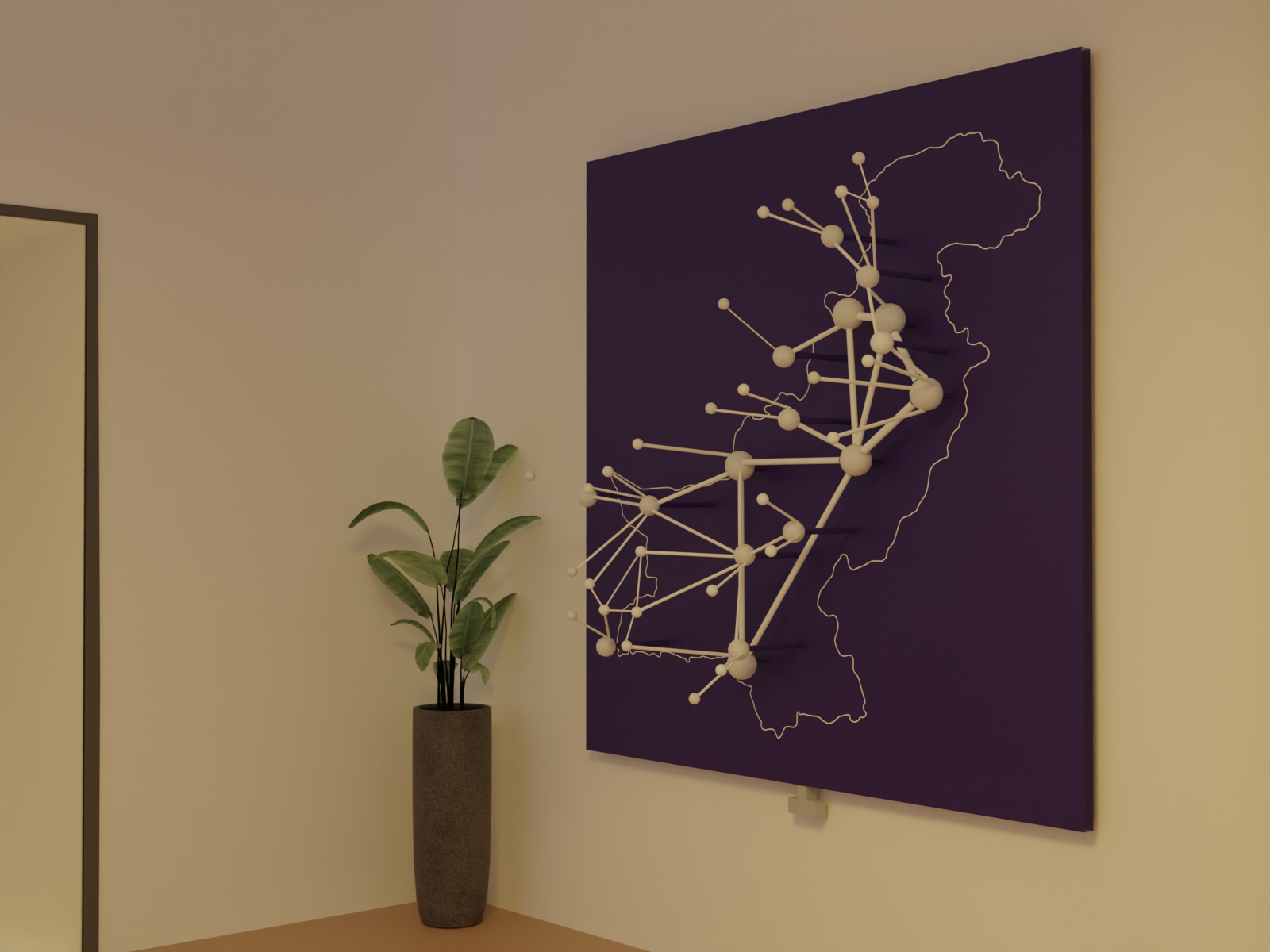
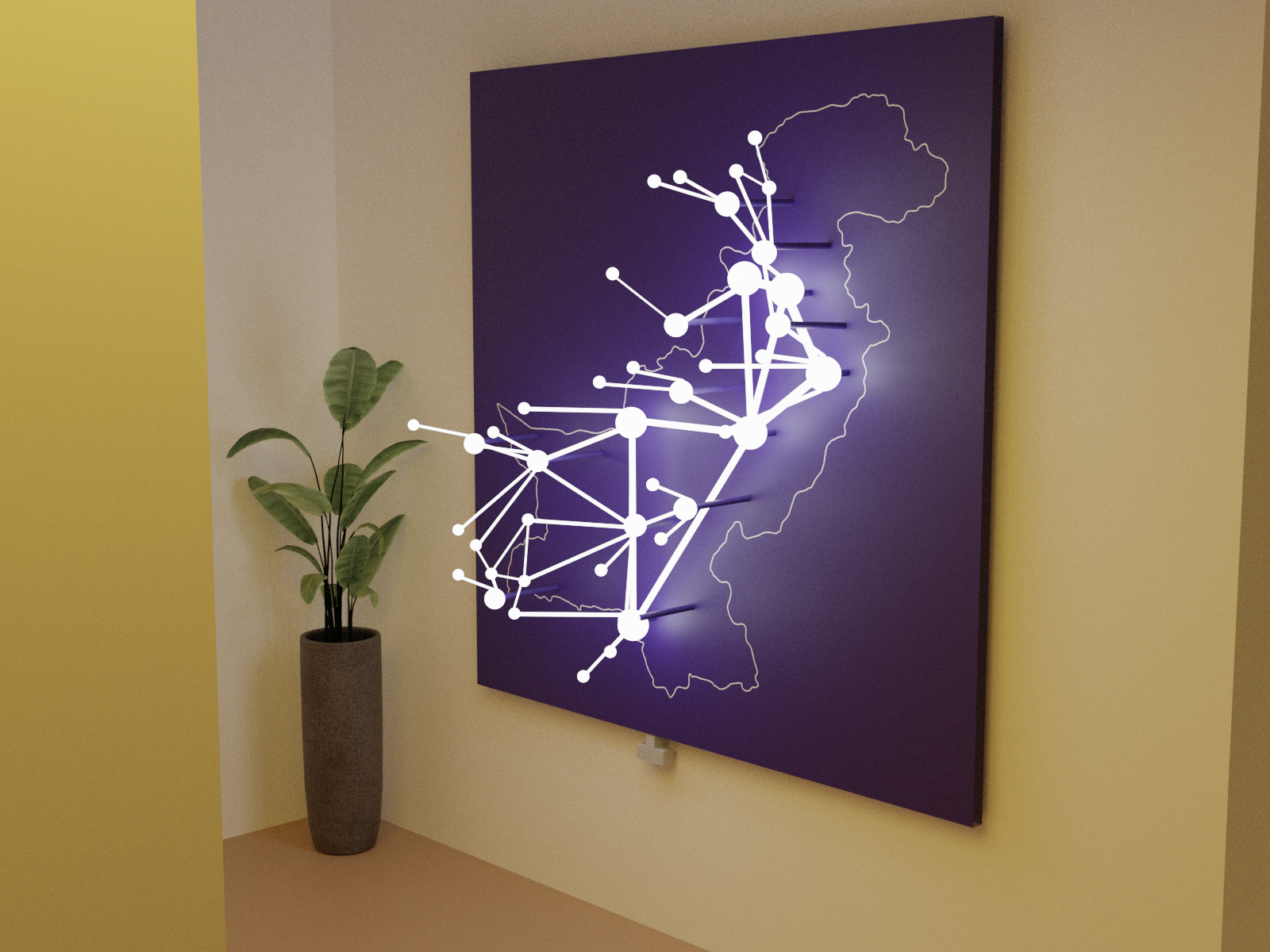
Pakistan is etched once, as a thin outline. Everything that glows sits inside it: spheres for cities, rods for the motorways between them, sphere size following the weight of the city. The network keeps growing, so the composition spills past the border on the left.
Five words, then flat digital maps: how much has to glow before the shape reads as Pakistan, how little before it reads as growth.
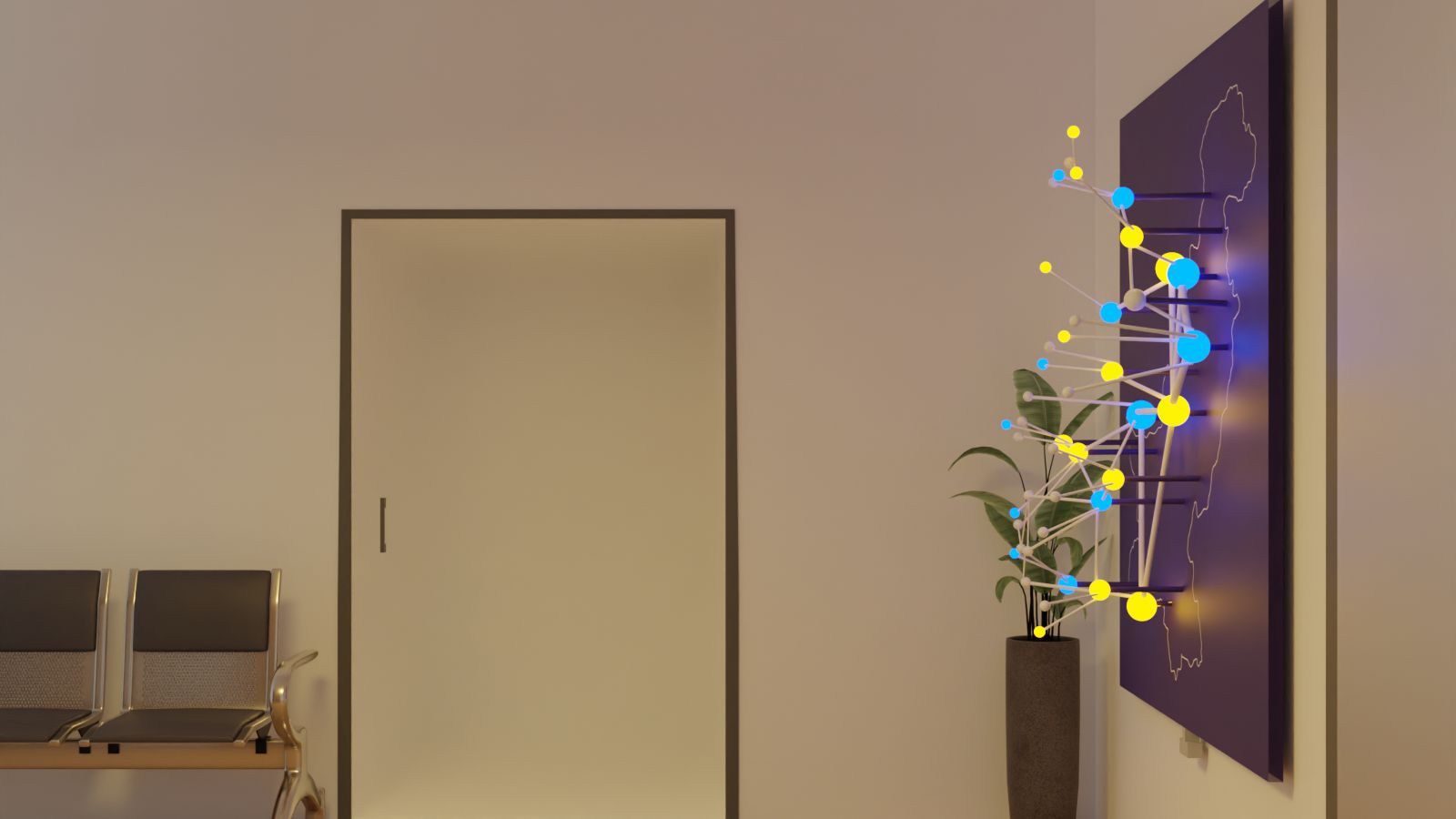
The nodes sit at four depths off the face. Head on, it reads as a map; from down the corridor it becomes a lattice standing off the wall. That is what catches people from the doorway. Three materials do the whole job: a plywood frame painted NHMP blue, polycarbonate pipes for the motorways, and illuminating spheres for the cities, 54 by 54 inches, only two inches deep.
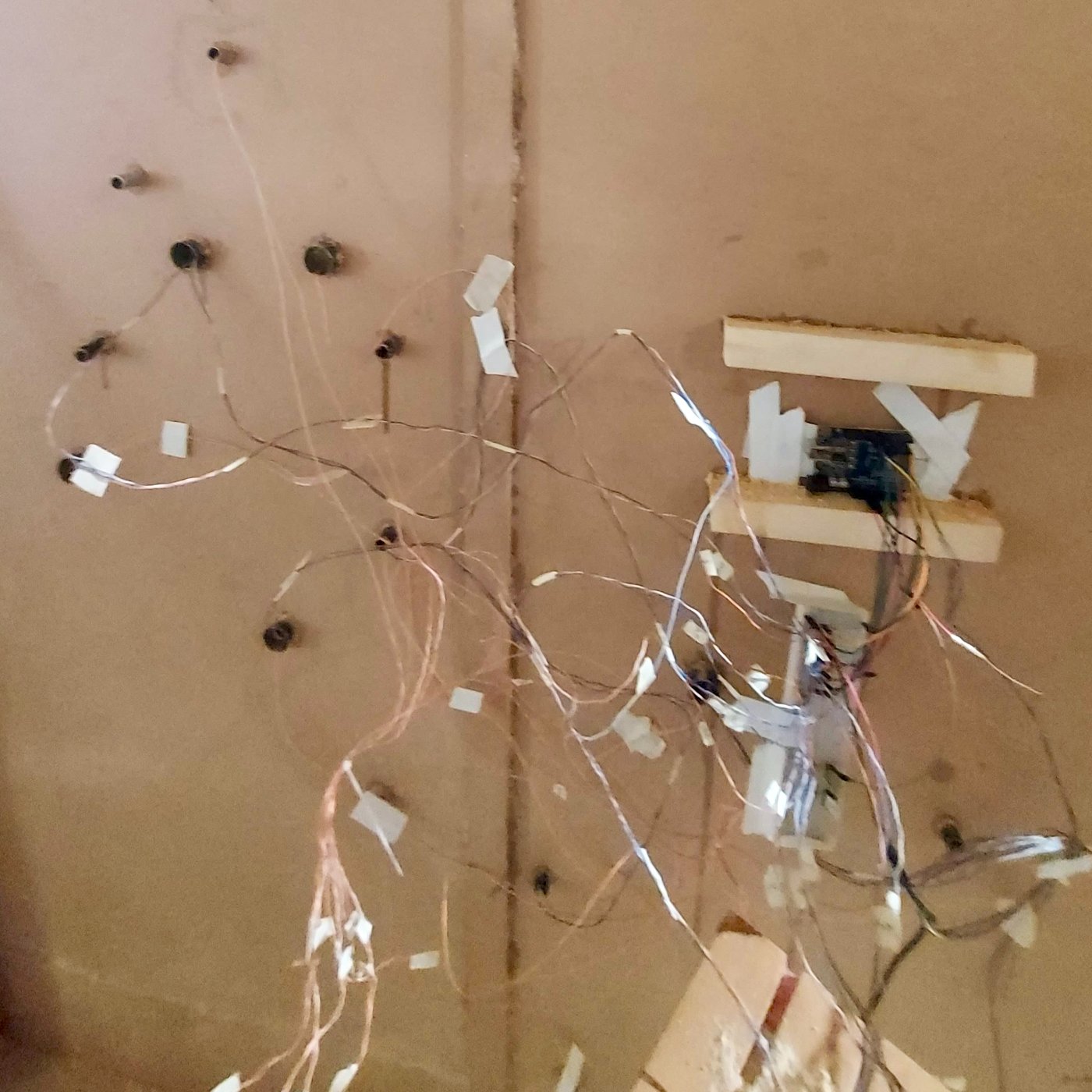
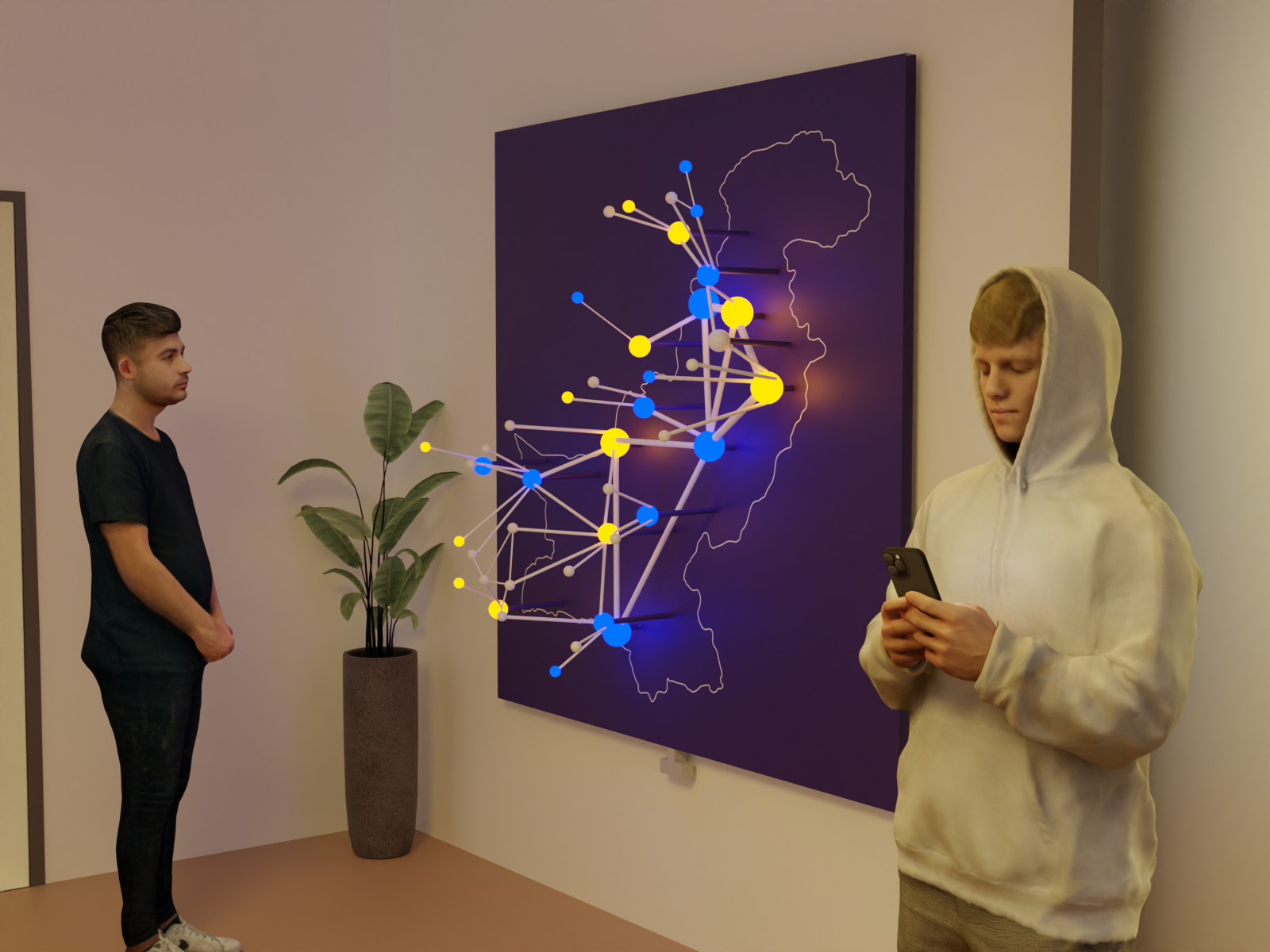
An Arduino drives the strips; an ultrasonic sensor reads how far away the nearest person is. Nothing else is needed to make the piece feel alive.
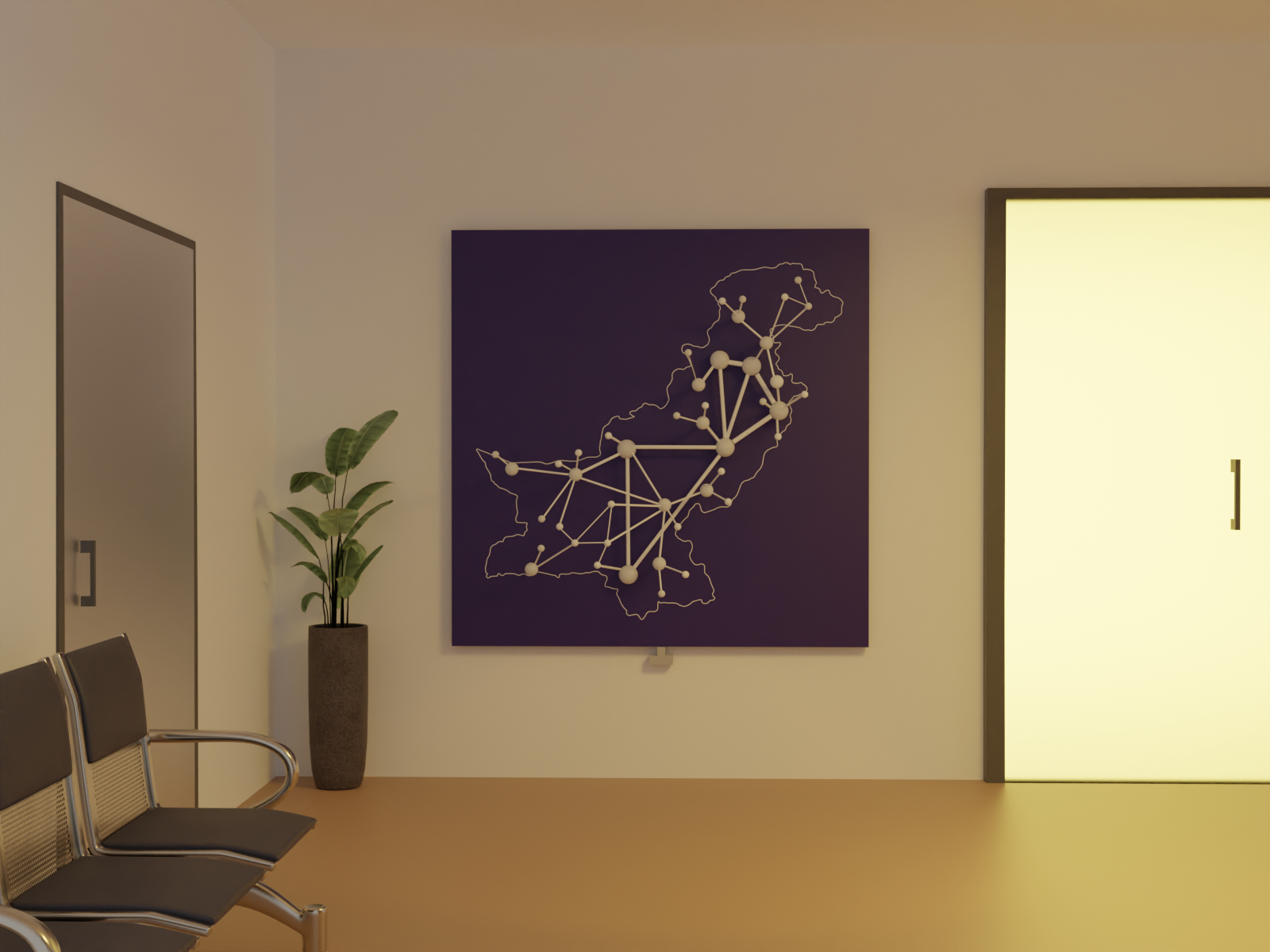
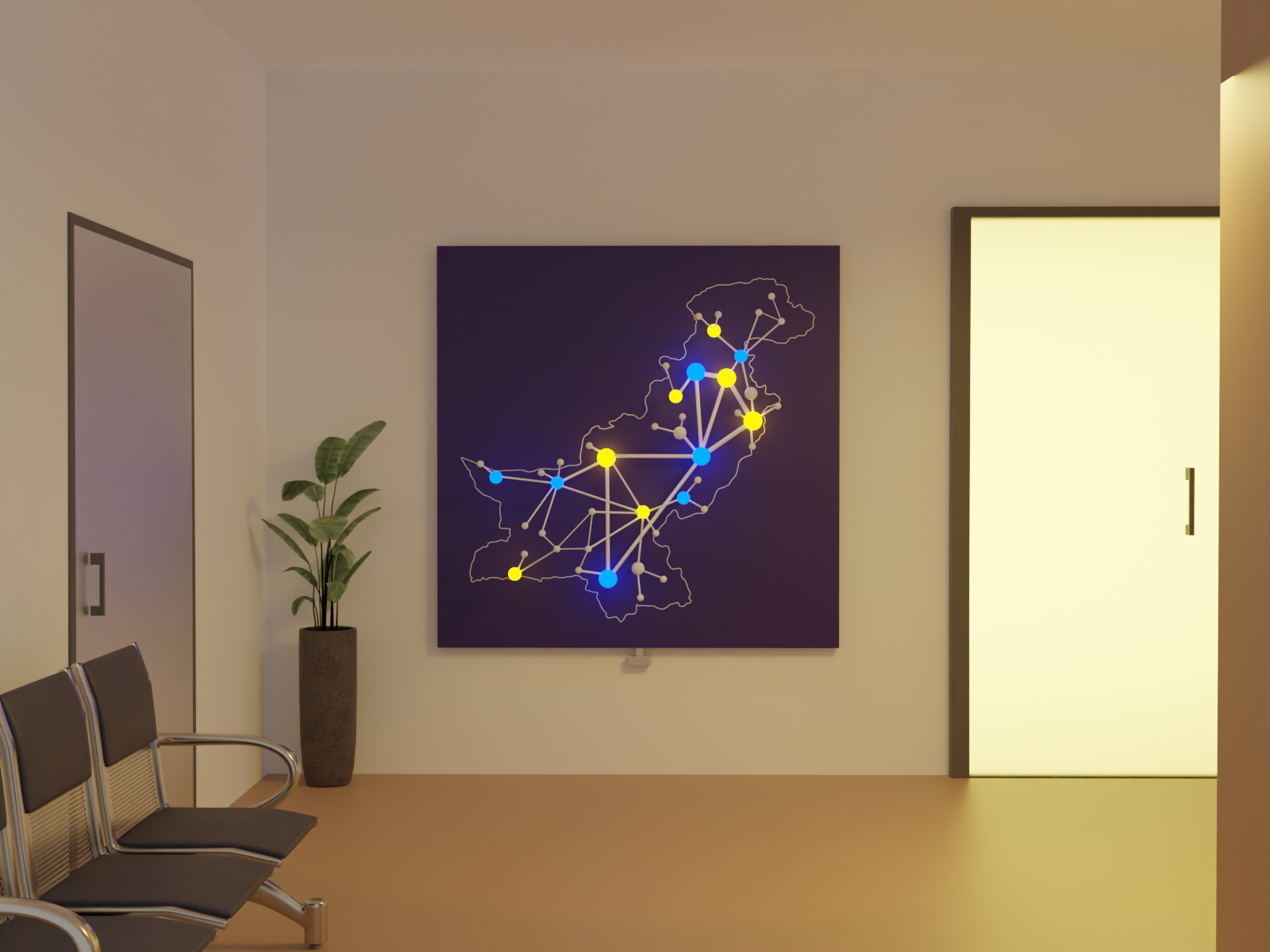
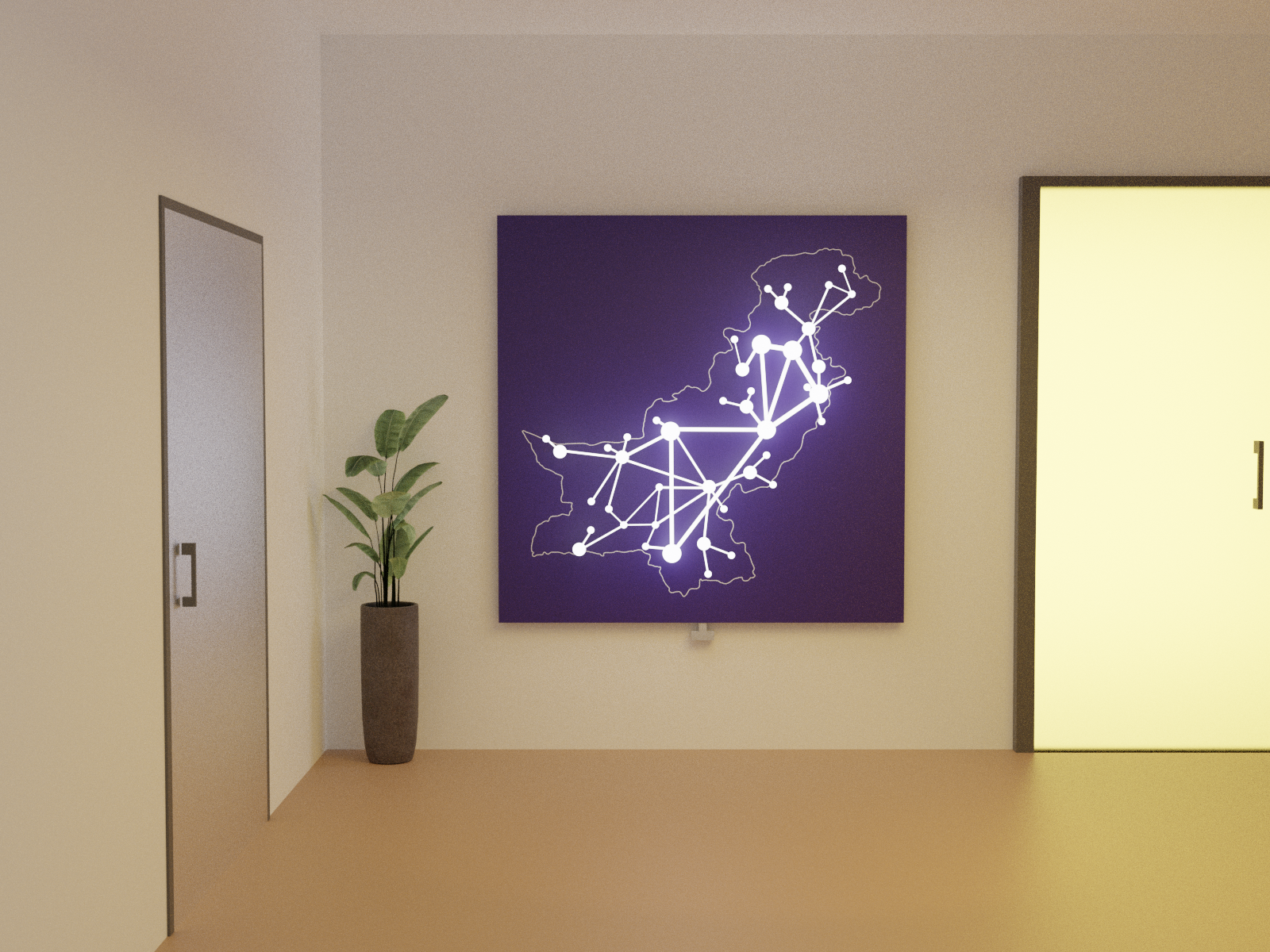
My group member, Hafsa, drew the storyboard before modelling anything: a visitor catches the glow at the edge of vision, walks over, and the piece switches from blinking to a continuous white run, close enough to trace a route with a finger. Six scenes and a transition loop were storyboarded in total, so the light never has to be explained to anyone waiting.
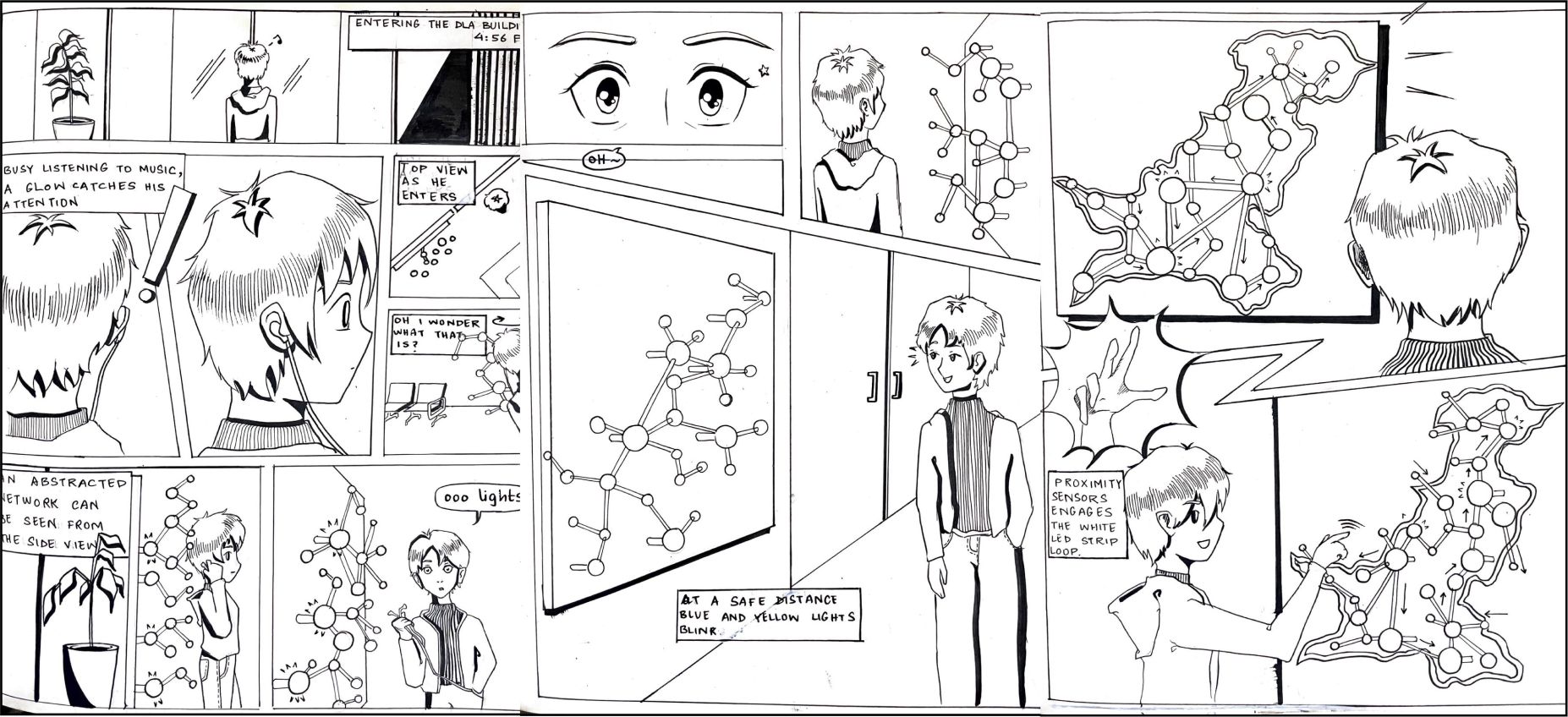
Nothing here is ambient. Every change of light is triggered by where the nearest person is standing, and every state means something: dark is daytime, blue and yellow is the force at rest, white is the network being read.
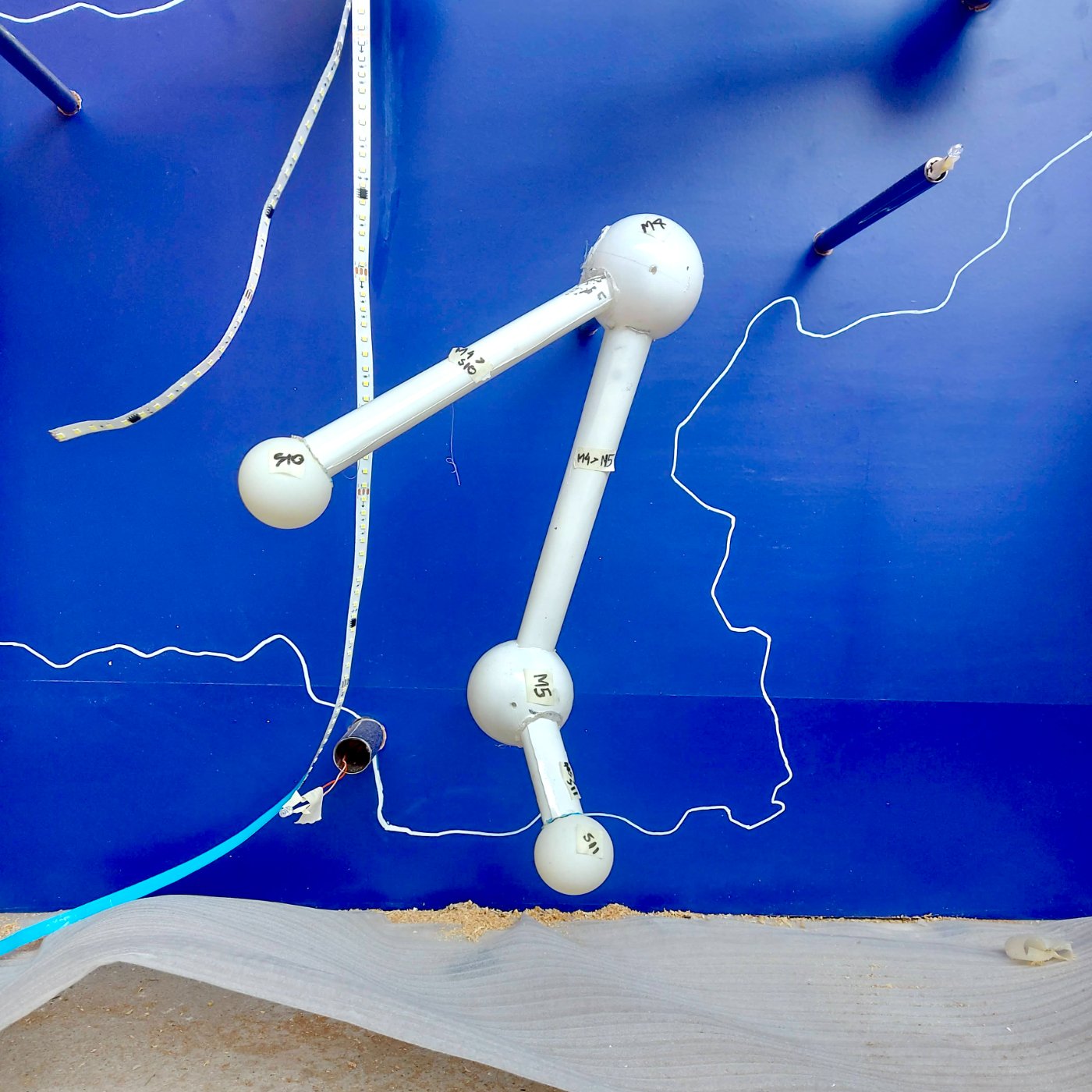
A back box takes the electronics; the front panel is drilled for every node so the rods locate themselves. Four sphere diameters, a handful of rod lengths, the whole network is a kit of repeated parts.
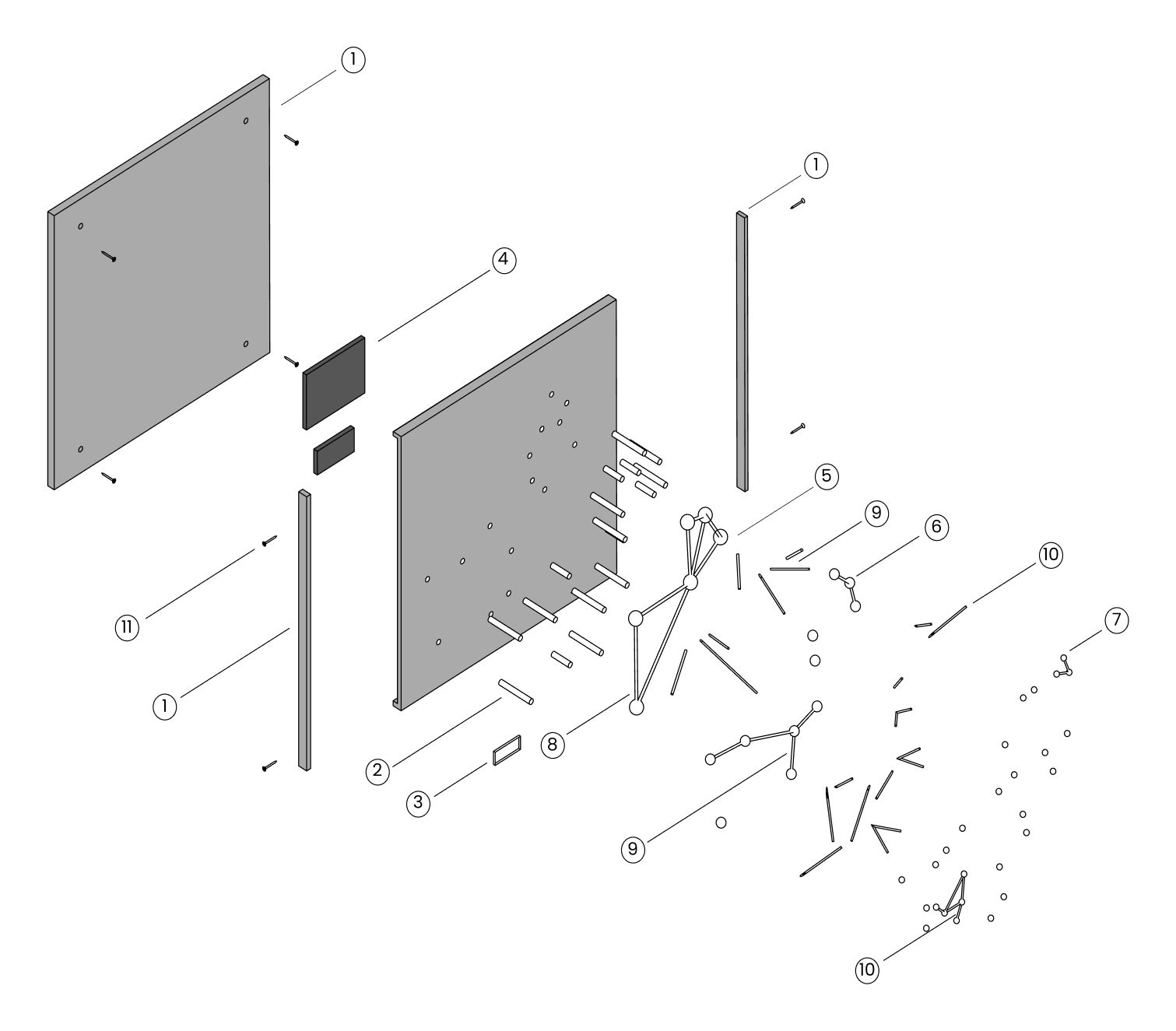
Panel painted, every node drilled and labelled, strips threaded from the back. The whole network is a kit of repeated parts, so it went up in the order the map is read.