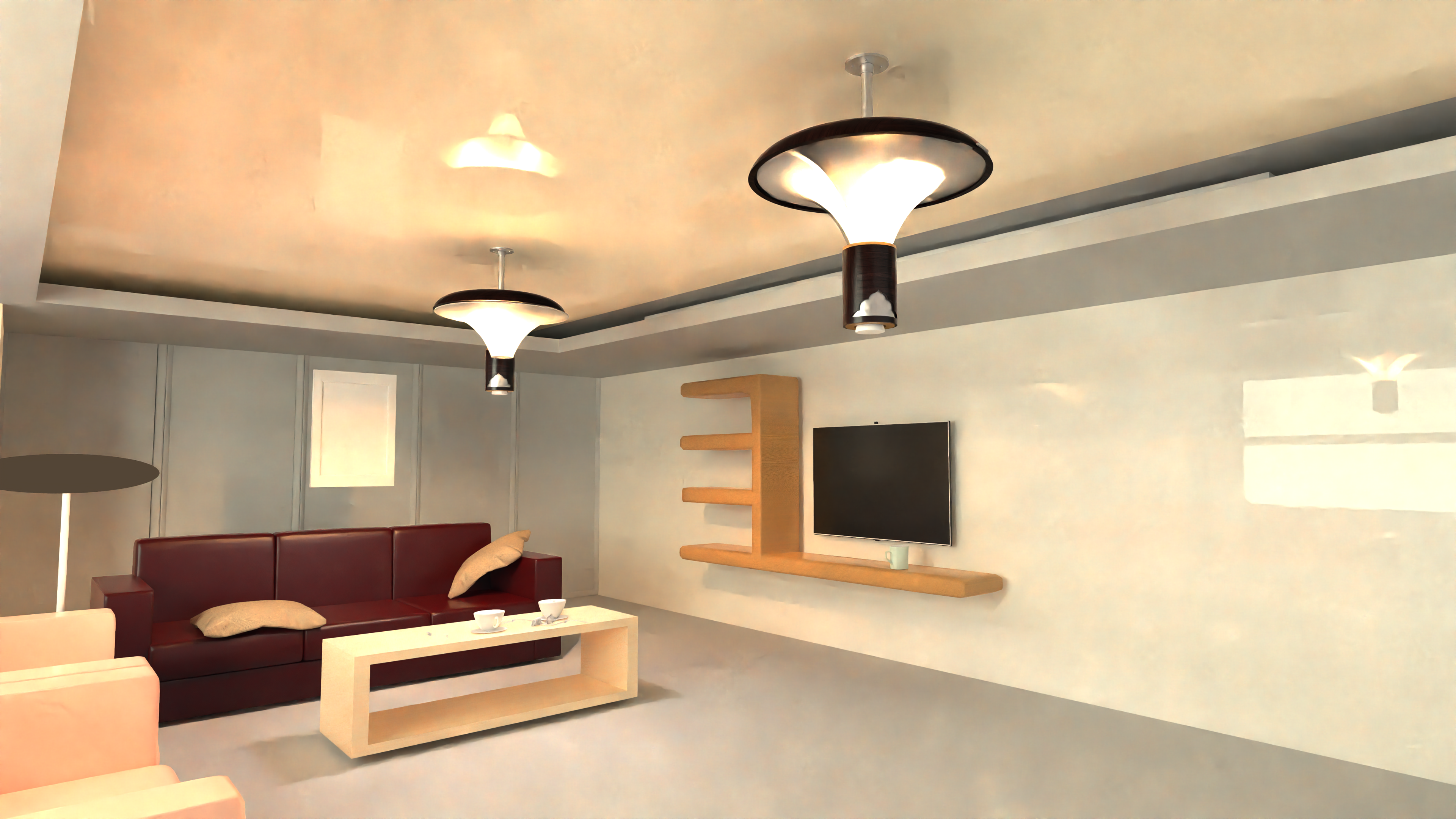
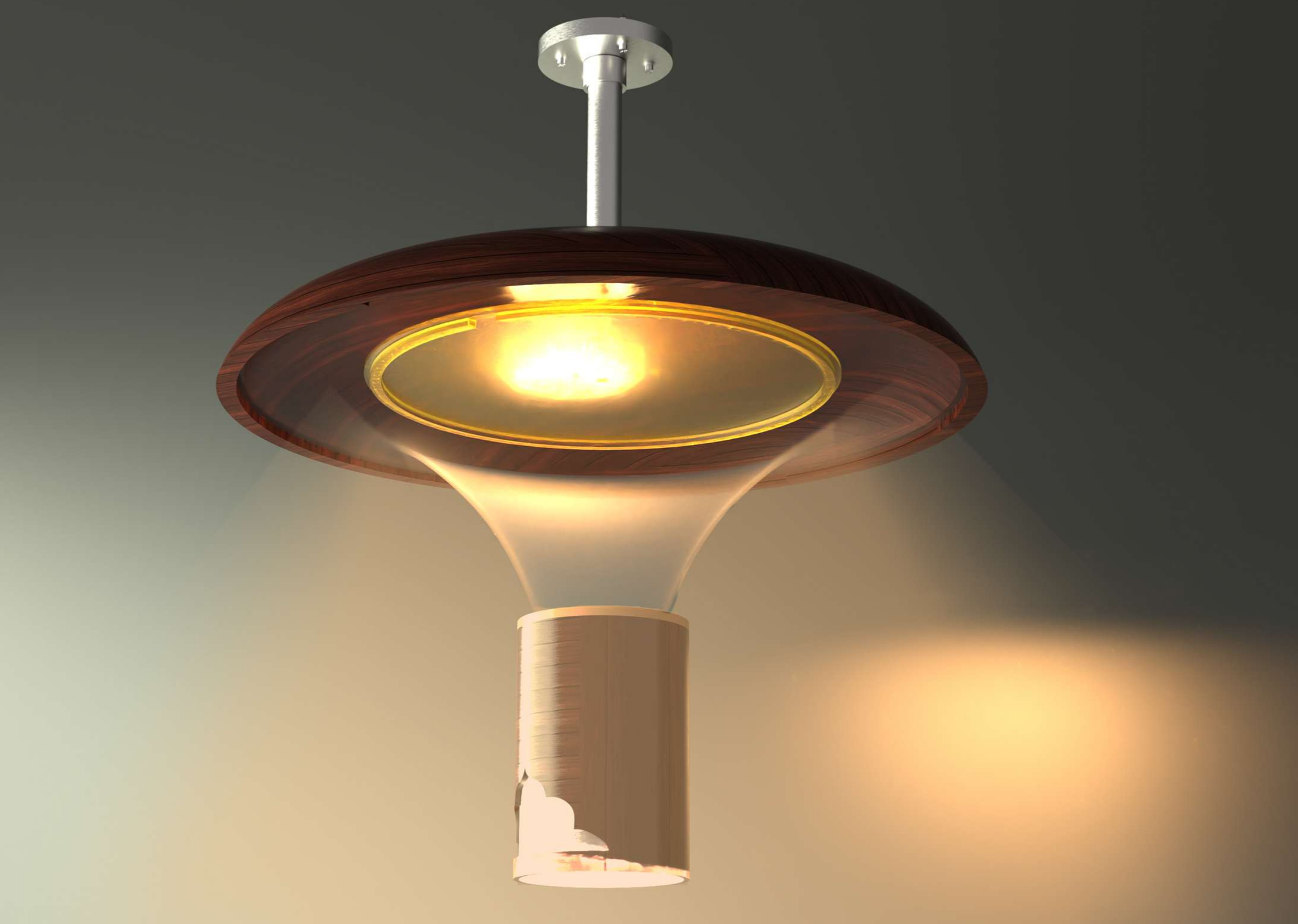
In a rented apartment the ceiling light is the only light. It is on or it is off, it runs all evening at full power, and nobody can move it.
Replace that fixture with one that carries both kinds of light a room needs, and let a sensor decide how much of either it should be giving.
Interviews and apartment visits across studios, one-beds and two-beds in Lahore. Same fixture in all of them, same four complaints.
Relaxing, cooking and working, each wanting a different quality of light out of the same ceiling point.
The test room is a 200-300 sq ft living space with a 9’ ceiling. Mapping it showed light landing everywhere except where people sit, and glare wherever a bulb was visible.
Suspension sits at 7.5’, low enough for the task beam to reach a table, high enough for the ambient wash to clear the ceiling line.
Based on 8 hours of average use at PKR 40 per kWh.
The early pages ask where the second light can live: recessed in a track, hung below a ring, or dropped through the middle of the shade. The last one held.
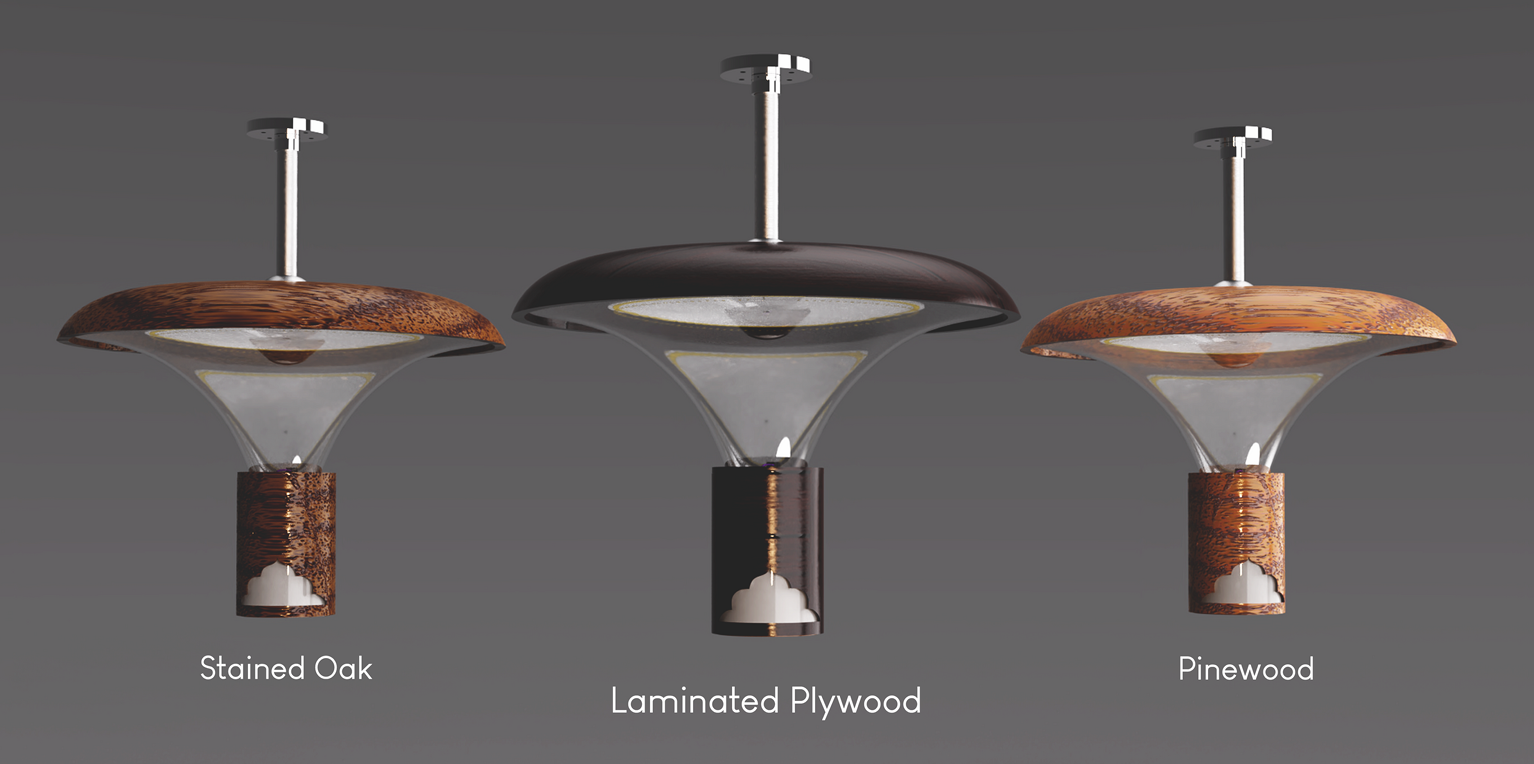
A cylinder passes through the dome and carries the task light at its base. Read together it becomes a mushroom: wide plywood dome, flared diffuser, stem underneath.
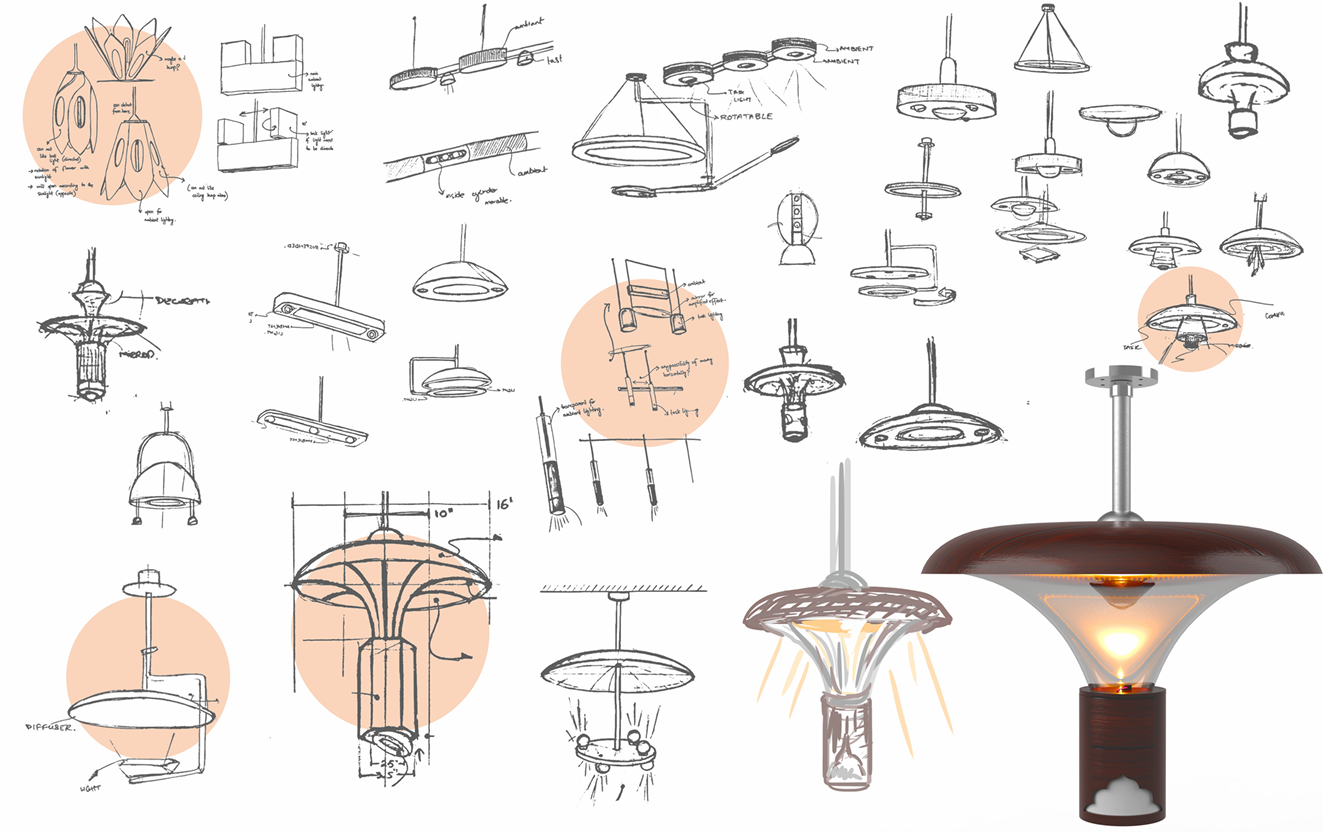
I settled the proportions in render before engineering anything: how far the dome overhangs the diffuser, and how much stem stays visible under it.
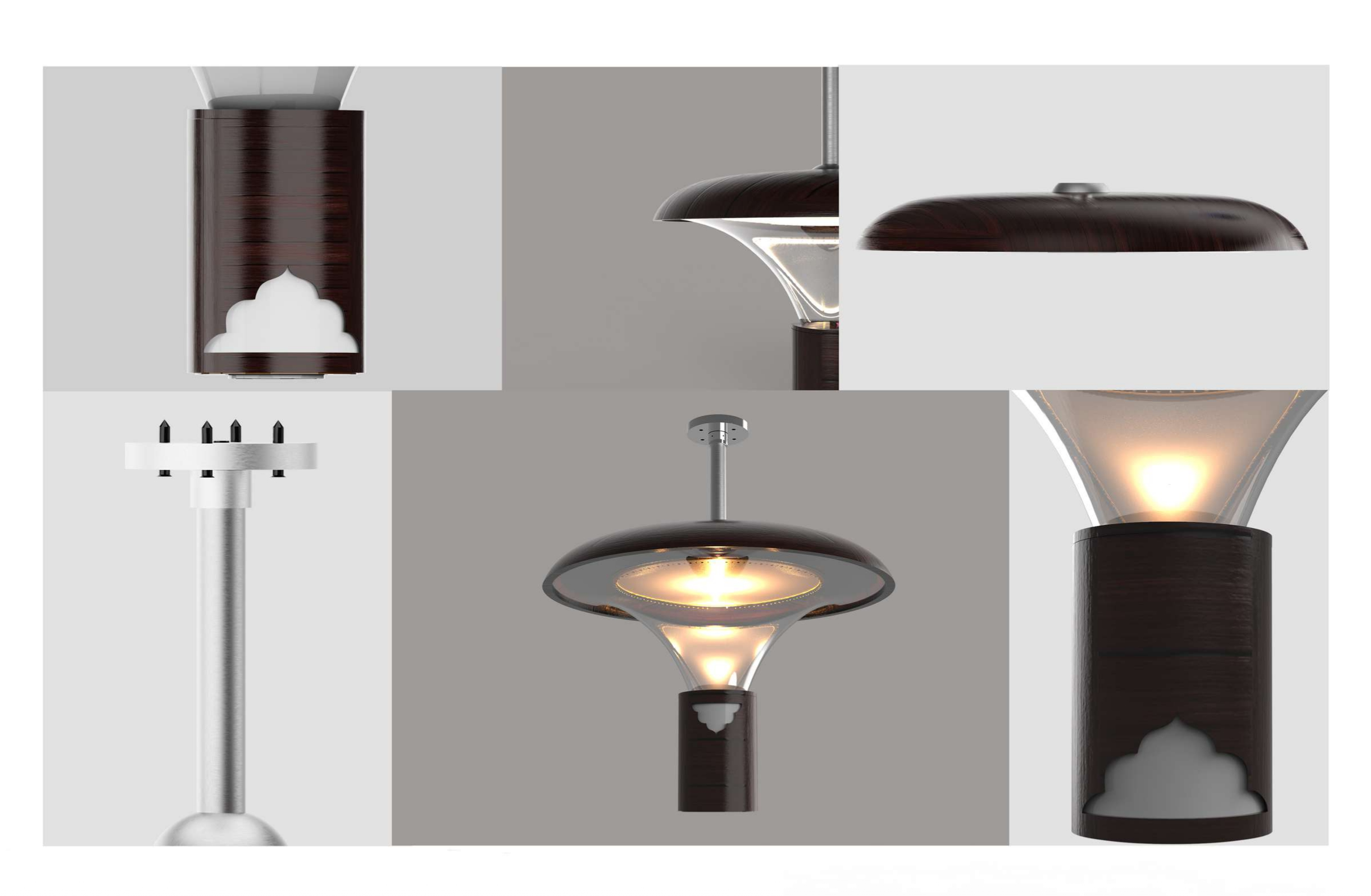
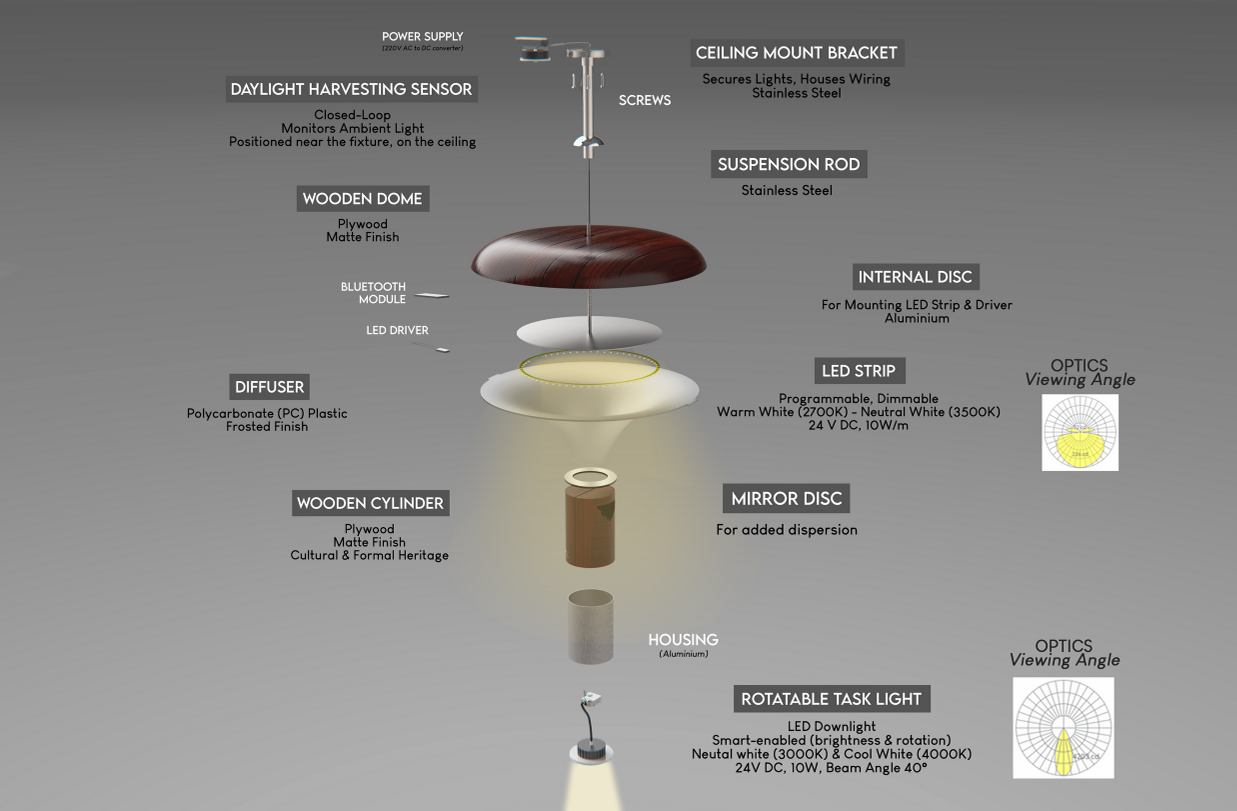
The dome hides everything electrical, driver, Bluetooth module, the aluminium disc the LED strip mounts to. Below it a frosted polycarbonate diffuser turns diodes into one soft surface.
The cylinder is structure and ornament at once: it holds the task downlight, and the arch cut into it lets a sliver of beam out sideways.
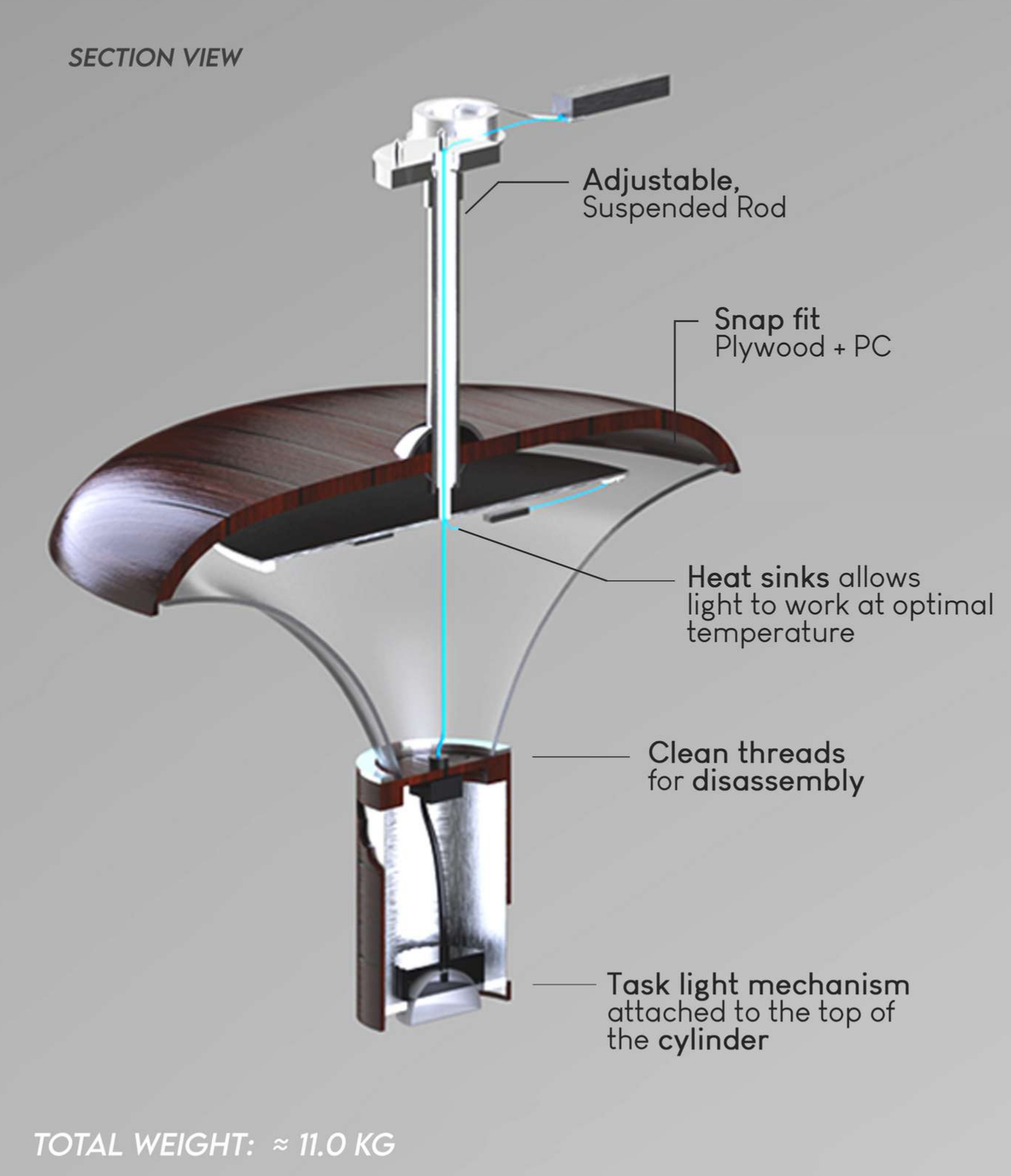
The rod is adjustable, the dome snap-fits to the diffuser, and the LED strip hangs off a three-way joinery with heat sinks that keep it at operating temperature.
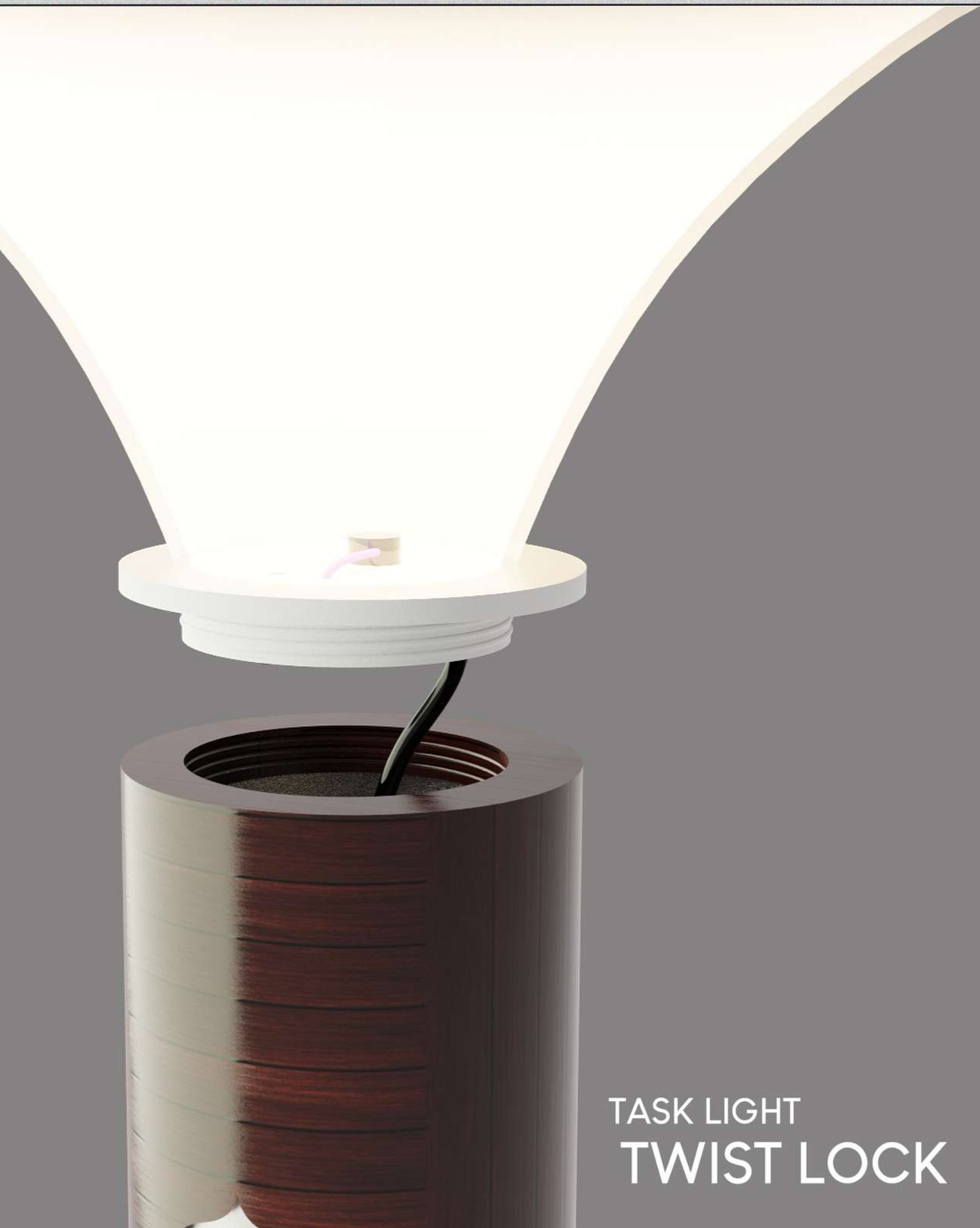
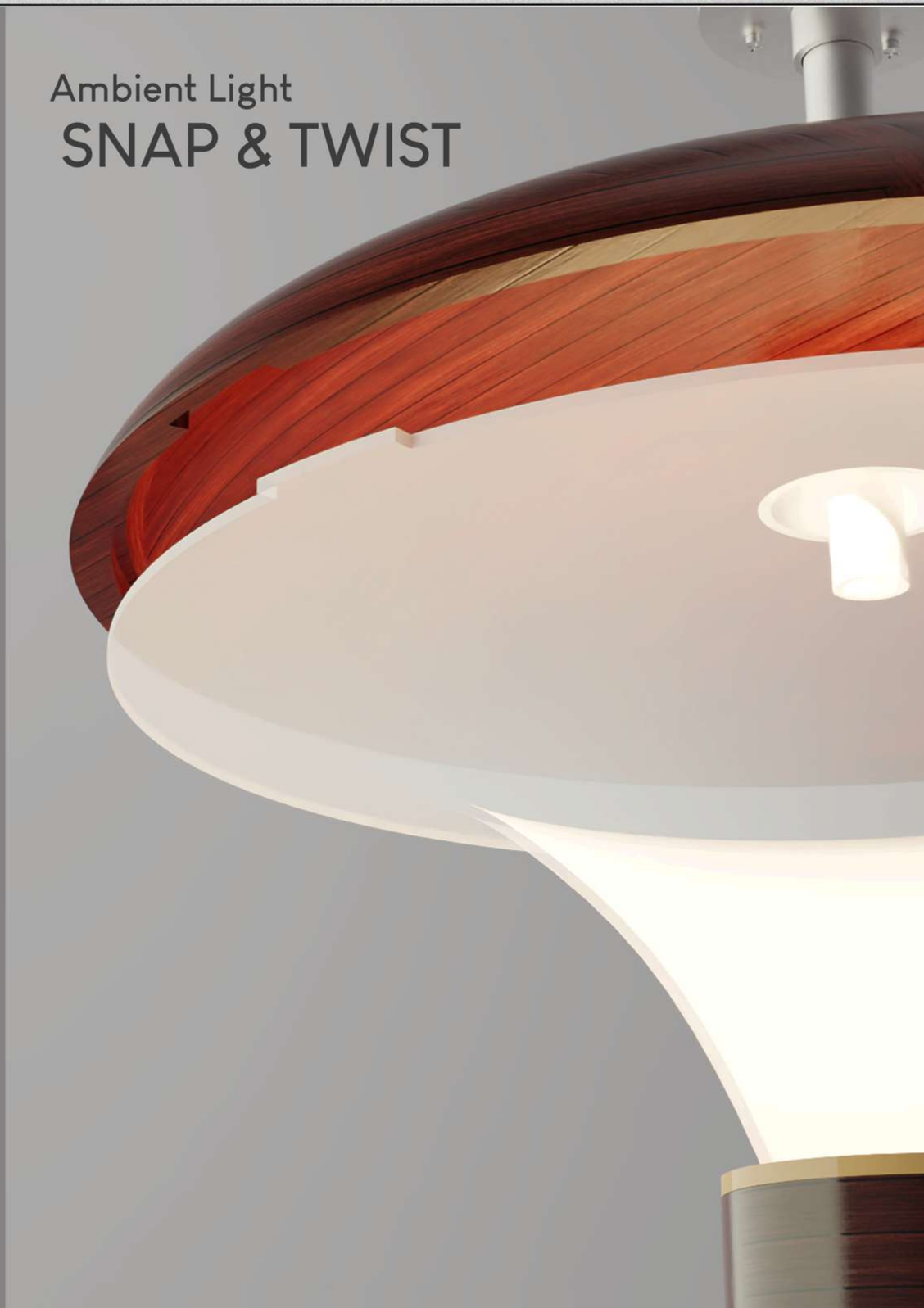
Everything threads. The task light twist-locks in, the ambient assembly twists off the dome, a failed driver is a five-minute job, not a new fixture.
Dome and cylinder are CNC-cut and turned from plywood, finished matte; the diffuser is injection-moulded polycarbonate. No process a local workshop does not already run.
At component level a unit lands between PKR 18,000 and 24,000. The sensor and the LEDs carry most of that, and do all the saving.
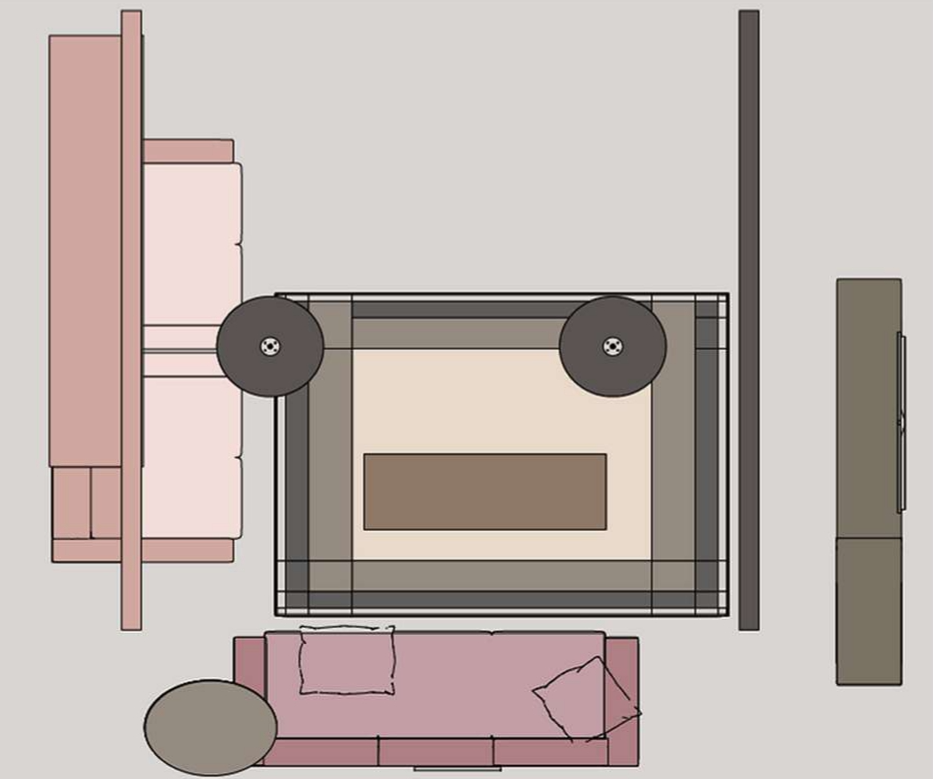
Before: four fixtures lighting the room flat. After: two Nova pendants carrying the wash, with task beams landing where people sit.
Daylight harvesting runs the ambient strip 35-50% lower and the task light up to 50% lower. Annual running cost falls from PKR 27,648 to about PKR 4,464.
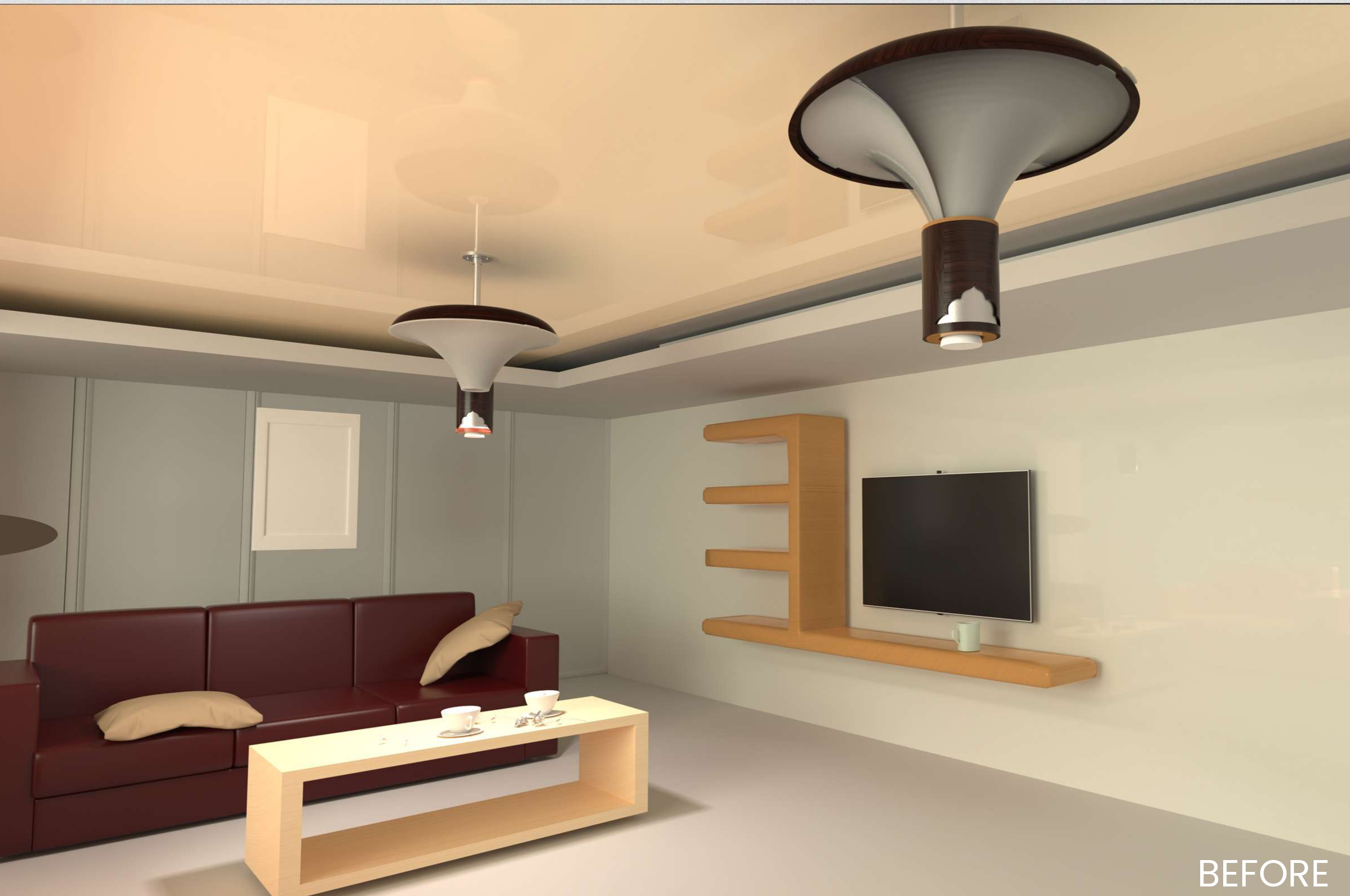
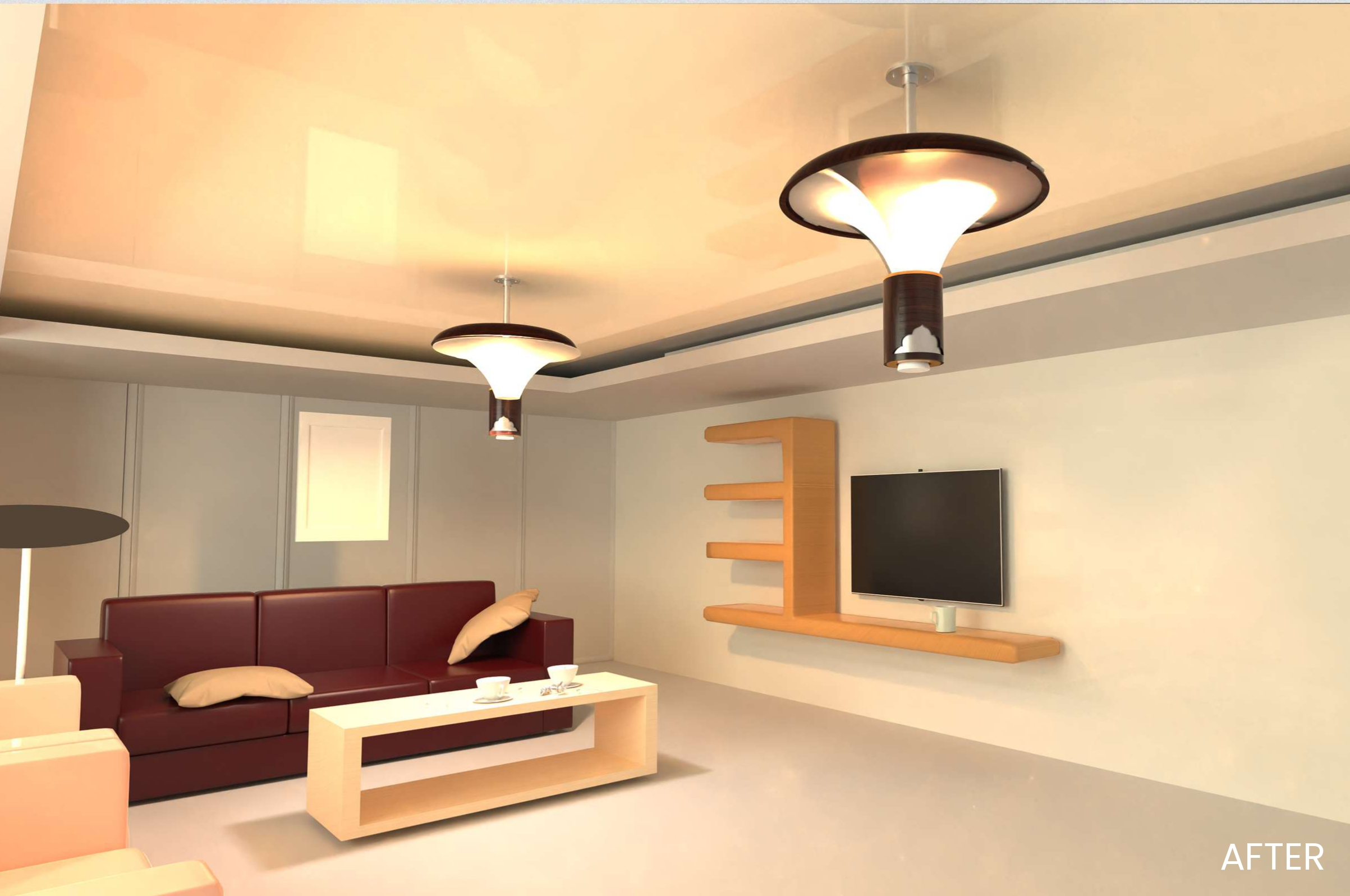
Daily figures assume 8 hours of use with 5 hours dimmed, at PKR 40 per kWh.
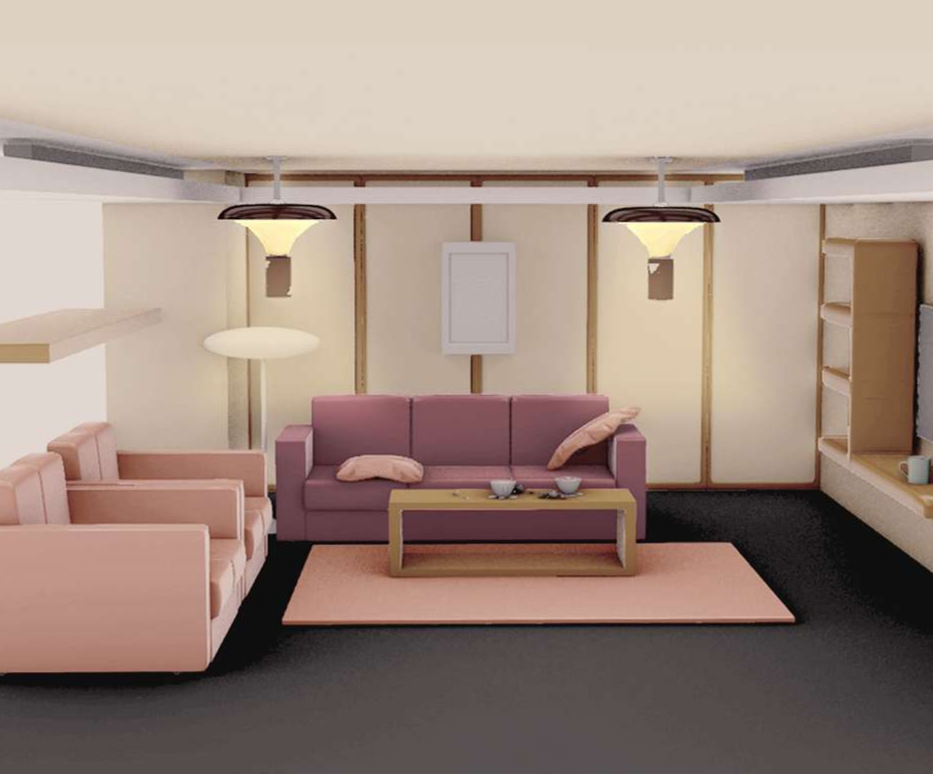
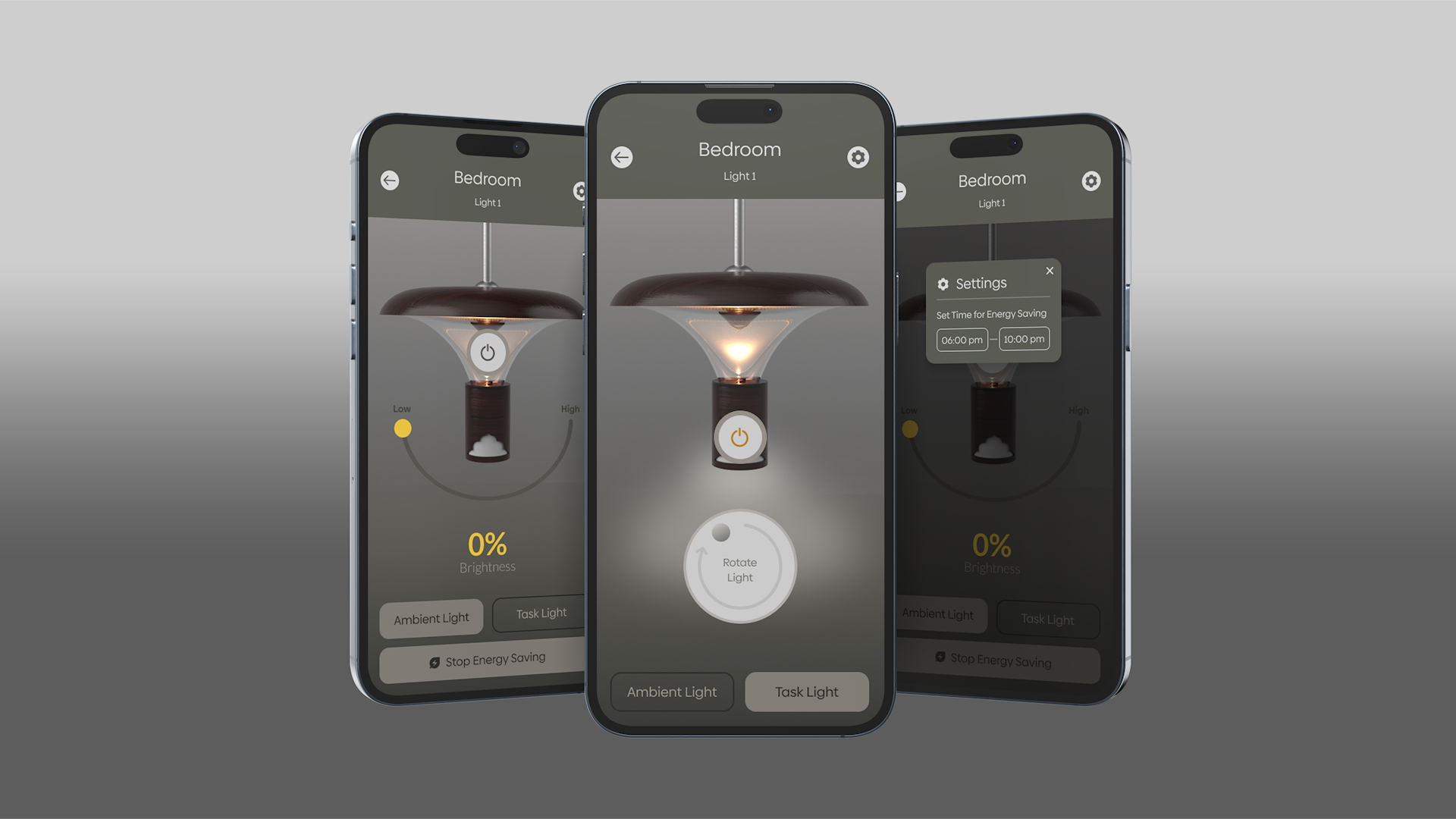
Nova pairs to a phone over Bluetooth, brightness, mode, beam direction and an energy-saving schedule all live in a companion app.
See the app